Tanztage: Chronicles of choreographic urgency
Since the 1990s, Tanztage at Sophiensæle, a historic Mitte venue founded by Sasha Waltz and Jochen Sandig, has functioned as a key platform for emerging dance generations. Under Mateusz Szymanówka, the festival highlights the material and epistemic conditions of choreographic work, shifting the focus from artwork as a product to choreography as a situated practice, embedded in economies of time, funding, and embodied knowledge.
This year’s thirty-fifth edition interrogates precarity, production processes, and co-presence, asking what it means for bodies shaped by uncertainty and financial strain to remain disciplined, resilient, and productive. At Tanztage, the body archives memory, labour, and social dynamics, turning presence itself into a contested resource. The festival, in its layered complexity, exemplifies how urban choreography is inseparable from social structure and ethical responsibility.
This year I experienced three performances:
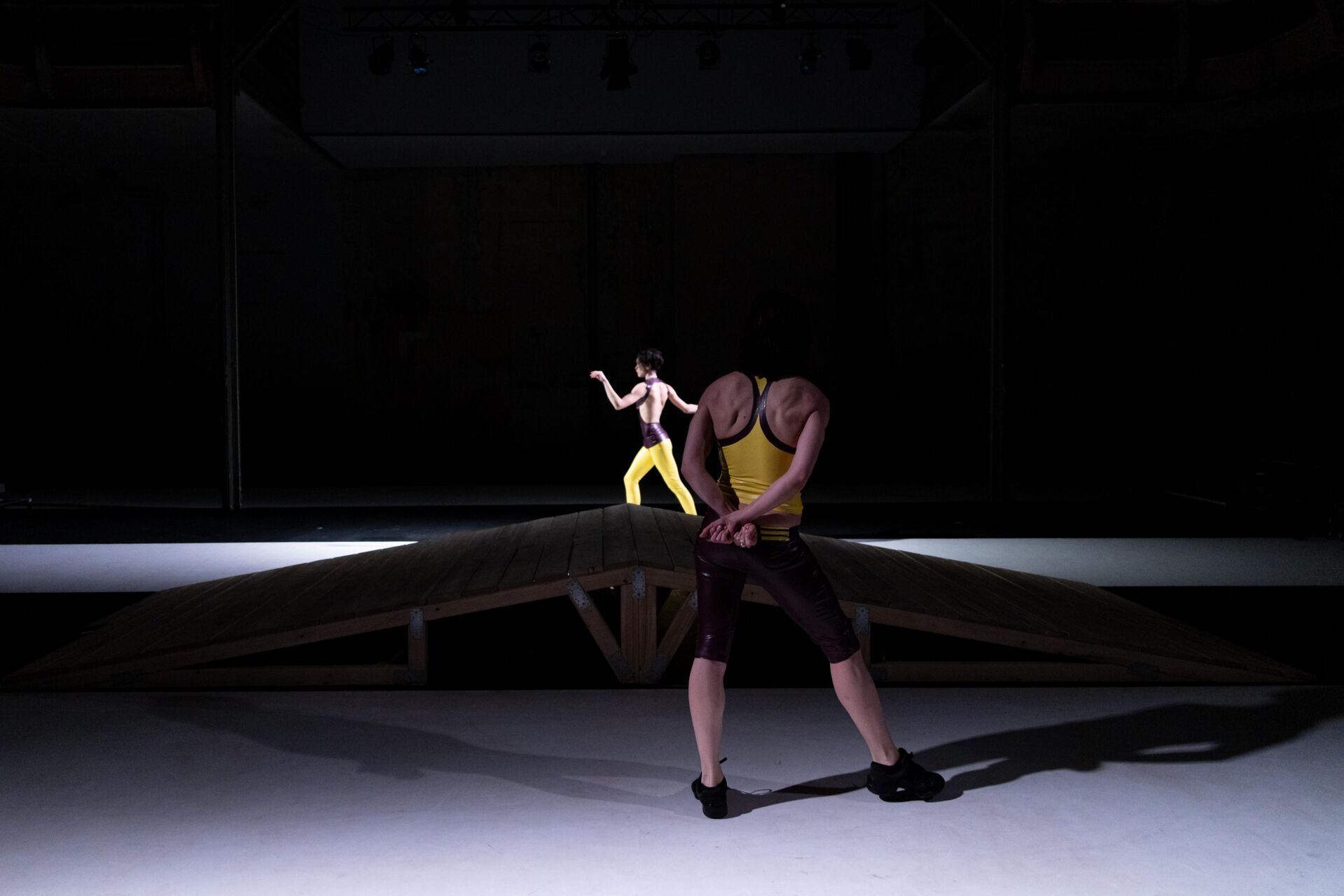
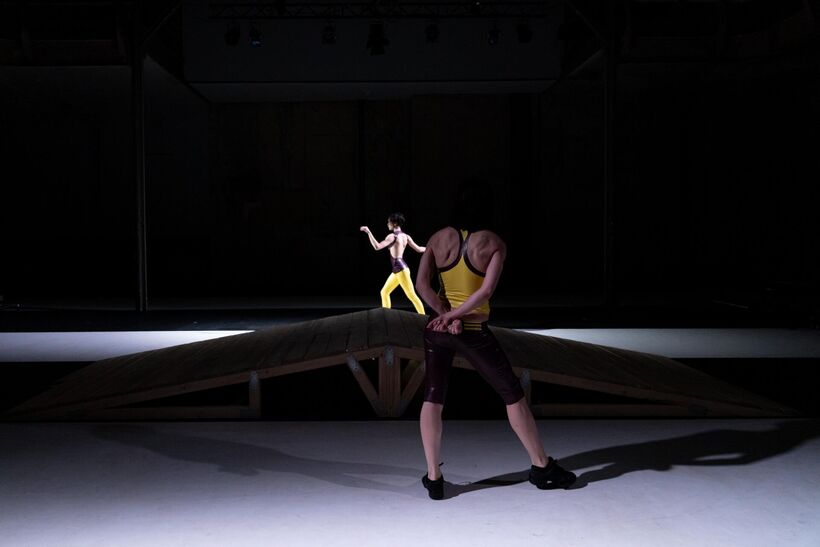
Elena Francalanci’s Lento Violento, performed together with choreographer and dancer Ewa Dziarnowska, explores the tension between presence and absence, intimacy and public, through repetition, and suspended encounter. The wooden platform — a sheltering and bridge-like surface as a sculptural object — frames a piece of choreography that reconfigures liscio, the traditional Italian partner dance. Oscillating rhythms and gliding repetitions stretch and contract time between memory and everyday gestures modulating dialogical desire for the other. Black-and-white linoleum strips guide the audience’s attention, producing a haptic and visual choreography piece that frames movement dynamics. Francalanci traces long, suspended lines weaving classical, modern, and jazz vocabularies, while Dziarnowska articulates a grounded, swing-inflected rhythm. Their differences generate tension through co-existence rather than synchronization.
For much of the performance, the dancers remain physically separate, resonating in absentia. Runs, crossings, and repeated gestures modulate the tempo and intensity, while warm light from beneath the platform destabilizes the boundary between intimacy and visibility. Everyday actions intertwine with narrative fragments and references to Italian culture, as in cinema, while the myth of Orpheus and Eurydice operates as an undercurrent, informing choices around delay, fleeting glances, and the impossibility of fusion. The final section offers brief moments of contact, accentuating the fragility of attunement. Interpersonal space becomes the primary site of reflection — a deliberate negotiation of co-presence as precarious achievement.
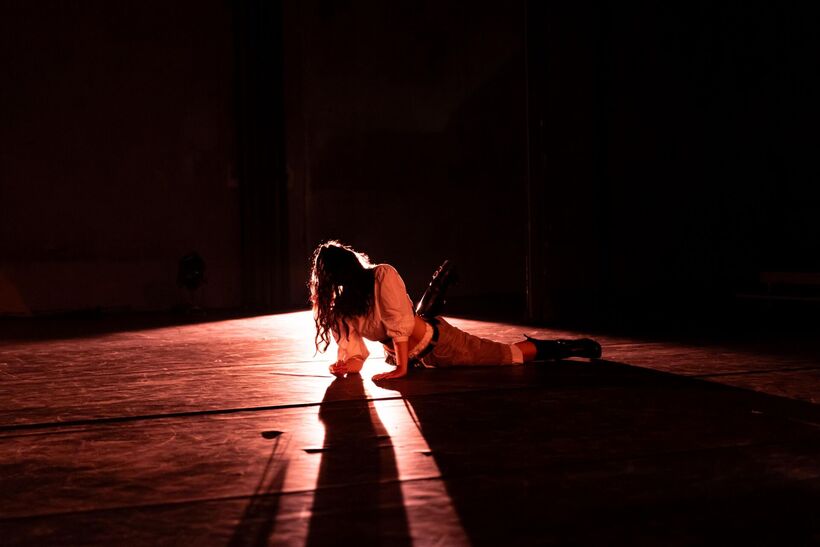
If Francalanci’s work is driven by an explicit search for the other, Pooyesh Frozandeh’s Saving Flowers, performed by kiana rezvanire, directs our attention toward slowness, spatial perception, and strategic withdrawal from spectacle. Dressed simply in trousers and boots, rezvani moves with extreme economy while reciting text fragments. Each word becomes a gesture, each breath contributes to a minimal bodily architecture, attuned to duration as an aesthetic choice. The work resonates with the choreographer and performer’s shared Iranian background, where bodily visibility and restraint carry political weight. Temporality and co-constituted attention function as ethical gestures within precarious cultural production.
A paper sculpture suspended centre stage functions as both a material and symbolic presence. Through video interaction, it generates shifting shadows and asteroid-like geometries until it collapses, enveloping the performer and transforming the stage into a temporary sanctuary. Marina Lukashevich’s live electronic score alternates abrasive textures with silence, reinforcing temporal suspension. Painting flowers on ruins becomes an allegory of contradiction. Creation interrupts, rather than resolves, catastrophe, allowing for attention, repair, and breath.
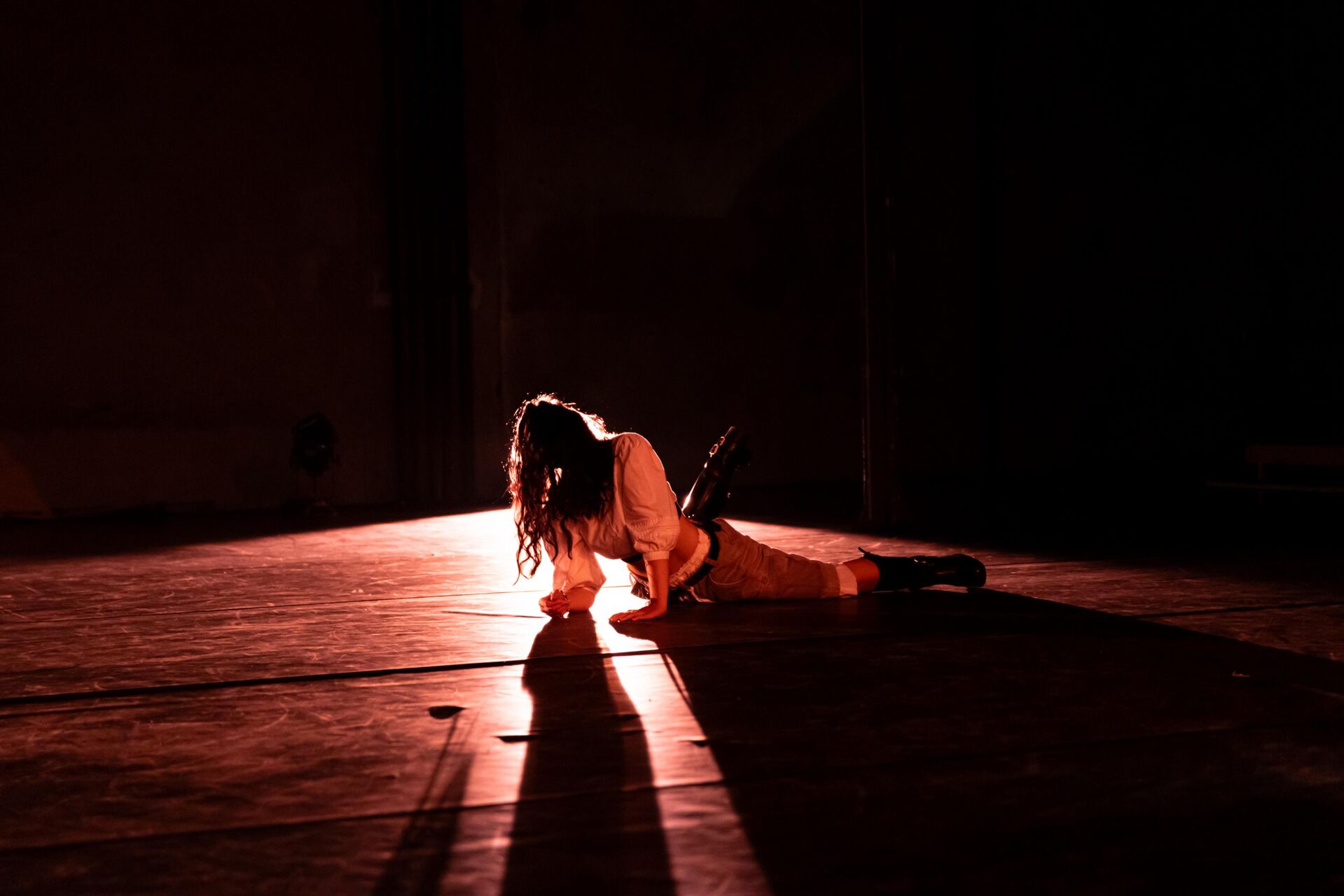
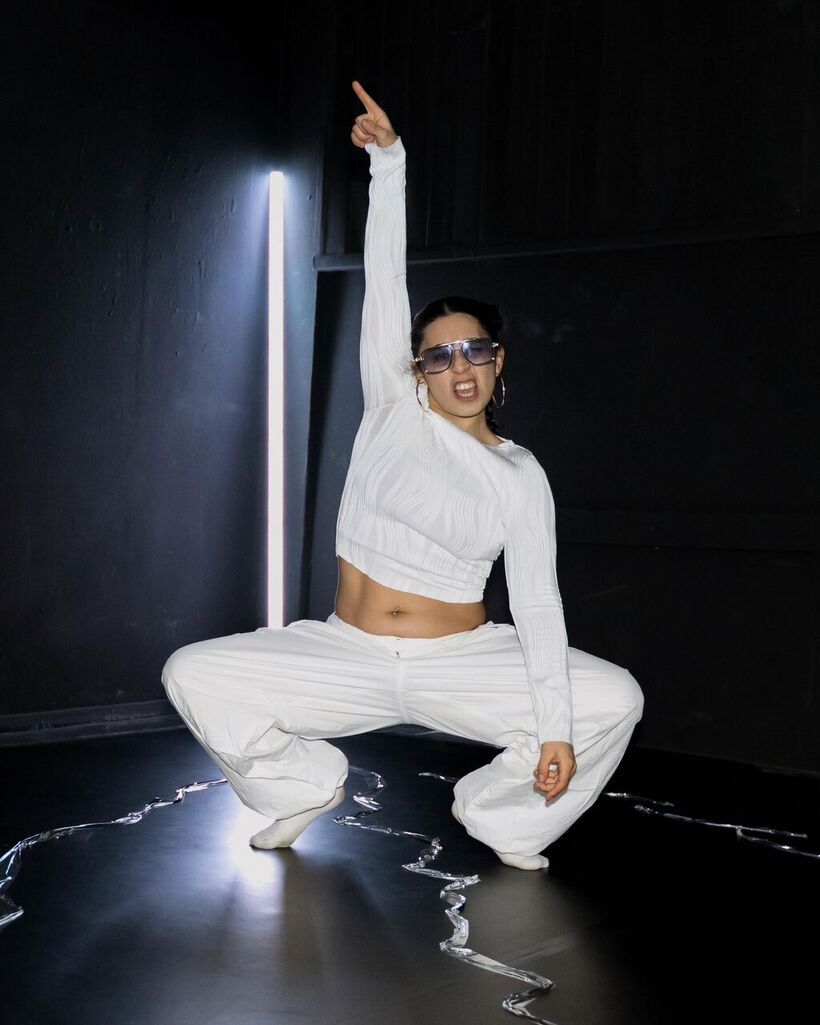
Changing the tone completely, Pamela Moraga’s Gig frames the dancing body as a site of labour shaped by precarity and migration in Berlin’s gig economy. As the audience enters, she warms up to Wenn die Leute wie Maschinen nur noch für die Arbeit leben! (“When people live like machines, only for work!” from the song Menschine by Dendemann), immediately situating the body within regimes of productivity and exhaustion. The cracked floor underscores structural fragility. Through movement, spoken text, and direct address, Moraga intertwines her immigrant biography with bureaucratic language, exposing how artistic legitimacy is filtered through standardized formats of productivity and self-branding. Statements like “if you don’t write, you don’t dance” and the rapid obsolescence of projects articulate the accelerated temporality of creative labour.
Addressing the audience, she asks: “How can I sell a dance? How much would you pay for a movement? Can I pay my rent with this dance?” A militaristic “attention” gesture contrasts with dance movement. This is a critique of systems that legitimize discipline and war while devaluing embodied labour. Movement softens and expands across the stage, then pauses for a tender, bittersweet phone call in which Moraga recounts her migrant path, questioning whether this performance is a gig or another “shitty job.” The piece closes with reggaeton, both invoking and reclaiming a stereotyped form of cultural salvation.
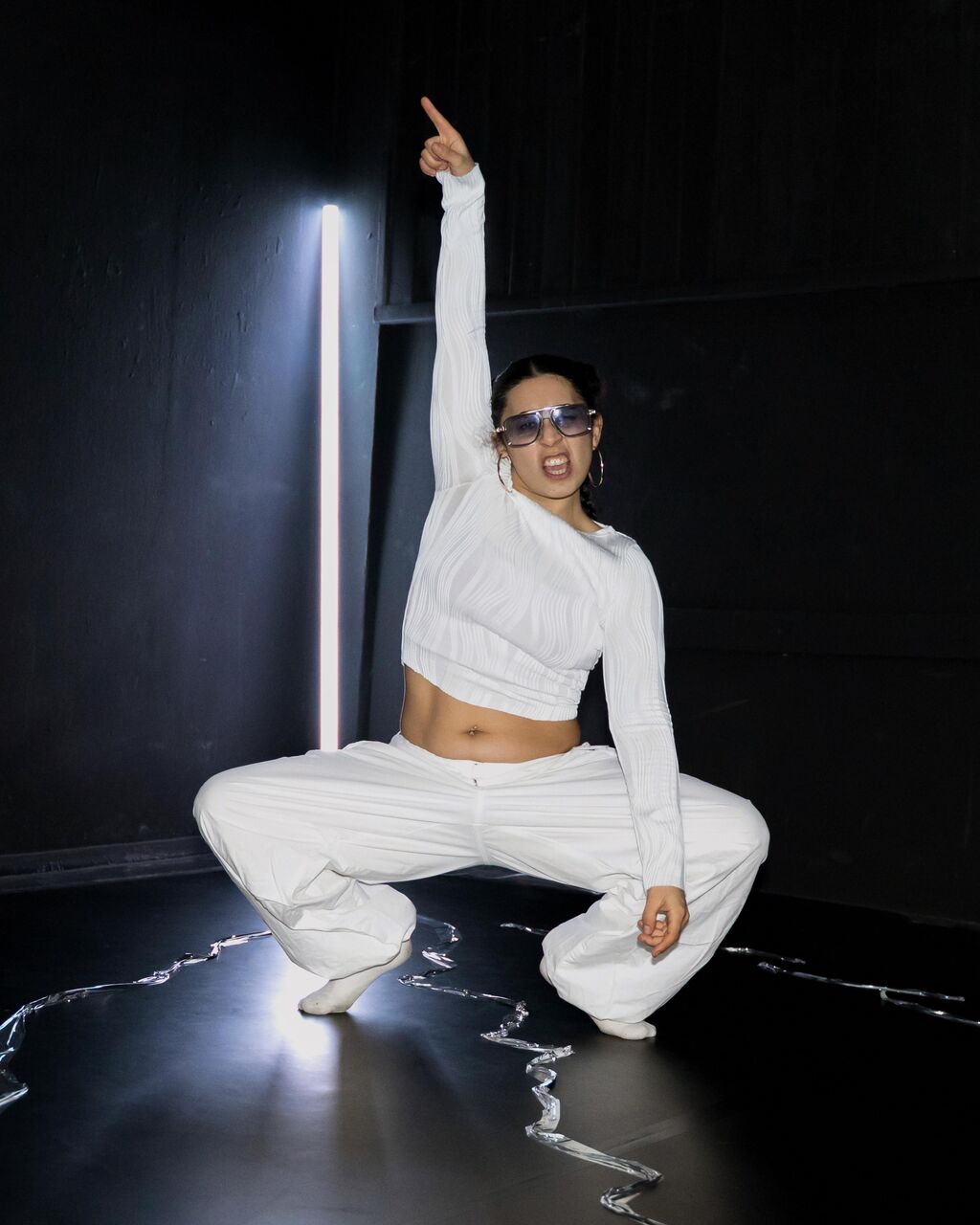
Irony and vulnerability function as choreographic strategies, allowing the body to articulate effort, endurance, and self-exposure. Gig is a high-energy, empathetic work that critiques the contemporary art economy, where the artist increasingly functions as a brand. It exposes the gendered and racialized conditions of dance labour.
CTM Festival: The Body as Ritual Medium
CTM Festival, an international hub for experimental music, sound art, and interdisciplinary performance, unfolds this year across HAU, Berghain, Radialsystem, and other Berlin venues. It creates a networked landscape where bodies, technologies, and sonic-material ecologies intersect and probe temporality, materiality, and perception.
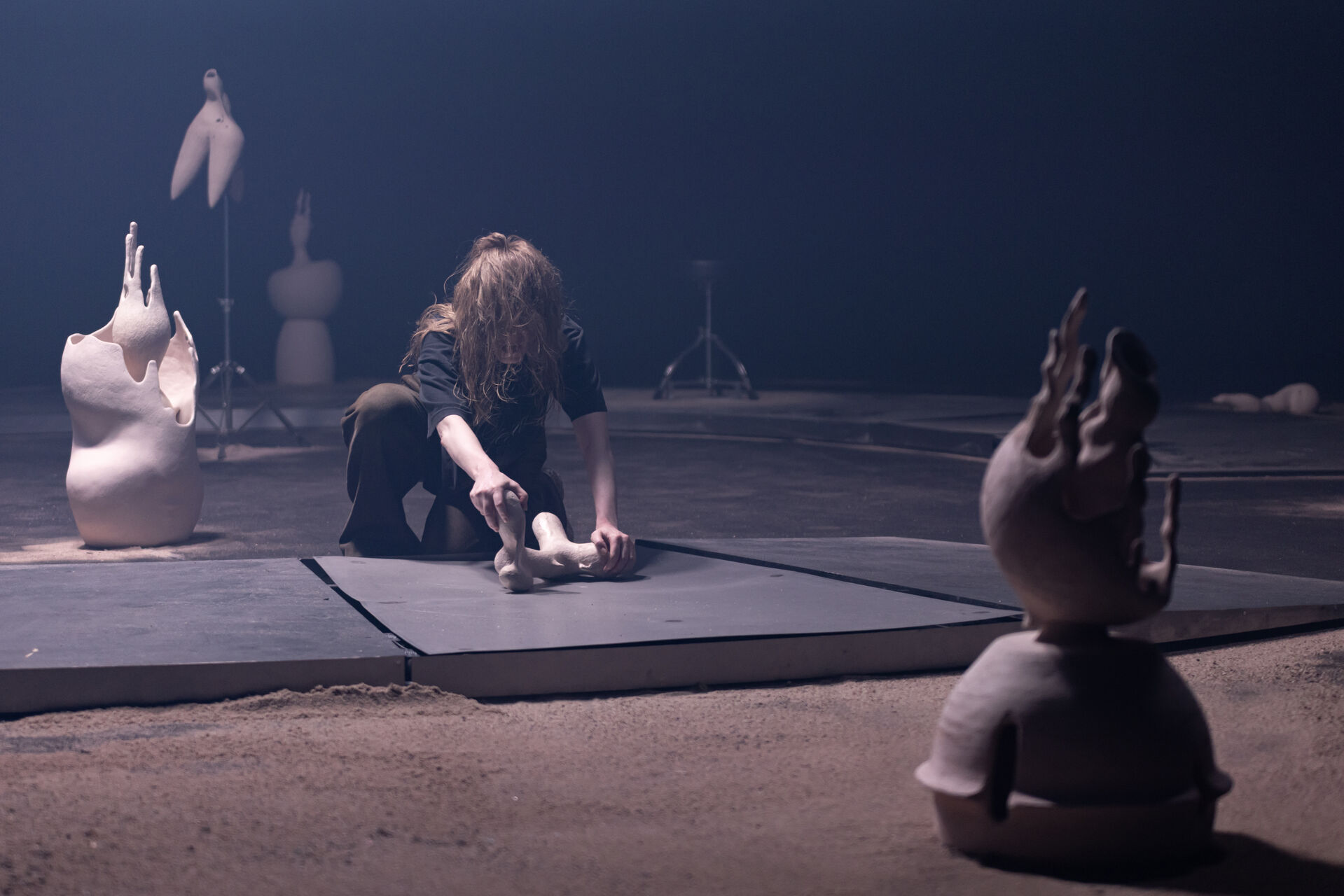
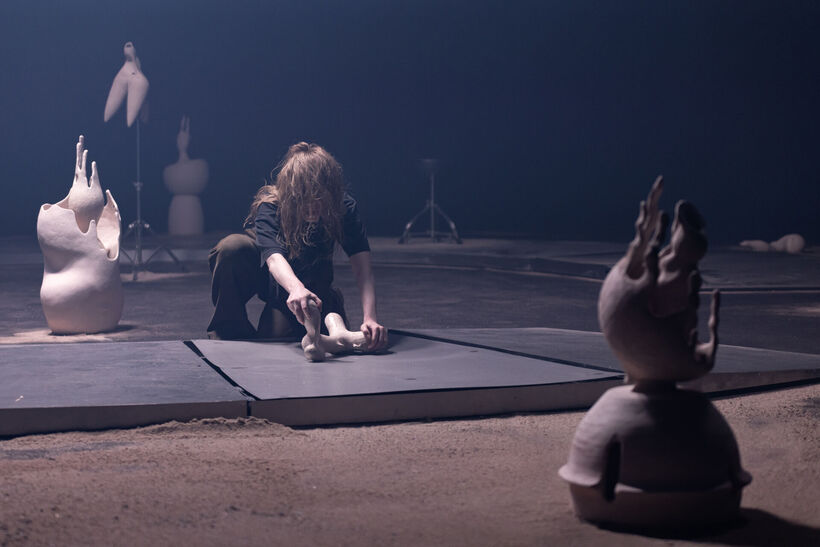
MoonJar by choreographer and performer Kat Válastur and composer Aho Ssan transforms HAU2 into a ceremonial space where choreography, architecture, and materials converge. Terracotta (by Latika Nehra), sand, and a circular platform create ritualized intensity through material discovery, gestures of picking, animating, or placing small ceramic figures — relics, bones, fragments of imagined archaeology, and occasionally votive statues. Movements are circular, broken, and repeated, echoing lunar cycles, DNA spirals, and geological time. Persistence, insistence, and meticulous engagement dominate over fluidity. The body mediates relations between human and non-human matter, memory, and temporality.
Válastur’s face is often obscured by her own posture, sometimes replaced by a terracotta masque, emphasizing the body as medium rather than individual. The score by Aho Ssan, who strangely does not play live, conditions movement: Válastur’s body responds physically to pulsating textures, attuning to vibrations, rhythms, and density. The finale shows Válastur kneeling toward a gap of light with a terracotta mask on her coccyx, producing a post-human figure. The image lingers long after the performance, marking a threshold into unexplored territories and new equilibria between matter and presence.
Alongside MoonJar, Noémi Büchi’s new A/V work Exuvie at Volksbühne, featuring dancer Rebeka Mondovics, frames the body as a mutable interface within cinematic and digital regimes. Taking inspiration from exuviae, the leftovers of molting, it presents metamorphosis as a durational process where loss and transformation remain entangled. Movement, sound, and image create stratified temporalities, producing a perceptual instability between an embodied presence and technological inscription. Büchi’s score, part electroacoustic, part orchestral, with nods to video games, anime, and hip-hop places the dancer within a fractured visual environment, reminiscent of Francis Bacon’s figural displacements lost in a Japanese arcade. By sidestepping AI, Exuvie reasserts human embodiment as a site of attention, highlighting the continued ethical significance of flesh in automated systems.
Ada Studio: Emerging and Collective Practices
Ada Studio, in Berlin’s Wedding district and part of the Uferstudios network, functions as a collective laboratory emblematic of the Freie Szene. Led by Gabi Beier, it emphasizes dance as a non-hierarchical practice where bodies engage with gender, community, and symbolic authority. Its modular design fosters interaction between performers and the audience, rendering choreography a social, political, and sensory practice. Central to its programming is “neworks”, a platform for emerging choreographers where gestures become tools for aesthetic, social, and political exploration, allowing risk, play, and reflection to coexist.
Giorgia Bovo and SueKi Yee’s, We Hate Pink! playfully interrogates the colour pink. Audience members receive small pink objects to wear, clips and ribbons, creating participatory engagement. The performers wear minimal black and flesh-toned outfits with pink accents. The set is minimal (two chairs), but audience interaction drives the piece. Movements are collectively guided, humorous and narrative, including gestures like “catch the salt at a dinner party”, “cheerleader” or “pizza.” Gradually, pink light fills the space, amplifying ritual, play, and critique. Everyday objects — nail polish, ribbons, pointe shoes, neon lights — become performative tools, while the audience interprets the meaning of pink: from innocence and girlishness to punk rebellion, from superficial aesthetics to reflections on gender visibility. The finale transforms the stage into a “pink party,” with food, drinks, and collective interaction. Humour, ritual, and absurdity coexist with critical reflection: dance as a social, relational, and transformative device.
This practice demonstrates how choreography can function as a tool for collective process, social critique, and embodied experimentation. Within Berlin’s independent ecology, Ada Studio manifests the exploratory ethos of the Freie Szene, framing the performative gesture as a collaborative dispositif for social and aesthetic inquiry.