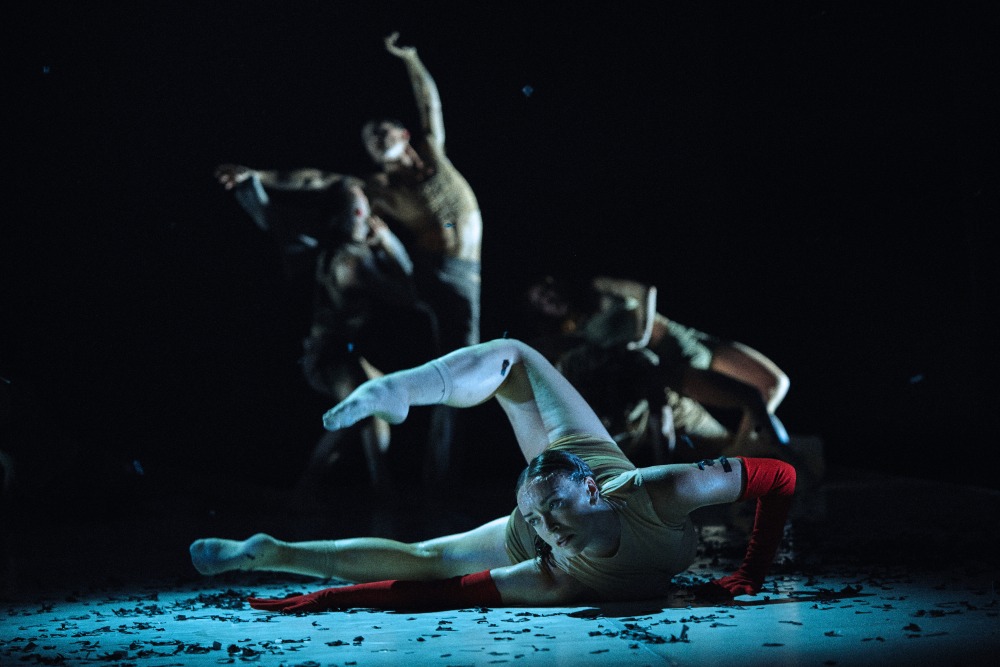
What stance should we take on the issue of climate change? It is clear that the world is sinking into crisis. The systems of recent centuries are collapsing. For decades, humanity seemed to be lulled by waves of optimism and activism, but also by deliberate blindness. However, it is within an artist’s power to create a piece so perfect that it captivates with its visuals, intersects with its vibrations, and makes the audience's hearts beat to the pulse of dancers moving at a frantic pace and to the limits of their physical capabilities. This is exactly what the renowned soloist and world-famous choreographer has achieved. This non-narrative performance raised the question of collective responsibility in a visually captivating atmosphere.
Choreographer Guillaume Côté’s masterpiece dances passionately for the climate. Burn Baby, Burn is an impressive visual-movement piece
Internationally-renowned dancer and choreographer Guillaume Côté premiered Burn Baby, Burn in 2024. The current Canadian tour showcases this innovative masterpiece, in which dance, music, and light communicate with equal perfection. In Montreal’s premiere, nine leading dancers of various ages and diverse dance backgrounds took to the stage at Théâtre Maisonneuve.

Burn Baby, Burn. Photo: Sasha Onyshchenko.
Advertisement
Côté Danse Company responded collectively to the climate crisis with a densely emotional probe into the depths of human energy. In Burn Baby, Burn, Guillaume Côté delved into the issue of global warming and, given the intensity of the performance, communicated it as an escalating threat to which one part of humanity is turning a blind eye, while the other is sounding the alarm. We can deny the crisis, we can laugh at it, we can succumb to scepticism, but we can also grasp it metaphorically, break it down and focus our attention on its individual fragments. And Côté set the burning issue alight in a space where lighting designer Simon Rossiter made effective use of moving light ramps, red hues, and cool shades. There were moments when a dark shadow appeared in the illuminated fog. This reflection resembled either rising destructive smoke or a blind spot. How symbolic it may seem to be absorbed by darkness.
From a movement perspective, the team drew on a wide range of expressive tools. Classical training formed the basis. The ballet vocabulary was complemented by street dance styles, most frequently hip hop, as well as fashion industry gestures, disco, voguing, and contemporary dance. The choreography could be described as sophisticatedly thought-through, emphasising the body’s geometry while finding meaning in broken shapes. It wowed the audience by cutting into synchronised sequences and seemingly random groupings, only to immediately let the solos and duets stand out. Everyone was given an opportunity and impressed with their performances, whether that was through unusual elements derived from a combination of classical and hip hop or other "compounds," or through perfection in execution. The transitions were generally characterised by softness and quiet movement, reminiscent of the disintegration of a unit behind glass, the fading of a firework or the melting of a snowflake in the palm of your hand. The dancers disappeared into an illusion of invisibility. They reappeared in the same way. Suddenly, they found themselves in the middle of the action, which they seemed never to have left. At certain moments, they became silhouettes, outlines of humanity or a crowd flickering in time. At other times, they stopped in front of the ramp, staring intently into the auditorium, and it was possible to distinguish one from the other. Individuality alternated with anonymity, the individual merged into the group, only to emerge from it soon after – separated from someone else.
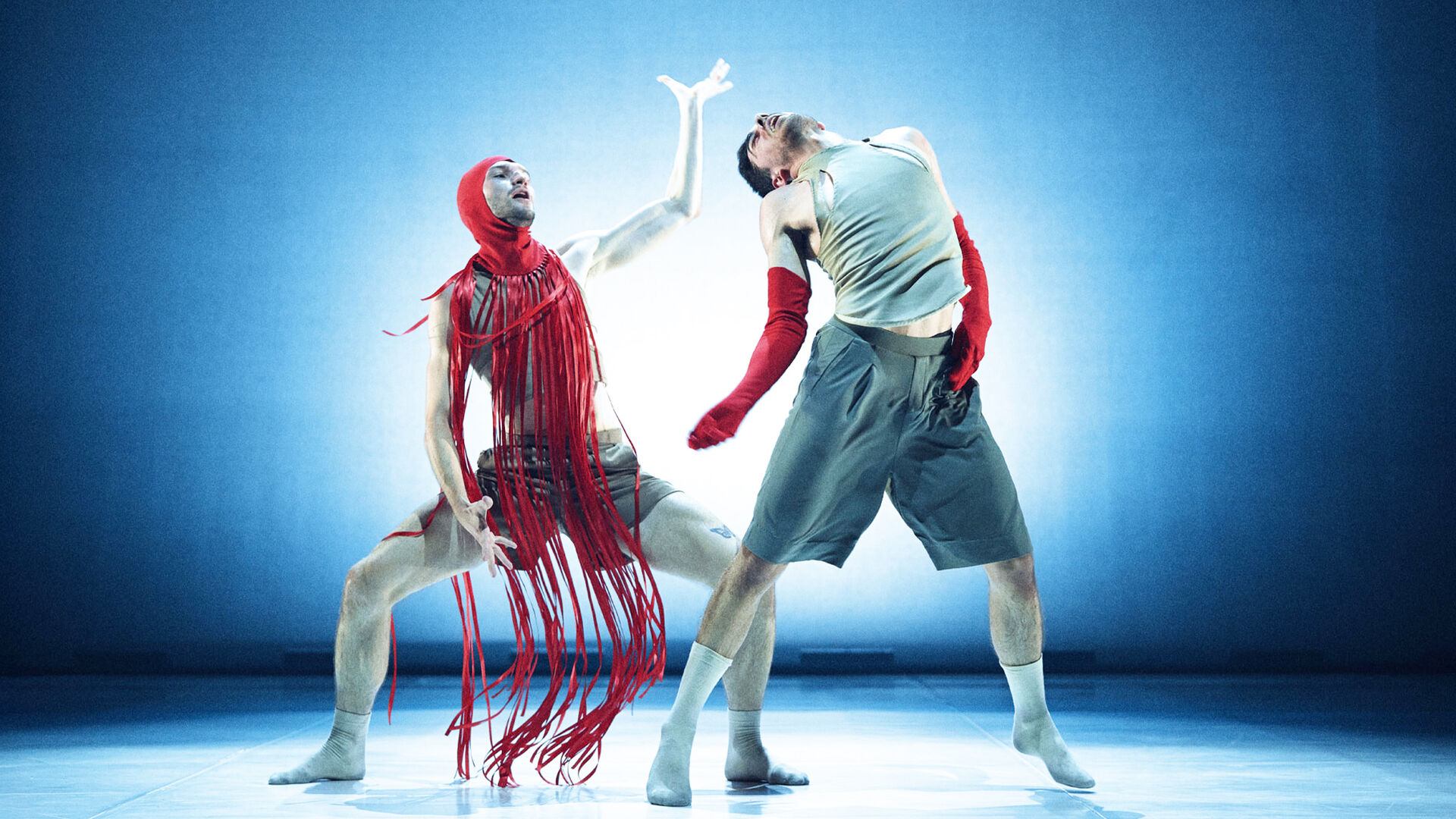
This virtuoso work of movement seemed like a meeting of grandeur and intimacy. The performance left a stunning, even paralysing impression, and at the same time, when watched with sensitivity and openness, it vibrated through the whole of the observer’s body in the seat, sharpening their senses and soothing them with its beauty and grace. The audience's responsive reaction came in connection with the dynamic, even frenetic tempo, as the dancers defied gravity and human exhaustion. In the quieter passages, there was admiration for the endurance in flexible positions — the powerful elements that did not suggest extreme tension — as well as the imaginative interconnection of larger units.
Nine people were dressed in layered tops and tight or loose trousers in shades of brown or beige, which, with the changing light, oscillated between warm and cool colours on the spectrum, most often taking on a bronze hue. Long red gloves, some with fringes reaching to the floor, added a symbolic dimension. The dancers emphasised their feet, their steps and slides, and their perfectionism rose above their ankles, knees and wrists, and even to the joints of their fingers. The movement of their heads followed their torsos, or, in complex articulations, metaphorically became the rudder steering the ship into the stormy waters of phrased gestures. They often moved by walking on their toes. In some moments, their head positions conversely contributed to emphasising a suspension in time.

With its specific aesthetics, Burn Baby, Burn issued a warning that could potentially cause concern or evoke a desire for change, i.e. personal climate action. However, it is also a performance that offers countless beautiful images of lyrical poetics, exposing physical availability, shared breath, and the harmony of each individual movement and, not infrequently, mutual touch. The superb audio-visual composition, combined with the masterful staging of physical expression, propels the work into the limelight.
Written from the performance at Montreal's Théâtre Maisonneuve on 26 November 2025.
Burn Baby, Burn
Choreography: Guillaume Côté
Original Music: Amos Ben-Tal, OFFprojects
Costume Design: Yso South
Lighting Design: Simon Rossiter
Associate Producer/Creative Assistant: Anisa Tejpar
Producer: Etienne Lavigne
Stage Manager: Jennifer Lee
Original Cast: Demetri Apostolopoulos, Jessica Germano, Martha Hart, Kevin Lau, Griffen Grice, Willem Sadler, Katherine Semchuk, Evan Webb, Carleen Zouboules
The reviewer's trip to Montreal was implemented with co-financing from Next Generation EU, through the National Recovery Plan and the Ministry of Culture of the Czech Republic as part of the Go & See programme organised by the National Institute for Culture.