
Of course, being noticed by the dramaturgy of traditional ballet giants does not make someone a good choreographer. Nevertheless, I believe that even today there are certain milestones that look very good on a professional resume. Two original works for the Opéra national de Paris and The Royal Ballet. An internal choreographic position at the Nederlands Dans Theater and Salder's Wells. One Benois de la danse and even five Olivier Awards. An award from Jacob’s Pillow. All this (and much more, in fact) makes Crystal Pite a name that resonates, receives extraordinary attention and, if some dare to predict, will be written in large, indelible letters in the annals of dance history.
Crystal Pite, a phenomenon that is "making history"
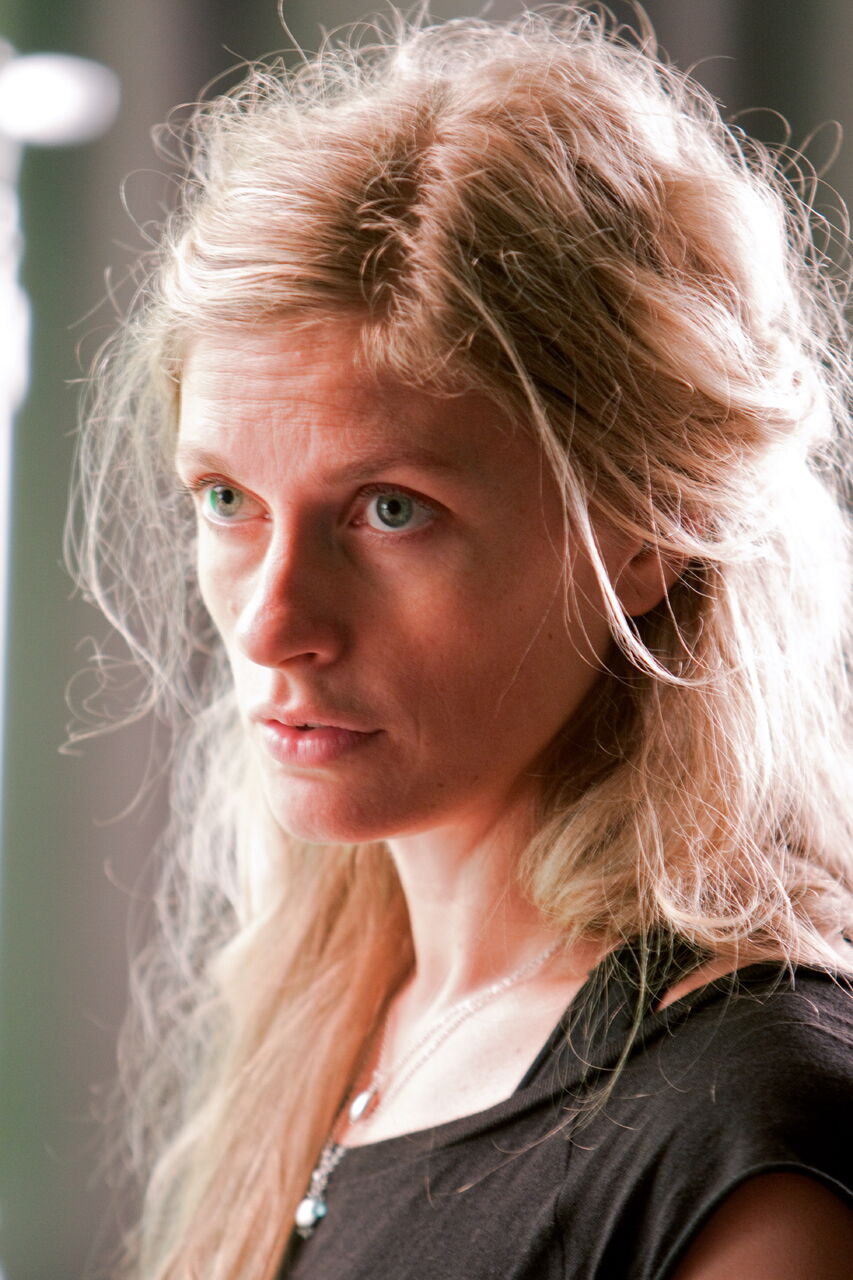
A select group of choreographers currently stands out in the global creative dance scene. In contemporary dance, the gender ratio of female and male choreographers is relatively balanced (thanks in part to the wave of modernist women in the first half of the 20th century). In the domestic environment, I would even dare to say that women predominate. However, if we look at the stages of large theaters, their dance repertoire is a dominant men's club, and there are not many women who are granted the abstract privilege of entering. So when one does enter and succeeds in captivating the bodies and audiences of ensembles such as the Opéra national de Paris or The Royal Ballet, it attracts attention and the name of the woman in question gains further prestige and glamour from the traditional golden portals. Among those who have shone brightest in recent years is undoubtedly Canadian creator Crystal Pite, who is celebrating her 55th birthday today.

Crystal Pite. Photo: Wiki Commons.
Advertisement
Crystal Le-Anne Pite was born in Terrace, British Columbia, Canada, on December 15, 1970, as the eldest of three children, and she differs from many of her (not only) generational choreographic peers in her formative dance training. Pite began classical ballet (and tap dancing) at the age of five and got her first engagement with Ballet BC, where she made her debut in 1988. As she herself says: "Ballet is encoded in me, I can't wash it off even if I tried!" In the mid-1990s, the young dancer moved from Canada to Germany and joined Ballett Frankfurt under William Forsythe, who chose her as one of four dancers to take part in the filmed instructional program of his Improvisation Technologies. Pite worked with Forsythe as a dancer and still-budding choreographer (albeit with a nice string of works to her name) until 2001, when she returned to her native Canada to found the now-famous Kidd Pivot company a year later. She continued to perform on stage for another nine years, transitioning to a purely choreographic role in her forties, when her son was born.
She reportedly created her first dance pieces when she was barely out of diapers, choreographing a dance to the song My Little Red Wagon at the age of three. She entered the professional scene with Between the Bliss and Me for Ballet BC, followed by commissions for companies such as Alberta Ballet, Les Ballets Jazz de Montréal, and Ballett Frankfurt throughout the 1990s. After the turn of the millennium, she began to focus more and more on creating for Kidd Pivot, which she gradually built into one of Canada's best-known and most sought-after dance ensembles, with which she has traveled the world. In addition, she found time to create works for Louise Lecavalier (2006, Lone Epic).
Her growing success and potential were noticed in the Netherlands in 2005, and Crystal Pite was invited to the Nederlands Dans Theatre, where she made her debut with Pilot X for the main group NDT I. Four years (and two choreographies) later, she was appointed resident choreographer. Over the next fifteen years, other works were added to the NDT repertoire: Plot Point (2010, nominated for Benois de la danse), Solo Echo (2012), Parade (2013), The Statement (2016), and Kunstkamer (2019). Between 2022 and 2025, Pite worked in tandem with director Simon McBurney on the trilogy Figures in Extinction. The project, which won the Sky Arts Award 2025, in which each subsequent part follows on from and responds to the previous one (2022, Figures in Extinction [1.0] the list; 2024, Figures in Extinction [2.0] but then you come to the humans; 2025, Figures in Extinction [3.0] requiem).
In addition to NDT, Pite was also sought after by the National Ballet of Canada, which presented ballets such as Emergence (2009) and Angels' Atlas, the Cullberg Ballet acquired a new work in the form of Matter of a Maker (2008), the Opéra national de Paris created the one-act The Seasons' Canon (2016, awarded the Benois de la danse) and the full-length The Body and Soul (2019), and The Royal Ballet premiered first The Flight Pattern (2017, awarded the Olivier Award) and then its full-length extension Light of Passage (2022, nominated for the Olivier Award).
In addition to the growing interest of the ballet world, Pite worked with composer Owen Belton and director and playwright Jonathon Young on the specific face of her Kidd Pivot repertoire. In it, she has succeeded in congenially combining the world of movement, dance, and highly stylized dramatic acting with her, and here I quote, "obsession with storytelling," as repeatedly demonstrated by productions such as Betroffenheit (2015, winner of an Olivier Award and the Czech Crystal Award at the Golden Prague Festival), The Tempest Replica (2011, winner of an Olivier Award), based on Shakespeare's The Tempest, Revisor by Nikolai Vasilyevich Gogol (2019), and Assembly Hall (2024, again winner of an Olivier Award). Between 2010 and 2013, Pite and Kidd Pivot worked in Frankfurt as the resident company of the Künstlerhaus Mousonturm, where they created, for example, the four-part The You Show, composed of the duets A Picture of You Falling, The Other You, Das Glashaus, and A Picture of You Flying. Since 2013, Crystal Pite has been the resident choreographer at Sadler's Wells in London, where she premiered Polaris (2014) to music by Thomas Adès, performed by 64 students from the London Contemporary Dance School.
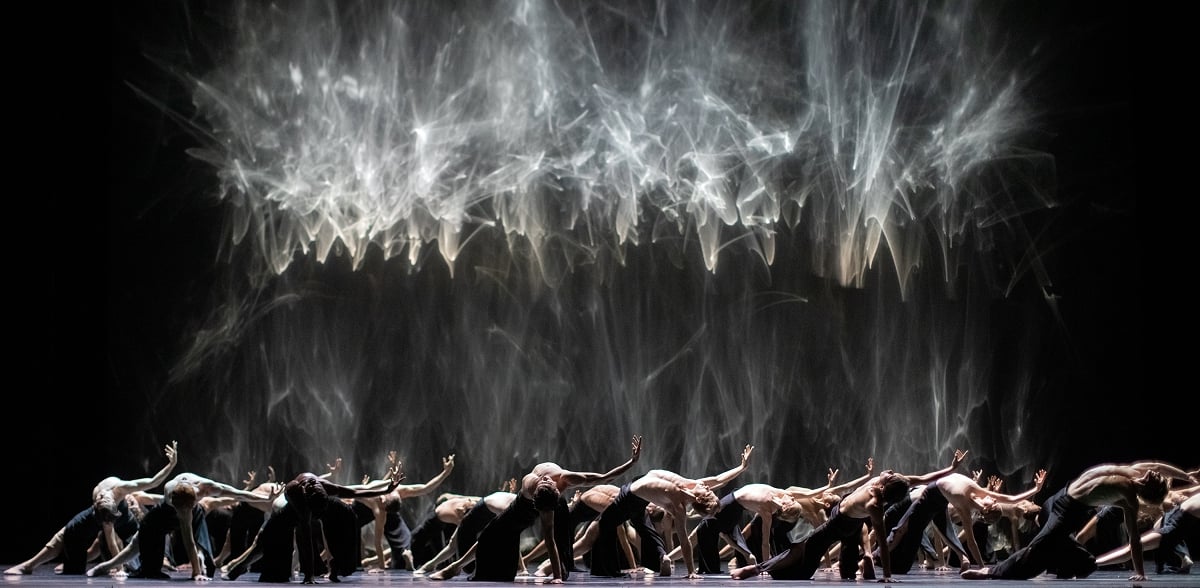
While with her own ensemble Pite develops her specific approach to contemporary dance theater full of whole-body gestures, expression, and accentuated facial expressions, with large ballet companies she lets herself be carried away by the large-format surfaces of multiple choirs, dominated by sweeping arm movements, deep, grounded positions, and a sense of constantly shifting mass that has no boundaries and transforms into a single amoebic body in which even the dancers themselves seem to lose their contours. Common to both positions is a dive into pressing cultural and purely personal themes—the refugee crisis, climate issues, authoritarian power structures, addiction, trauma and grief from loss, aggression, and escalating conflicts. The authenticity and urgency with which it presents them, as well as a certain lightness in its use of symbols and atmosphere, which, however oppressive and hopeless it may be (as in Flight Pattern or in certain moments of the first act of Body and Soul), is never descriptive, instructive, or literally activist. And perhaps that is why it has such an indiscriminate power over the audience, forcing you to watch works you have already seen several times over and over again.
When I first saw The Seasons' Canon, I had the feeling in the auditorium of the Palais Garnier that I was going to cry from the indescribable but absolute feeling that was permeating me, as my body desperately sought a way to release that inner pressure. With The Statement, I feel a tightening and a chill even when watching the video, and the fact that I see it at least once a year when I show it to my students at regular intervals does not change that. At the end of Body and Soul, on the other hand, I feel the urge to laugh out loud, but always with an awareness of the pungent irony and the darkness hidden somewhere in the background. And Flight Pattern, seen live at Covent Garden, honestly made the editor-in-chief of Taneční aktuality, Josef Bartoš, cry (and made a hole in his budget when he had to go see it again the next day).
For Crystal Pite, in her own words, the most important thing is to touch the audience, to connect with them. She doesn't need them to understand her literally, but to feel that what is happening on stage touches them in some way, resonates with them. "I am inspired by things that cannot be measured or understood. I am interested in the human soul and how we connect with each other," she says. Judging by the critical acclaim and the purely personal experiences mentioned above, she is clearly succeeding. After more than thirty years of creative practice, Crystal Pite has dozens of choreographies to her credit and, we hope, many more years ahead of her. But even if she were to "close up shop" tomorrow for whatever reason, she has made an impact on the dance world like few others.
Sources:
Kidd Pivot www.kiddpivot.org
Nederlands Dans Theatre www.ndt.nl
Sadler’s Wells www.sadlerswells.com
National Arts Centre www.nac-cna.ca
The Canadian Encyclopedia www.thecanadianencyclopedia.ca
Jennings, Luke. Crystal Pite: I’m trying to excavate the truth. The Guardian, September 22, 2013. Available at: https://www.theguardian.com/stage/2013/sep/22/crystal-pite-interview-sadlers-wells
Mackrell, Judith. Crystal Pite: In ballet, girls are less likely to be prized for being mavericks. The Guardian, May 12, 2016. Available at: https://www.theguardian.com/stage/2016/may/12/crystal-pite-girls-ballet-choreographer-prized-mavericks
Winship, Lyndsey. Crystal Pite: the dance genius who stages the impossible. The Guardian, September 18, 2019. Available at: https://www.theguardian.com/stage/2019/sep/18/crystal-pite-betroffenheit-best-dance-21st-century
Roy, Sanjoy. The unknowable is not nothing. Crystal Pite and Simon McBurney on the mysteries of Figures in Extinction. The Guardian, February 5, 2025. Available from: https://www.theguardian.com/stage/2025/feb/05/crystal-pite-simon-mcburney-figures-in-extinction