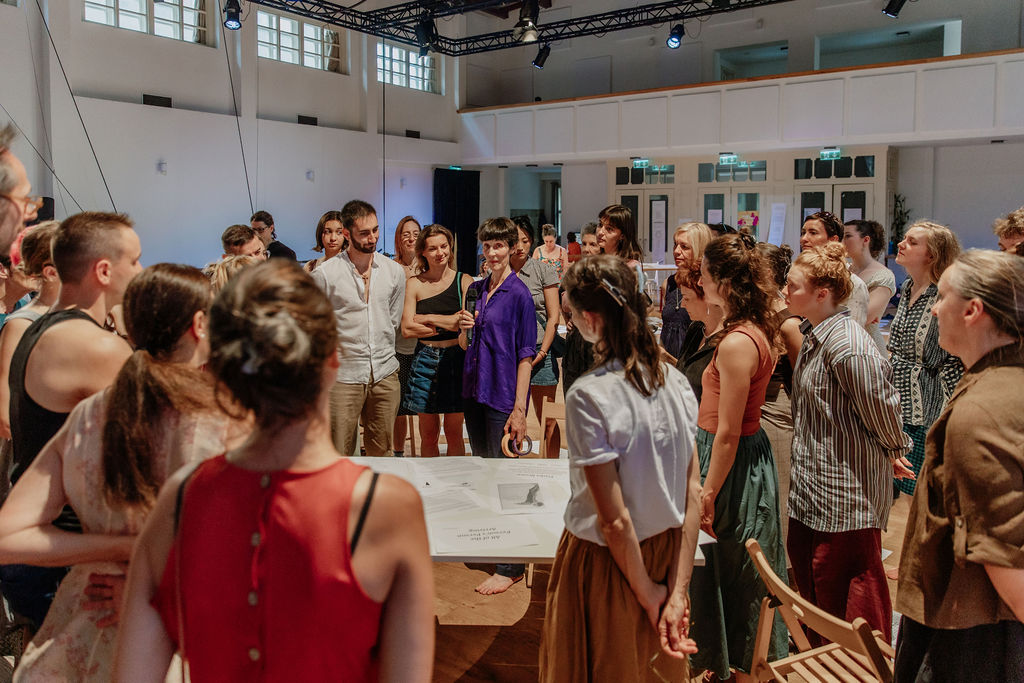
An Ambitious Gathering
The programme was structured in layers throughout the week, with two to three workshops running concurrently, bringing together in Prague several generations of key figures dedicated to dance improvisation or somatic techniques (I focus in more detail only on the events I personally attended). Icons such as Lisa Nelson and Eva Karczag are figures in the dance world directly linked to American postmodern dance of the 1970s, whilst Rosalind Crisp, Bettina Neuhaus and others have carried this legacy into European and Australian contexts, interweaving it with somatics, choreographic research and pedagogy. The programme thus drew primarily on the legacy of the later experimental, improvisational and somatic strand of postmodern dance associated with the Trisha Brown Dance Company, the journal Contact Quarterly and extensive practical research that gave rise to contact improvisation, Tuning Scores, Skinner Release and other somatic approaches. These fundamentally transformed the paradigm of dance creation, as they challenged the modernist conception of the body, the authorship of composition and dance performance, and shifted the focus towards perception, relationality, decision-making in the present moment and bodily experience.
A symposium on improvisation brought practice and theory together. Inspiring and multi-layered
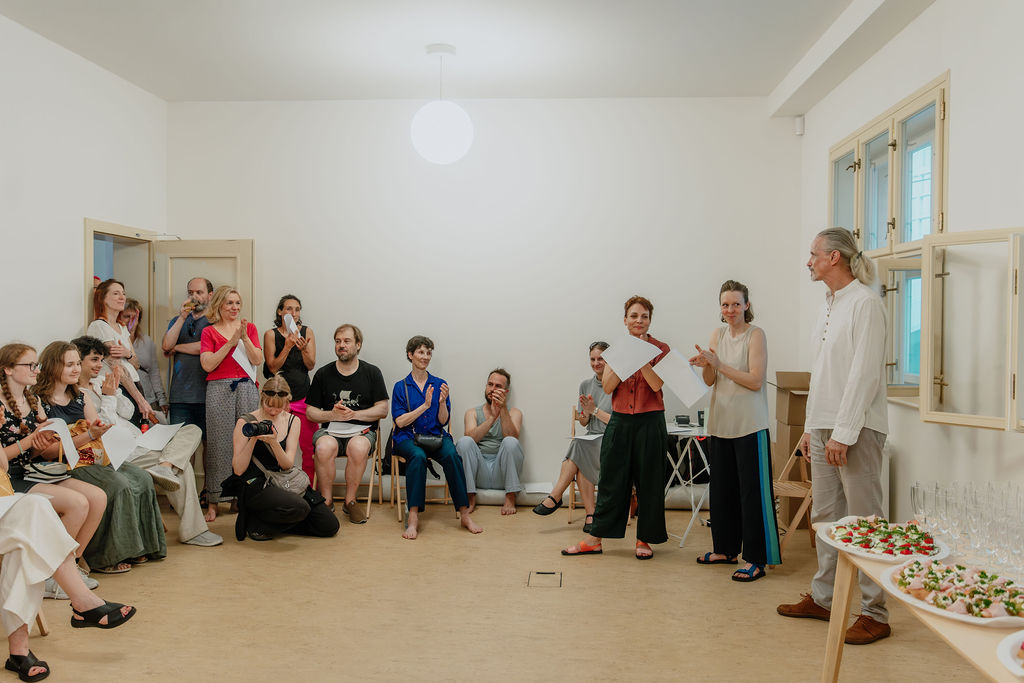
During the last hot week of June, Prague hosted a major dance event. A five-day symposium on improvisation entitled Inner Speech as a Stage Gesture in Instant Composition took place from 22 to 26 June 2026 at HAMU and at the Žižkostel Community Centre. The project, organised and spearheaded by Mish Rais, Head of the Department of Authorial Creativity and Pedagogy at DAMU, was co-produced with the Dance Department at HAMU, CreWcollective and Žižkostel. The event brought together students, teachers and theorists from several European universities; it is research-based and will result in a specialist publication.

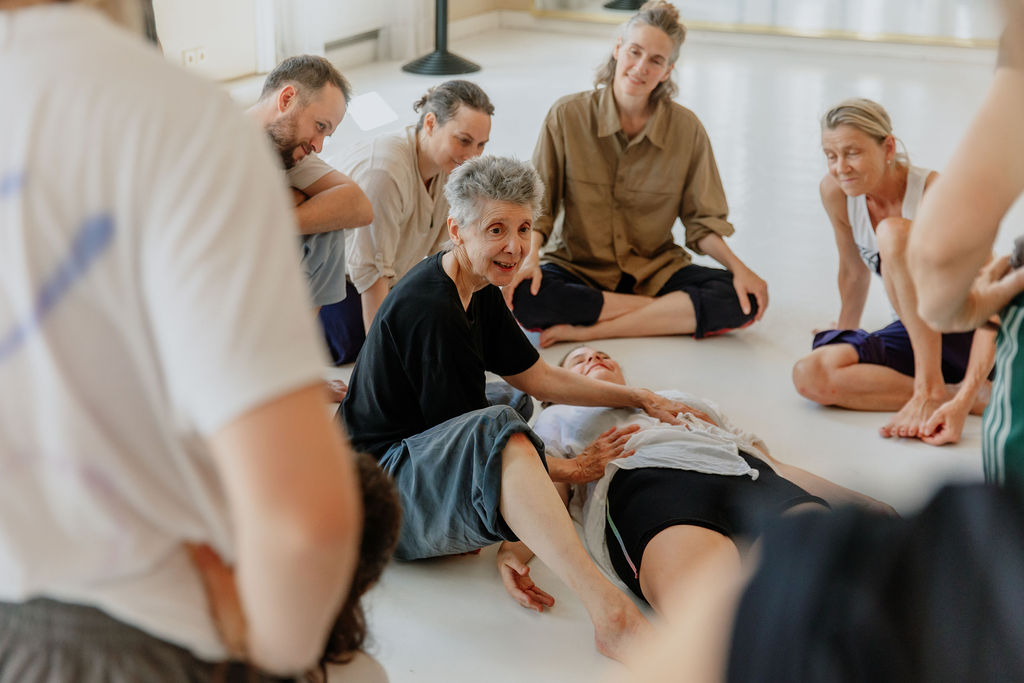
However, it was not merely a historical overview or a parade of stars. The invitation was also accepted by the younger generation of already established female artists and academics: Lizzy Le Quesne, Megan V. Nicely, Laura Navndrup Black, Susanne Martin, Professor Susanne Ravn, Paula Guzzanti, Jenny Roche and, surprisingly, a non-dancer: Professor of Theory, Epistemology and Methodology of Qualitative Research, Luca Tateo.
They contributed contemporary artistic and academic reflections on language, politics, participation, pedagogy, care, ageing, cultural psychology, and social and epistemic justice. A distinctive Central European perspective was represented by well-known figures associated with the Academy of Performing Arts in Bratislava (VŠMU): Marta Poláková and Anna Sedlačková. From the Czech scene, we should mention Mirka Eliášová, Mish Rais, Markéta Machková, Zden Brungot Svíteková, Jana Novorytová, Kateřina Dietz and Jitka Pavlišová. Poland was represented by Joanna Leśnierowska and Yuliya Dzichkouskaya, alongside Tomasz Jagusztyn-Krynicki from Sanatorium Somatyczne.
Given its scale and the presence of so many prominent figures, it was therefore an event that is almost unheard of in the Czech context. The symposium also successfully built on several years of research into improvisation and the publication Secretly Alive: Embodied Perspectives on Dance Improvisation by Mish Rais and Mirka Eliášová, and can be counted amongst significant events of a similar nature, such as New York’s Movement Research MELT held at Judson Memorial Church or the Freiburg festival onCe, which takes place biennially.
The central concept, to which the event’s title itself referred, was that of inner speech. As conceived by Mish Rais, this denoted the internal compositional and decision-making process that takes place within the performer’s body and mind during improvisation. The aim was to explore what the performer registers in the present moment, the basis on which they make decisions, how individual reactions become a composition, and what the audience might glimpse of this process.
The concept of noticing was also important. The performer acts whilst simultaneously observing their own actions. They divide their attention between performing, perceiving the situation and reflecting on what is currently emerging. However, the symposium was not a presentation of a finished theory. On the contrary, the concept of inner speech was constantly re-examined throughout the week, which I consider to be one of the greatest strengths of the entire project.
Speech without words and living history
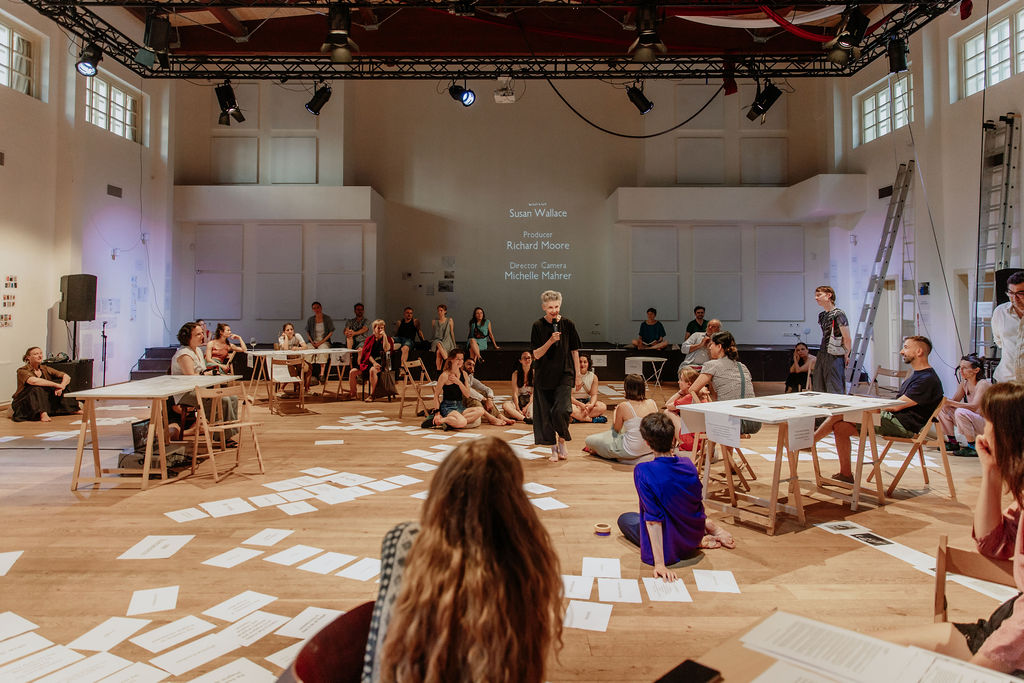
On Monday, Rosalind Crisp’s Speechless and Zden Brungot Svíteková’s Field Trip / Field-Tripping workshops took place simultaneously. In the afternoon, Markéta Machková and Mish Rais introduced the symposium’s key concepts and research questions. In the evening, Bettina Neuhaus and Eva Karczag presented their performative lecture Along the Lines at Žižkostel.
The online workshop Speechless, led by Rosalind Crisp, seemed subversive and mischievous in its title in relation to the symposium’s theme. Ultimately, however, it was a decision-making process that led to differentiation and clear articulation through movement. We worked with precise instructions, rhythm and timing, whilst being mindful of ensuring that the decision was legible in the body. In her improvisational methodology, Crisp disrupts time, seeks impulses throughout the whole body as well as in its individual parts, and keeps the composition open for as long as possible.
The most interesting task for me was the one in which we had to organise our own bodies whilst simultaneously observing how we were carrying out this organisation. I observed the way in which I moved, which enabled me to become aware of my own movement habits and encouraged my ability to disrupt them or carry them through to the extreme.
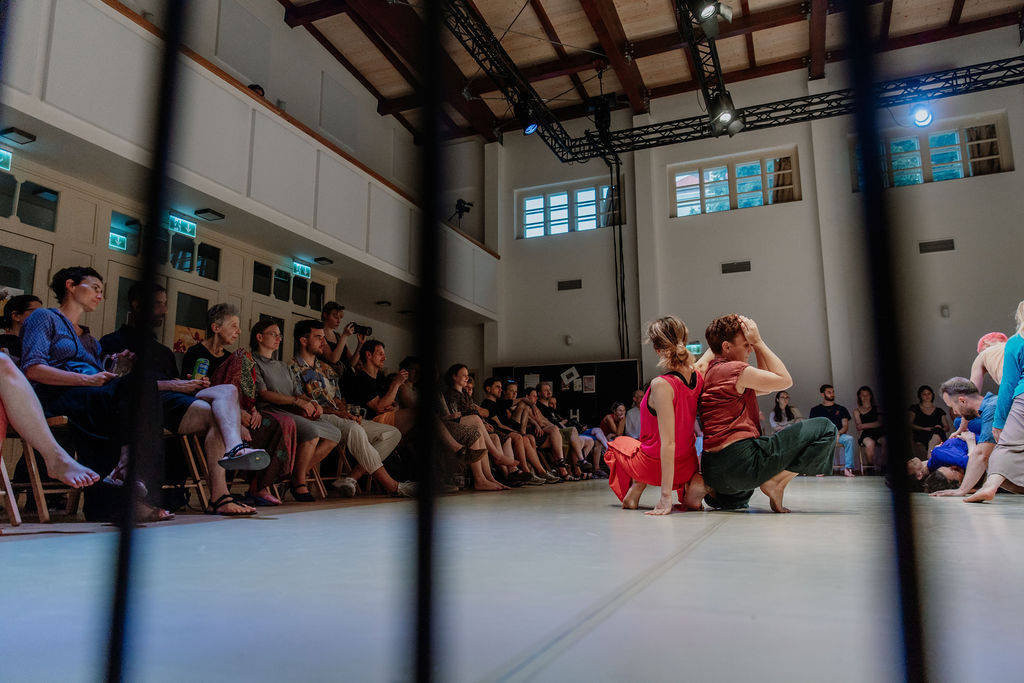
The evening performative lecture Along the Lines by Bettina Neuhaus and Eva Karczag traced the formative moments of their artistic journey, which they brought to life through the body, memory and encounters with the audience. I had already seen it some time ago, when CreWcollective first presented it. Once again, I was struck by the generous space both artists created for their own narrative and for the audience to enter into dialogue. References to American postmodern dance and the Judson Dance Theater tradition emerged. They responded to the audience’s questions not only with words, but also through movement, sound or small actions. Each question could thus open up a new situation. Both women were fascinating in the quality of their experienced bodies. A sense of detached view and freedom, as if they no longer needed to prove anything, yet combined with precise work and often surprising speed, together with physical wisdom, generosity, kindness, sarcastic humour and a critical eye, make Along The Lines a true masterpiece.
The Body, Writing and the Decision-Making Process
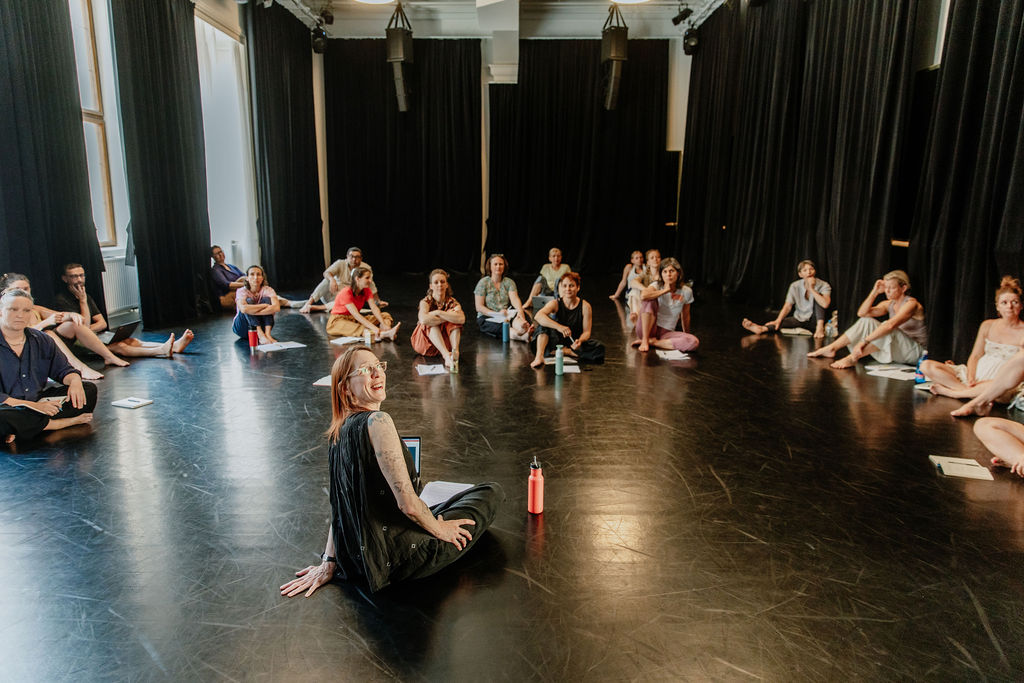
Tuesday’s programme combined practical workshops, the sharing of methods and a three-hour theoretical panel. Workshops were led by Paula Guzzanti on Writing from the Body, Susanne Martin on Improvisation as Art, Mirka Eliášová and Mish Rais on Decision-Making Process: Dancing, Observing, Writing, and the Polish Sanatorium Somatyczne on A Field of Possibility. The theoretical panel featured Laura Navndrup Black, Megan V. Nicely, Jana Novorytová, Marta Poláková, Lizzy Le Quesne, Mish Rais, Susanne Ravn, Jenny Roche and Luca Tateo.
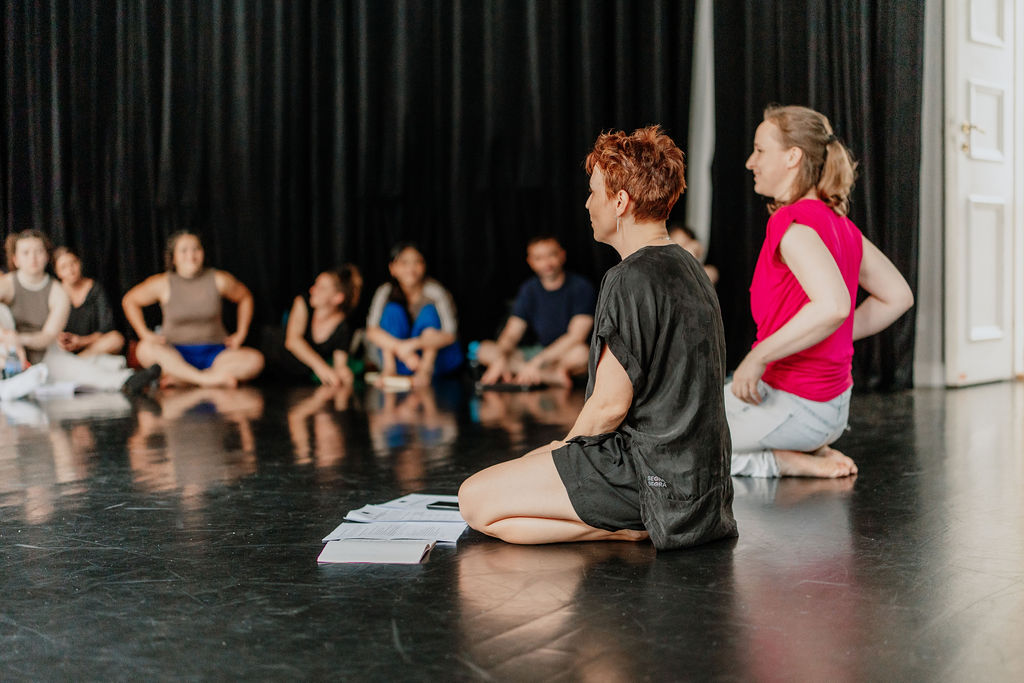
I really enjoyed Paula Guzzanti’s workshop from the University of Malta, Reflective Writing Laboratory Applied to Dance Practice. It was refreshing in that it wasn’t focused solely on the body, movement and the composition of space, but worked extensively with language and writing. It evoked a host of associations and questions within me. It demonstrated just how closely writing and bodily experience are interconnected; not only does language arise from the body, but the act of writing itself can be reflected upon anew through the body, feelings and sensory perception.
In one exercise, we repeatedly walked back and forth across the space. At one end, we recorded the journey descriptively; at the other, poetically; and we observed whether the individual journeys transformed and formed some kind of progression. The results were surprising, and a lively debate ensued about what emerges when movement, attention, experience and language begin to influence one another.
The experiment by Mirka Eliášová and Mish Rais centred on the questions: What do we actually consider to be a decision? Who makes the decision and why? What is the delay between stimulus and action, and how do we know which decision came first and which second? Mish Rais also approaches improvisation from the context of Ivan Vyskočil’s Dialogical Acting, in which a person develops a certain dialogue with themselves within an improvised situation. This is presumably the source of her interest in inner speech. At the same time, however, it was interesting that Mish herself, as well as a number of participants, questioned the very notion of inner dialogue. They questioned its verbal nature and leaned more towards bodily, situational and sensory awareness, which is not focused on a single stimulus but remains open to a broader field of relationships and shifts in the situation. It is precisely this discrepancy between the initial concept and the experience of the individual artists that may be one of the most thought-provoking outcomes of the research and the subsequent publication.
Imagination and Support
On Wednesday, workshops by Bettina Neuhaus, Moved by Imagination, and Eva Karczag, Support Is Everywhere, took place in parallel. In the evening, the Žižkostel hosted the launch of Jiří Lössl’s book Education through Conscious Movement, a performance of Sometime Now produced by CreWcollective, and a subsequent discussion.
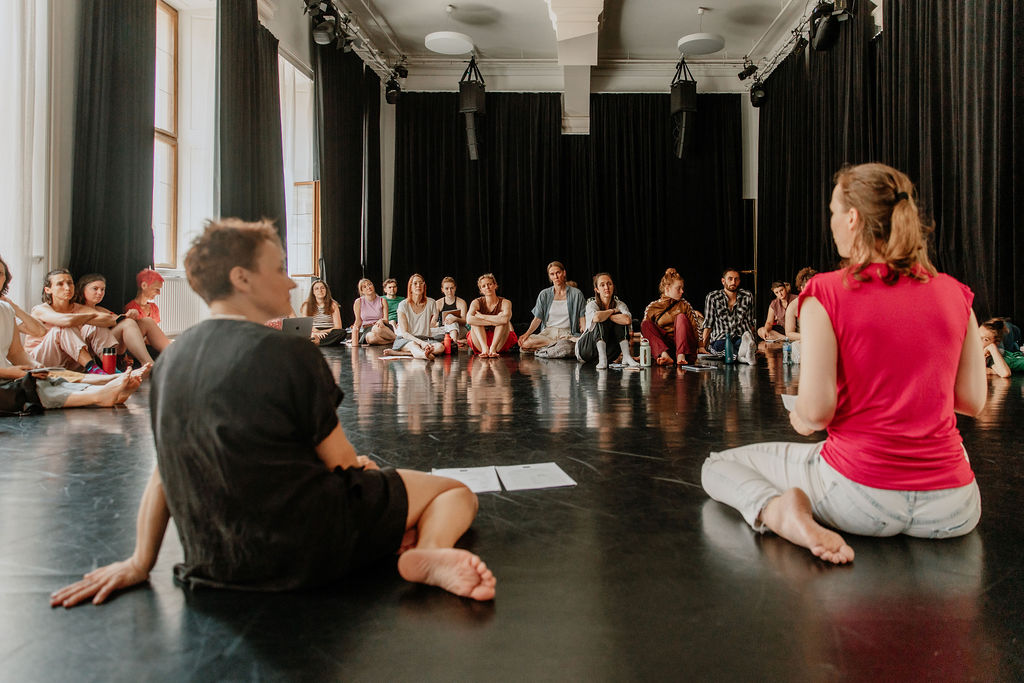
Bettina Neuhaus’s workshop was based on the Skinner Releasing Technique and on improvisation as a poetic and experimental form of dance training. The session focused on imagination, movement patterns, relaxation, readiness for movement and multidirectional body positioning. Bettina’s work is sensitive, calm, precise and clear. Nothing was superfluous, and she was perfectly attuned to the group. The individual tasks flowed seamlessly into one another, and the entire workshop had a precise build-up. I found it inspiring to observe not only the content but also the way she led the class – the tone of her voice, her choice of words, where she paused, and how precisely she timed the movements. In the Skinner Releasing Technique, the voice is not merely a neutral vehicle for instructions but helps to create the state into which the body enters. I was also struck by the word supple which is not quite the same as flexible. In dance training, flexibility often refers to a measurable range of motion or the ability to adapt to a requirement. Supple, on the other hand, implies softness and the ability to respond sensitively without force. In a broader context, flexibility is also one of the demands of the neoliberal era, in which we are expected to be constantly high-performing, adaptable and ready to react. Suppleness, by contrast, can denote a flexibility that arises from listening to the body.
Eva Karczag’s workshop Support Is Everywhere was based on the simple idea that we need not seek support solely in a fixed technique or within ourselves. It is present in the ground, in space, in the breath, in gravity, in other people and in the living world we inhabit. We explored various kinds of support both within the body and in its surroundings, so that we might move with greater confidence, both individually and together.
Once again, Eva Karczag’s calmness, clarity and the vast experience she has gained over decades of practice were evident. What she radiates cannot simply be adopted as a set of technical instructions. It is the quality of her attention, developed through long-term work with her own body, students, colleagues and somatic approaches. For me, therefore, the workshop with Eva was one of the highlights of the symposium. We focused, for example, on precise work with relaxation and the perception of internal organs, their weight, space and interrelationships. This subtle internal differentiation allowed the body to move more freely and in ways different from those we experience in everyday life.
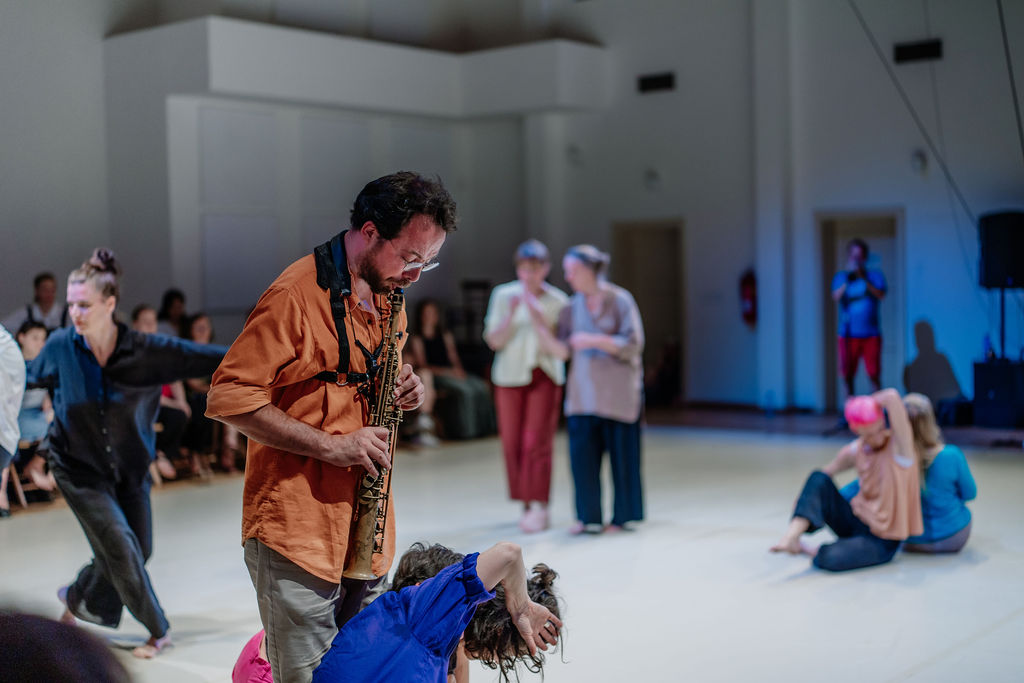
On Wednesday evening, the world premiere of Sometime Now took place at Žižkostel, in which CreWcollective, together with guests, brought together internationally renowned figures in the field of instant composition, dancers and musicians. I also took part in this event as a performer, which was my first significant opportunity to familiarise myself with instant composition as a stage practice. Sharing the stage with such prominent figures was a truly intense experience, and I realised first-hand that this is a discipline requiring long-term practice and a great deal of sensitivity. I also had the opportunity to lead a discussion about what we saw as audience members and what we experienced as performers. A recording of the entire event will be used for further reflection and to prepare a publication.

Five hours with Lisa Nelson
Following a networking brunch curated by Filip Novák, a student from the Department of Authorial Creativity and Pedagogy, came one of the highlights of the whole week: Lisa Nelson’s five-hour online workshop Tuning Scores Laboratory: Composition, Communication, and the Sense of Imagination. The workshop focused on the senses – sight, touch and hearing – that is, on how the body organises sensory perception and attention, and how each of us perceives movement and attributes meaning to it. Lisa Nelson offered simple questions and explorations that can be practised almost anywhere. She demonstrated how our ways of perceiving determine what we notice, where our desire is directed, and how we engage with our environment. Sight played a major role, as did the distinction between when we see and when we do not. We explored how our gaze guides movement, how our perception of the body changes with our eyes open and closed, and what happens when we cannot rely on our sight. We learnt short dances and tried to pass them on unsighted or synchronise using hearing, touch, rhythm or simply the sense of another person’s presence. For me, and I think for the others too, it was an almost magical experience. It wasn’t just about exercising the senses, but about the question of how a shared dance comes about in the first place: what we need to see, what we can sense, and how we can communicate through movement without having everything under visual control.
Language, Body and Politics
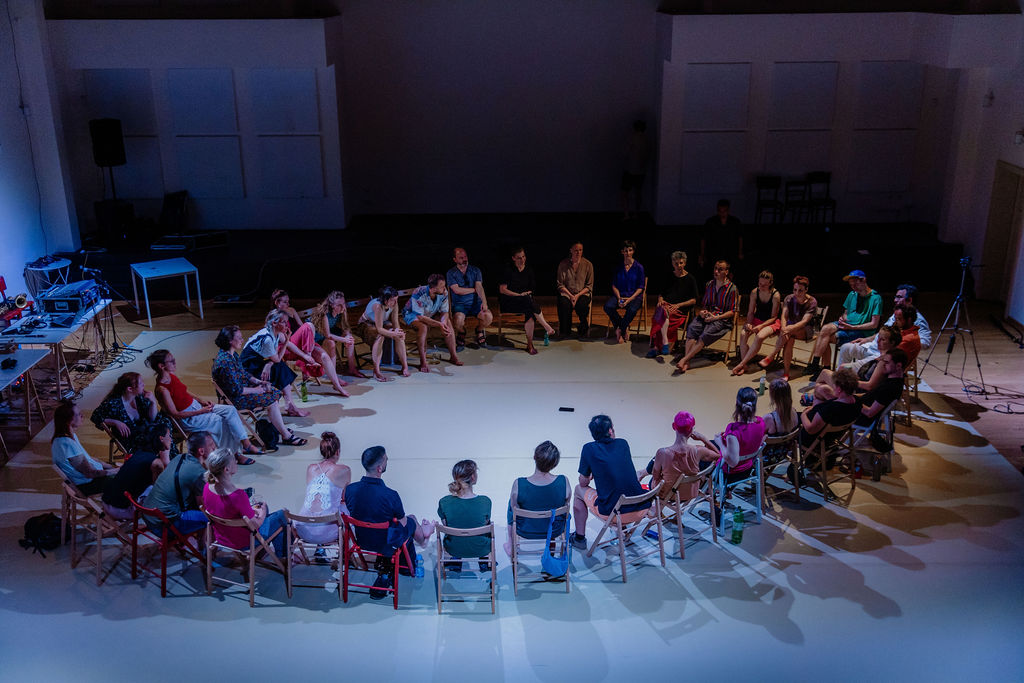
On Friday, three parallel practical sessions took place: Megan V. Nicely presented Micromovements in Dance and Language, Anna Sedlačková Form and Flow and Kateřina Dietz Tensegrity as a Principle for Organising the Body. The symposium concluded with a joint focus group reflection led by Mish Rais and Lizzy Le Quesne, which also laid the groundwork for a planned book publication.
Alongside Paula Guzzanti’s workshop, it was in Megan V. Nicely’s session that the genuine interconnection between language and movement was explored most profoundly. For Megan, however, this was not merely a formal or somatic experiment. Even in her lecture, the relationship between the body and language was situated within a political and theoretical framework, drawing on an understanding of postmodern dance, butoh and poststructuralist thinking. For her, language was not a neutral tool used merely to describe an already existing reality, but something that helps determine what we can talk about, what we are able to recognise and name, and how we perceive ourselves, others and their bodies. It thereby influences what we consider normal, acceptable or even possible. The workshop explored the question of how these structures become embedded in the body and movement before we are consciously aware of them. Language can categorise and restrict movement, but it can also open up new possibilities for action and perception. It was here that it became most evident that decision-making in dance is not merely an individual internal process, but is also influenced by social discourse and power.
Little interest from the dance community
Throughout the symposium, I appreciated that Mish Rais did not remain confined to her own initial concept. Cultural psychologist Luca Tateo also provided a striking counterpoint, criticising inner speech as a concept that is perhaps too egocentric and Western. He contrasted the notion of decision-making within an isolated individual with an ecological or ecocentric conception of the human being as a creature interconnected with other people, the environment and the wider living world. In doing so, he also referred to indigenous cultures and other ways of relating to movement, community and the environment, thereby highlighting the concept’s cultural and epistemological limitations. These diverse influences created a space in which the concept could transform and perhaps even partially disintegrate. This very fact confirmed that it was a genuine research situation.
Although the symposium itself was a closed event, I found it all the more surprising that, despite fairly extensive promotion, the Prague dance scene showed little interest in the two public performances of Along the Lines and Sometime Now.
They formed an important part of the programme and offered the chance to engage both with the historical context of postmodern dance and with the prominent figures who are developing this practice. I had already noticed a similar disparity with DANCETOPIE symposium. An exceptional programme is being put together in Prague, bringing in figures and practices that you would otherwise have to travel abroad to see, and yet a large part of the local scene remains on the sidelines. Why isn’t there much greater interest in an opportunity that is literally right under our noses? This question should be asked not only by individual artists, but also by experts, institutions and the media, who all play a part in determining what receives support within the Czech dance scene and what enters the public awarness.
Written at the symposium ‘Inner Speech as a Stage Gesture in Instant Composition’, 22–26 June 2026.