
The annual showcase of selected dance performances… took place. And that in itself is a success. While the specter of government cuts loomed quite predictably over its 32nd edition, it is haunted far more by its own past at present. It should end on a high note—and if it continues, then with dignity. The question is therefore obvious: should the showcase scale back, or should the organizers deliver the coup de grâce?
Keep it alive, or put it out of its misery? The Czech Dance Platform has bounced back — the question is, for how long
The 32nd edition of the Czech Dance Platform went ahead despite cuts in state subsidies. A revamped marketing identity, a more interesting selection of submitted works, and perhaps even the selection criteria themselves have benefited the platform compared to last year. While audiences didn’t feel the financial cuts, the presented program still raises questions. How important and necessary is its role today? On what criteria does the Czech Dance Platform deserve to survive?

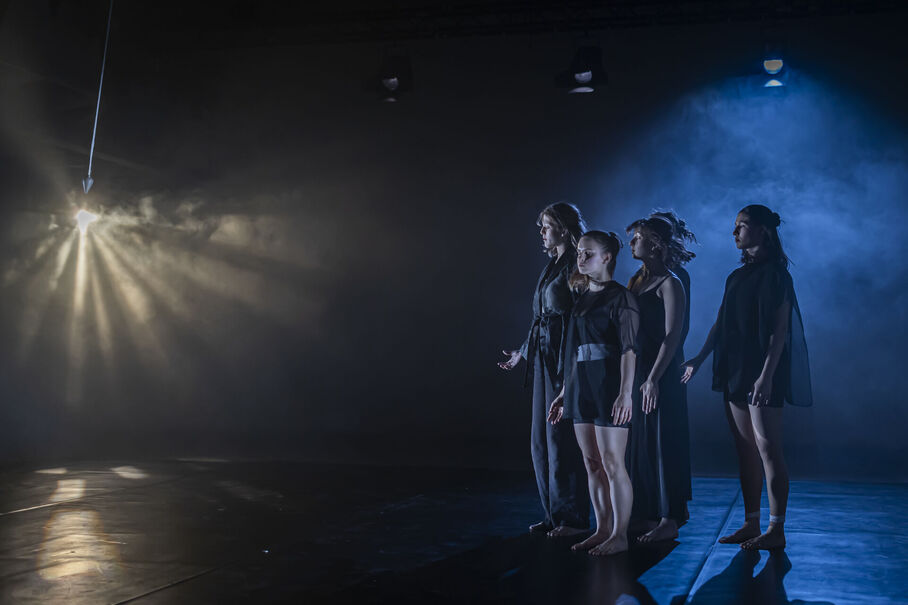
Czech Dance Platform. Frekvence. Photo: Andrea Jirovcova.
Advertisement
How to cut into the living… art
The statements by the current Minister of Culture, Ota Klempíř, are painful in any case. However, independent troupes and events can only be defended with the argument “quality over quantity,” or “representation of society as a whole over self-serving visibility.” Otherwise, the debate is doomed from the start to a swift, but certainly not painless, end.
In the case of the Czech Dance Platform, I face a dilemma. What this festival—with its long-standing tradition and once-pivotal significance for the Czech dance scene—symbolizes is irreplaceable. And given the currently recurring history of political pressure on the cultural scene—as if cut out of an authoritarian regime—it is all the more worth preserving on principle.
However, its current state leads many, for various reasons, to consider euthanasia. Keeping it alive “merely” on principle does not seem like a prudent path. On the other hand, based on what criteria would the ČTP in particular deserve to survive?
The paradox is that one cannot say that this year’s audience—at least compared to last year’s edition—particularly felt the impact of the new budget cuts. Regarding the selection of individual performances, one could even argue the exact opposite: a lot of independent music, dance, physical theater, and new circus for very little public funding. Logistically (especially regarding the packed schedule, which was at times programmatically lacking), there is room for improvement. Nevertheless, the adjustment of the marketing identity, a more interesting selection of submitted works, and perhaps even the selection criteria themselves have benefited the platform compared to last year.
This is not a fundamental change to the brand, but rather a clarification of what ČTP itself wants and what it is capable of delivering. In other words, what is promised—or rather, offered—to the audience. On the one hand, it would make no sense to repeat what has already been said; experience from last year shows how a small change in the fundamentals can achieve a significant effect and efficiency (an example being the organization of transfers between venues, resulting from a realistic approach to the schedule).
On the other hand, the fact that this year’s professional and informal networking sessions took place without the physical presence of all three jurors—whose votes determined the participation or non-participation of individuals and ensembles—is particularly unfortunate. And it sets a poor precedent for the future.
I also cannot fathom the decision to start the event on Thursday evening and end it on Saturday. A wasted weekend and, for domestic visitors, a “dead” Friday is an unfortunate choice that is, at the same time, easily solvable. For example, cramming the performances and artist meet-and-greets into a single day—even if they overlapped—would not only prevent dead spots in the program and logistical hassles but would also indirectly elevate the overall quality by raising the bar for the selection of individual performances.
Not that there isn’t anything to discuss in the meantime. After all, live art should be about debate, meeting live artists, sharing, and constructive criticism.
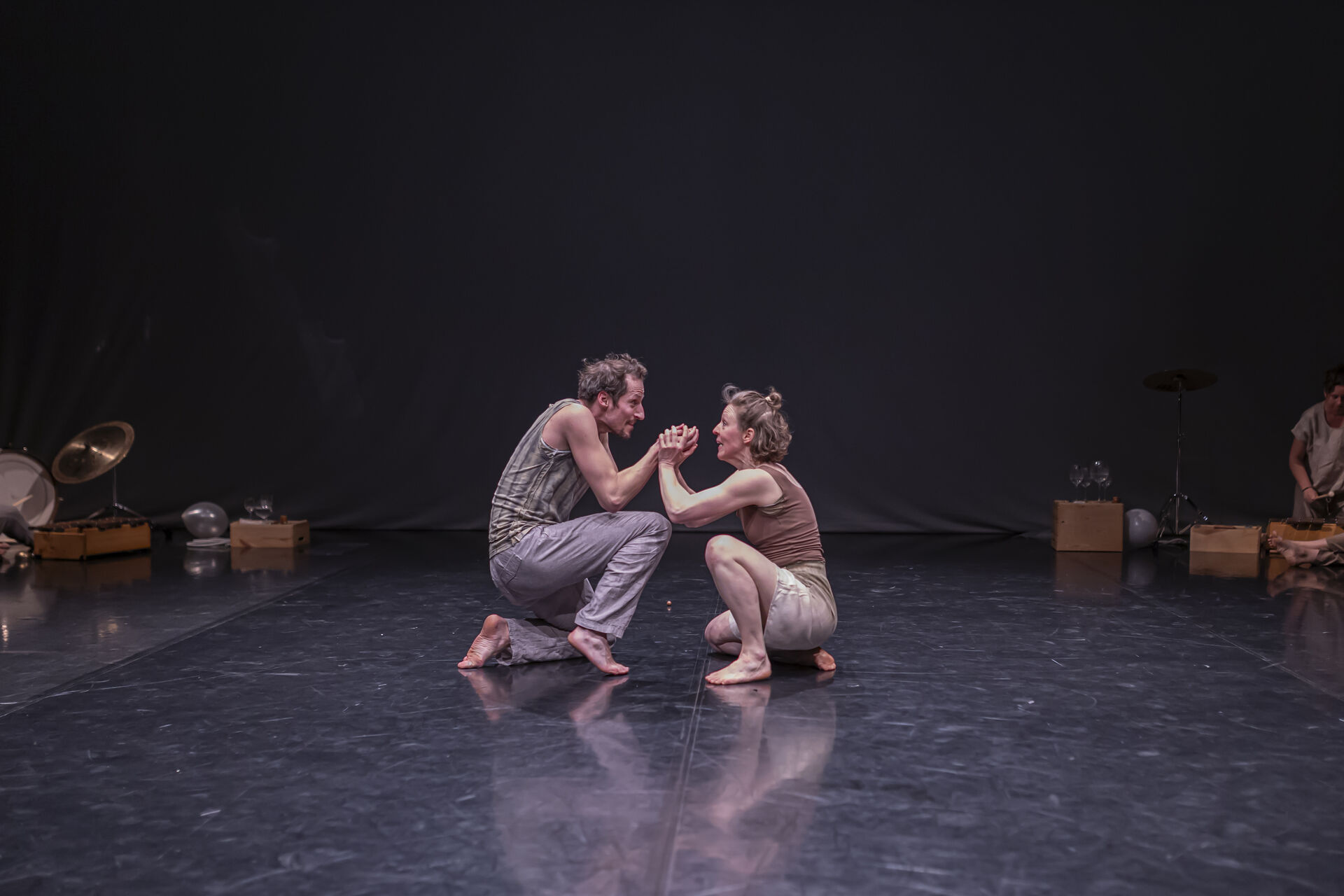
Personally, however, a series of “highlights” in a mini-festival format makes far more sense to me than a drawn-out event where, given the downtime between performances, the “networking” feels a bit like a chore (at least for visitors from outside Prague or the Czech Republic). This is especially true for an event whose credo is, above all, to bring the community together. It would be an intense experience, but all the more powerful for it.
Despite the aforementioned changes for the better, this year’s edition still fell short in terms of quality. The opening performance this year was the intoxicating, unrestrained, and euphoric Rapture by 23 Poems and Enya Belak. A very good, strategic move to start with: young, fresh, and at the same time distinctive.
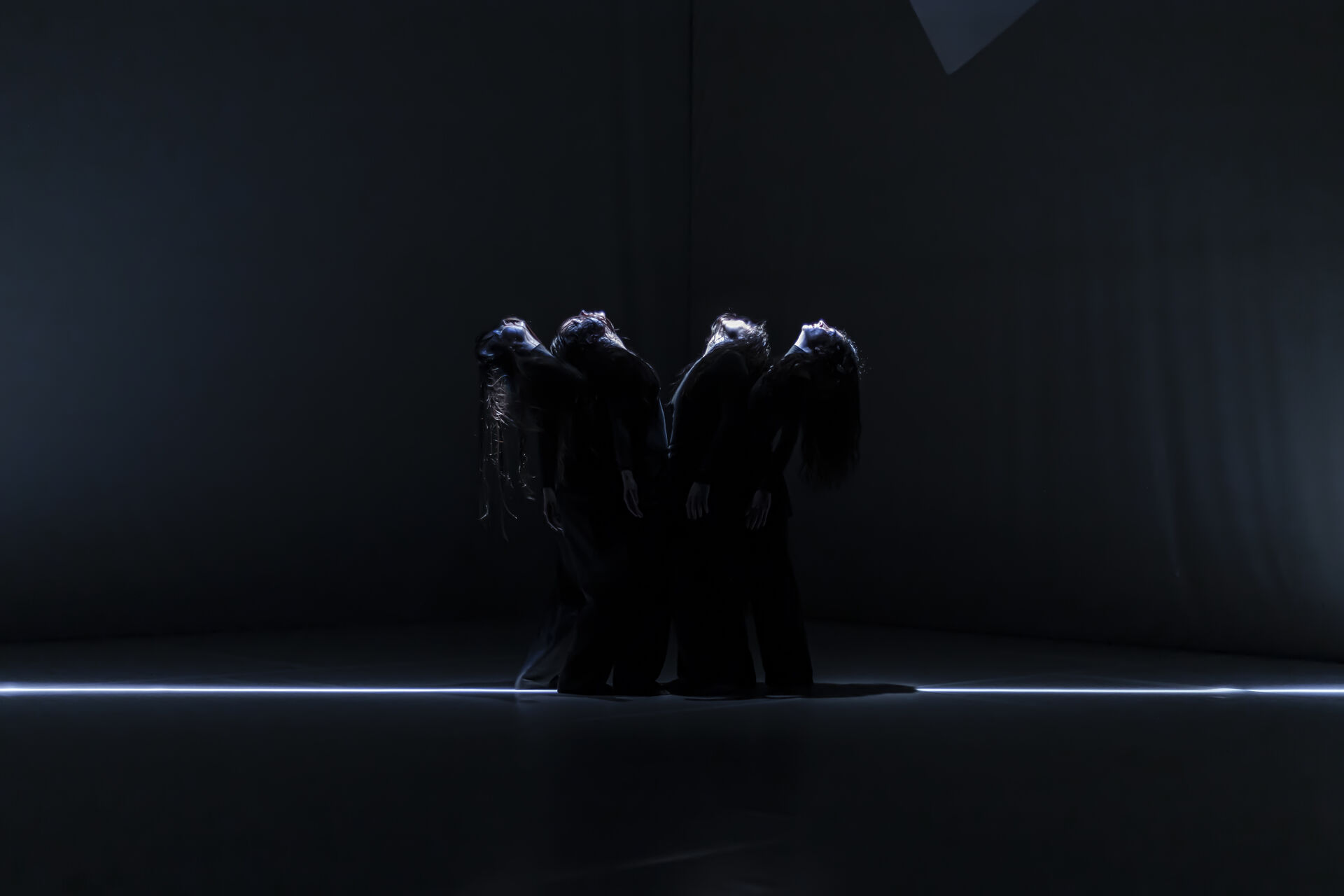
In contrast, The Swind by Alina Tskhovrebova and Daria Koval turned out to be a much less justified presentation. Completely without music, accompanied only by the sounds of bare feet, flowing hair, and rustling pants, their pas de trois was an eyesore. Minimalism is one thing; lack of thought is another. With a not entirely uninteresting concept of adopting (movement) identity and (choreographic) patterns, the production aimed at younger audiences. And perhaps it would have been a success. A promising work in progress, perhaps. But a runtime of less than half an hour as the evening highlight of the second day? I can’t make sense of that.
It would have made more sense to present Stále stejný příběh instead—a multi-genre project by the Eli a kol. ensemble, Mirka Eliášová, and the BERG Orchestra, which was the first stop on the third and final day. A charming, imaginative, and above all playful panopticon about nature, the beauty of flora and fauna, and the—albeit unintended—destruction wrought by human hands immediately won the hearts of audiences young and old.
Friday afternoon belonged to a trio of chamber performances by young dance talent, current and former students of Czech dance schools.
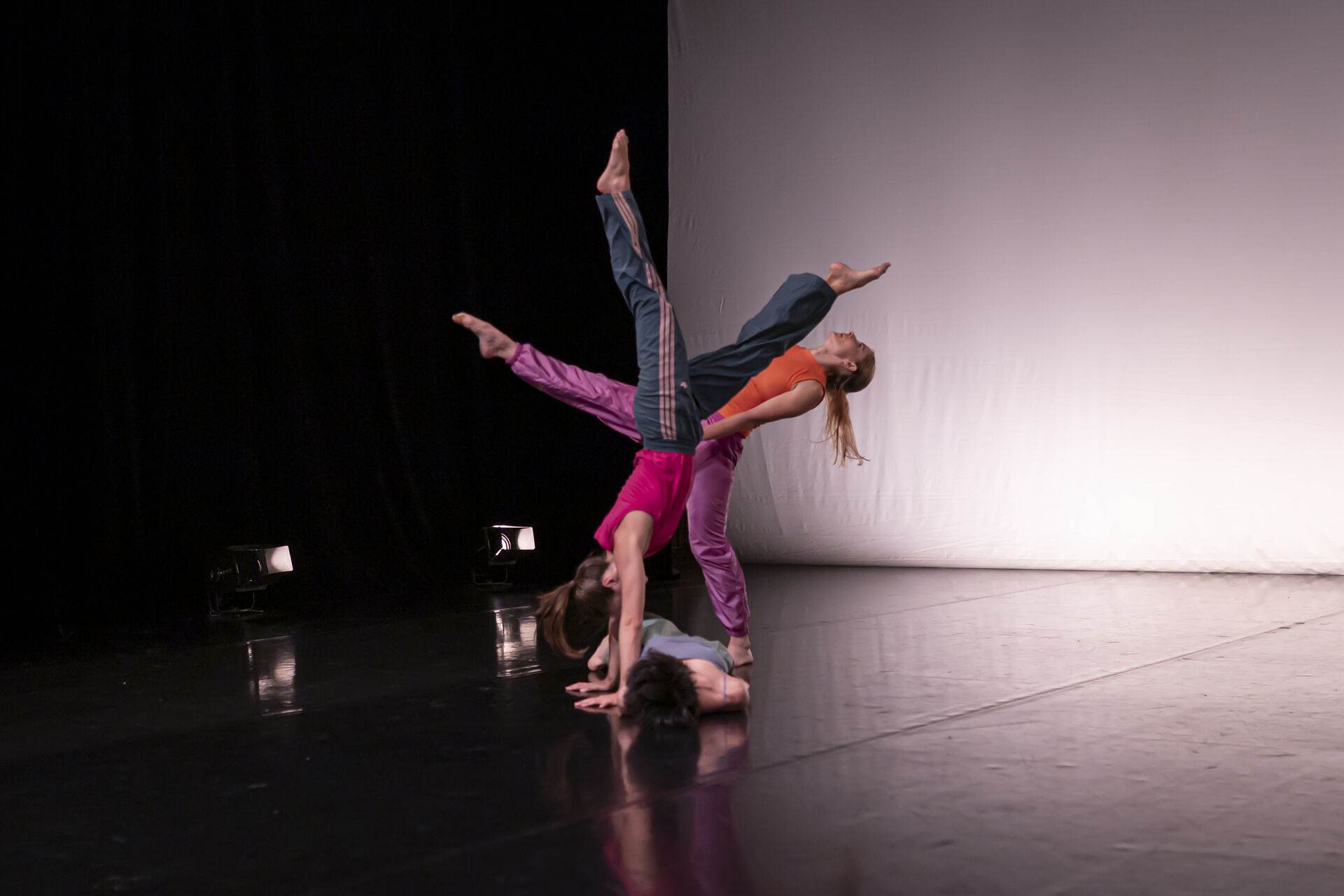
JAMU graduate Daniela Hanelová, with her just-the-right-amount-of-theatrical solo Cadavre Exquis, offered a view of dance and choreography as a potentially surrealistic form of unexpected harmonies, playful contrasts, and clever references to pantomime. The contemplative, soulful Lontano by Adéla Kaválková, a graduate of the Duncan Centre Conservatory, then provided a necessary contrast to Hanelová’s precise fragmentation through its emotional depth, sincerity of expression, and overall delicacy.
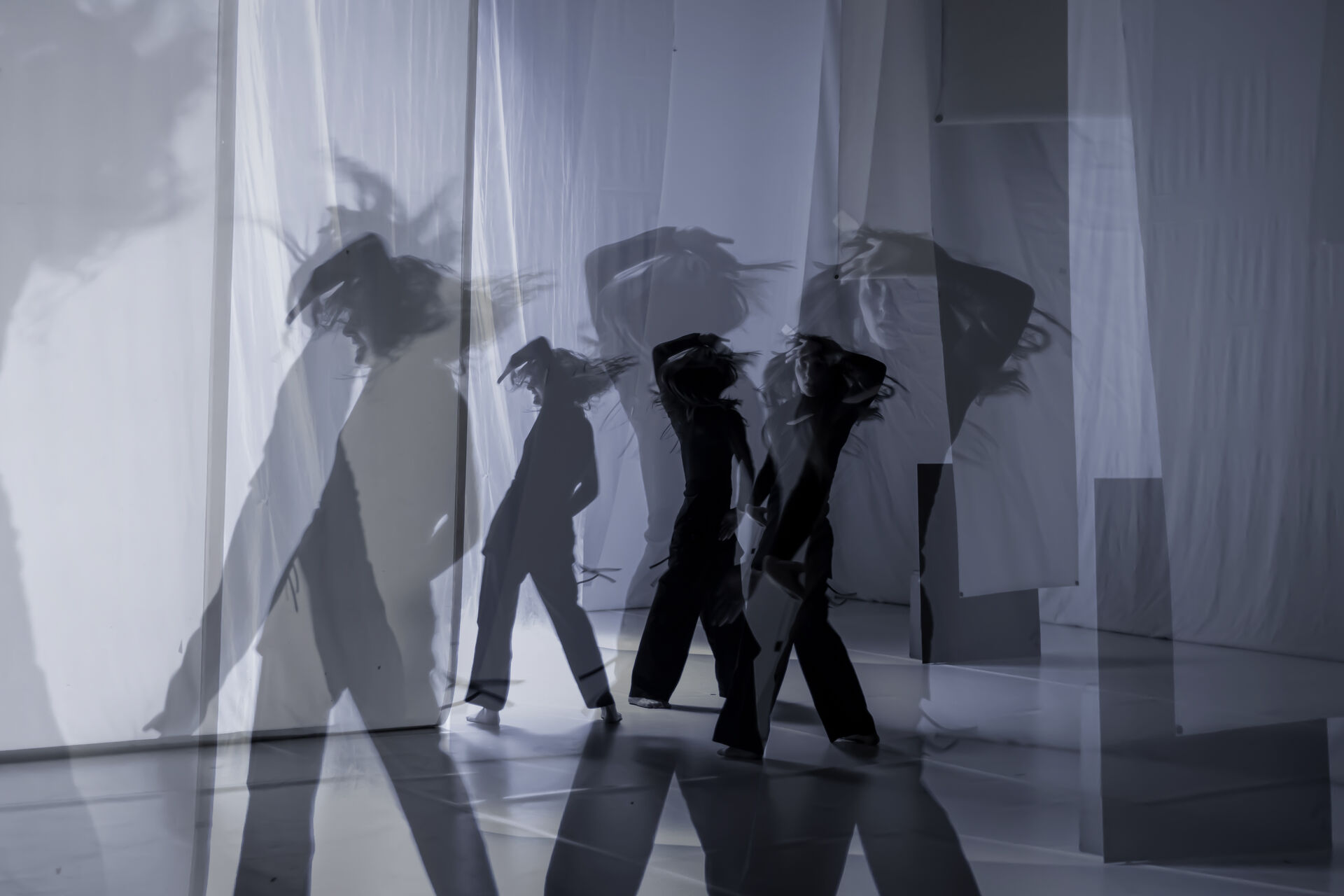
The final group piece, Echoes of Fragments by Anna Kubalíková (also from the Duncan Centre), drew on the best of both previous choreographies. On one hand, a black-and-white interplay of sharp, distinct silhouettes set to the fast tempo of a techno-style track; on the other, spontaneous compositions and fleeting connections brimming with unforced emotion. Chance dance encounters in top form and in the best light (incidentally, a pretty good subtitle for a new dance festival).
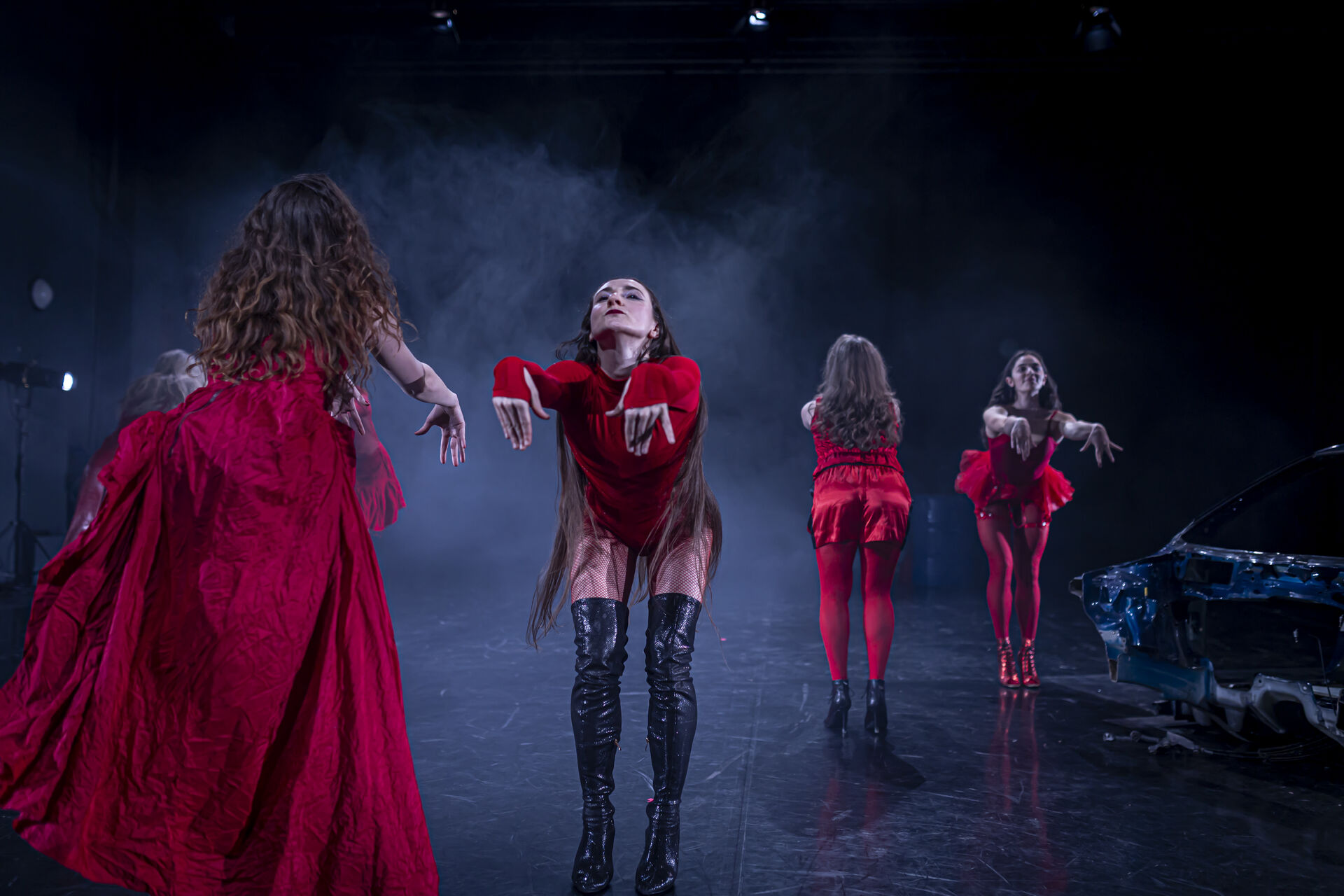
Lysistrata Reloaded revived both the ancient past and the audience’s attention
Following Frekvence, an environmental-social experiment by Alžběta Tichá at DOX, Saturday evening was dominated by the punchy, awkward, and above all unobtrusively topical Lysistrata Reloaded by Kateřina Jonášová.
At the PONEC theater, a collective of performers from the PiNKBUS platform and graduates of dance and acting schools made their debut. Their creative home is Venuše ve Švehlovce, where the faded glory of peeling walls and rounded vaults directly invites epic themes. Nor did this one-time “relocation” in any way detract from the production’s appeal.
Aristophanes’ ancient tragedy of quiet strength, transformed into revolutionary ideas, was, in its new, sexy tragicomic guise, unquestionably the highlight of this year’s ČTP and, in fact, an apt symbol of the idea of building, uniting, and enriching communities.
For what kind of society is one that does not accept all its members without exception? As the increasingly frequently quoted poet Oto Klempíř would say: “The world is full of mean old men.” Of course, who says it is precisely them who should be listened to, Mr. Minister?
Written from the Czech Dance Platform event, April 16–18, 2026, Prague.