Looking Back to Move Forward
Outside the independent scene, Berliner Festspiele’s fourth annual Performing Arts Season ran from October to January, offering audiences the chance to encounter large-scale productions by established artists. It concluded in January with French performer and choreographer François Chaignaud’s Último Helecho, an Argentinian and Peruvian folklore-inspired work that premiered at last year’s Impulstanz before heading to Geneva, Paris, and the Biennale de Lyon.
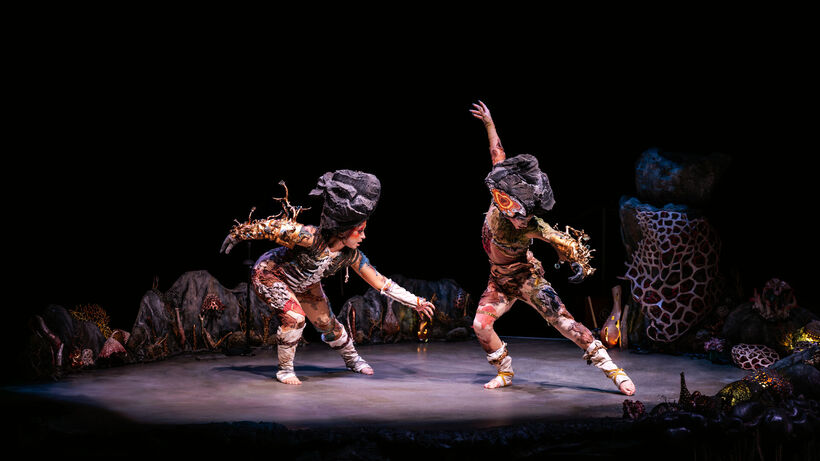
Atop and around a monumental, jutting rockface, held up by ornate yet seemingly crumbling sculpted columns, co-performers and creators Chaignaud and Argentine singer-songwriter Nadia Larcher (with musical and stage direction by Nina Laisné) dance together in a courtly fashion and serenade each other in Spanish. They are accompanied by a troupe of musicians whose brassy melodies oscillate between the mournful and the celebratory.
.jpg)
Wearing bald caps, external spine-like sculptures, and skin-tight tapestry bodysuits in deep, mossy greens, Chaignaud and Larcher’s appearance is at once ancient and otherworldly. Like fossilised creatures returning to life, they knock their bones into skippy, folkloric footwork from past lives, with Chaignaud particularly impressive in his hot-footed stamps and leg flicks. The combination of the archaic and the avant-garde raises intriguing questions: what have we lost? What might we reignite by unearthing it? Is looking backwards the way forwards?
Retrospection has been a recurring theme in Berlin’s dance programming, with many tried-and-tested works appearing on the city’s stages in 2026’s first quarter. Anne Teresa De Keersmaeker’s expansive solo The Goldberg Variations, created five years ago, was performed at Berlin’s HAU1 for the first time. (Its German premiere at Berliner Festspiele was cancelled in 2021 due to COVID restrictions.)
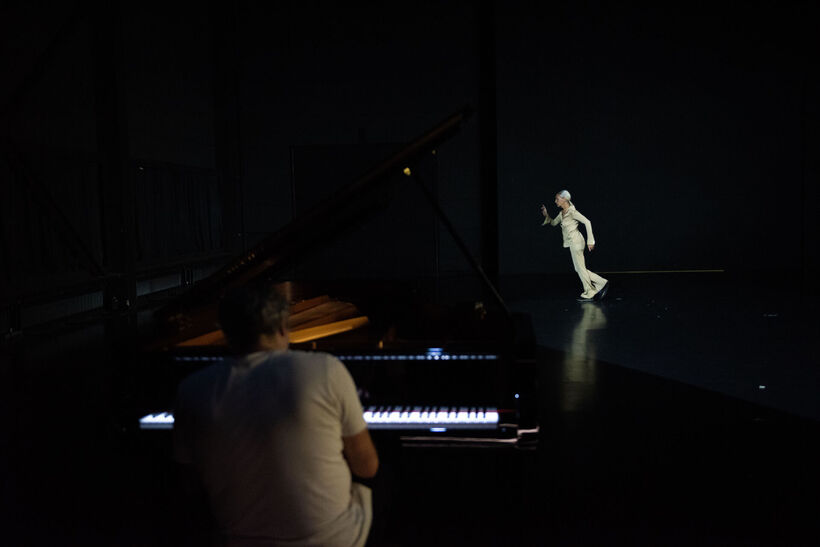
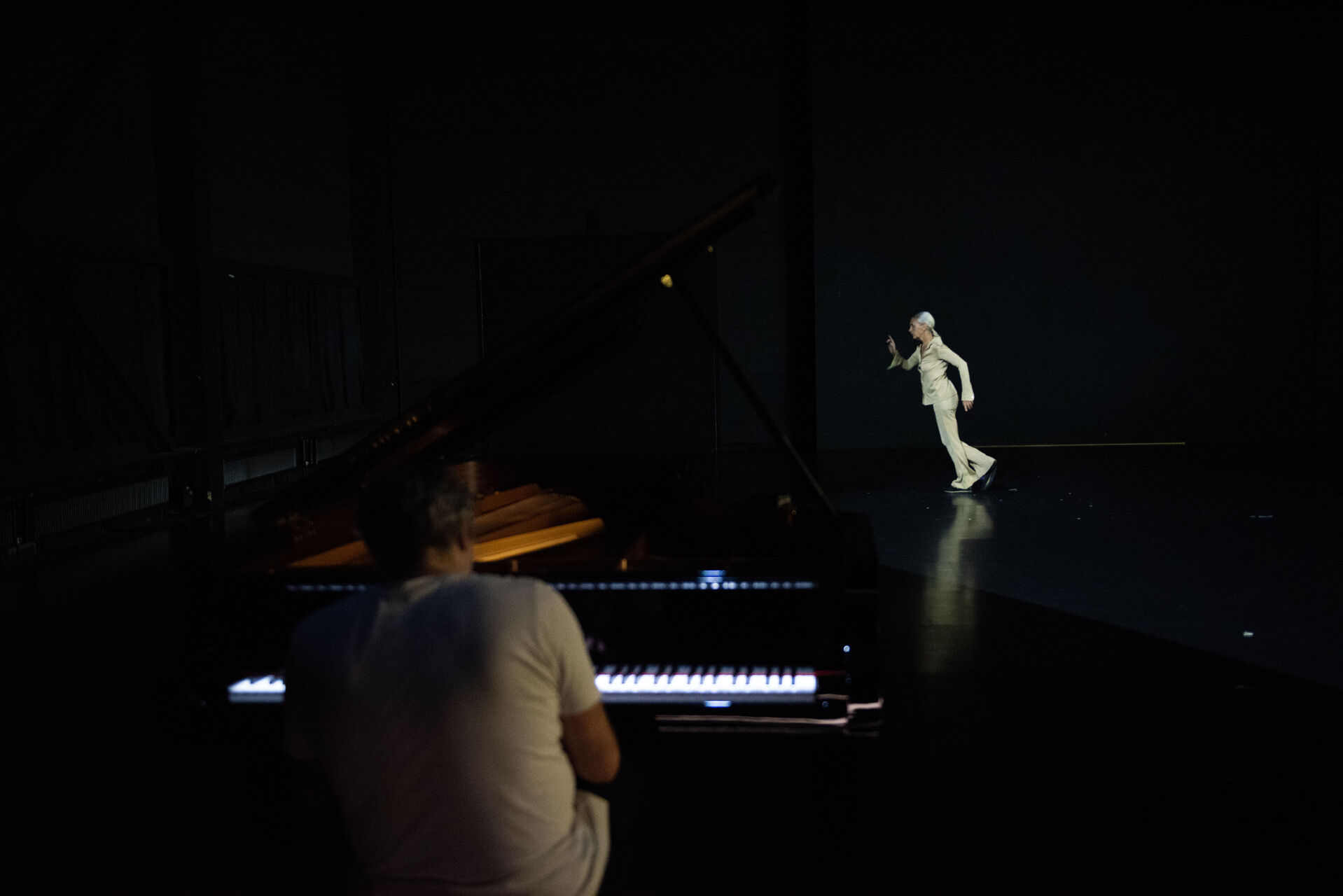
Accompanied by the calm, rippling tones of onstage pianist Alain Franco performing Bach’s titular score, the Belgian postmodern dance pioneer navigates the softly illuminated space, arms outstretched like compass needles, legs swinging like pendulums, her torso twisting like a corkscrew. The sharpness of De Keersmaeker’s exhales and jittery changes of direction frame her movement as serious, earnest work, underscoring her decades-long devotion to craft. Yet moments of hopscotchy skips, cheeky bounces, and irreverent poses cut through this rigor, reminding us De Keersmaeker’s practice is borne of not only precision but playfulness. That she continues to perform at 65 is unusual; that she remains utterly captivating is undeniable.
De Keersmaeker was not the only sexagenarian onstage in Berlin at the start of 2026. Sasha Waltz, who is based in the city and co-founded two of its most important dance venues, also returned to performing for the first time in many years, in the premiere of her work for the time being at Radialsystem. Inspired by Mary Starks Whitehouse—an American dance therapy pioneer—principles of Authentic Movement, the seven strong cast including Waltz watch each other as they are seemingly struck by a divine energy, throwing their arms in the air and welcoming currents of energy into their bodies.
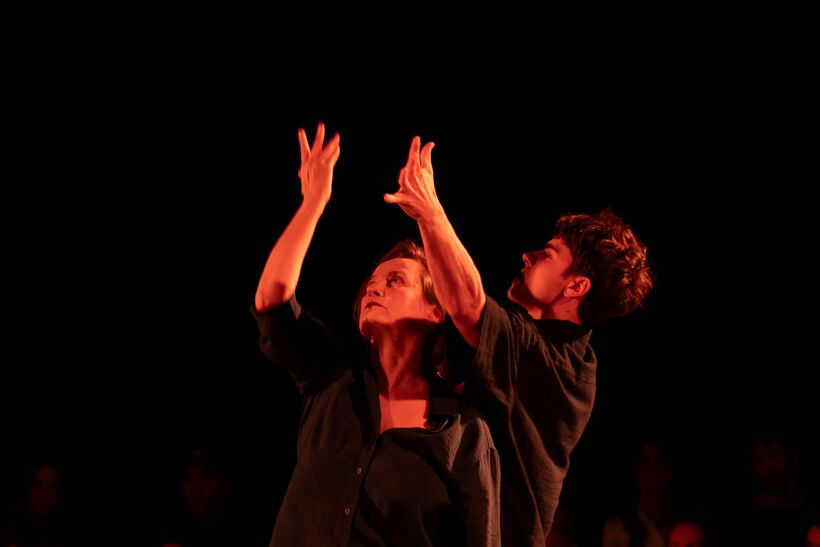
The intensity builds until they move as a single organism, surging across the space and melting their bodies into one another, closed eyes forcing them to sense physically rather than visually. While captivating, at times it feels more stressed and eerie than therapeutic; Waltz’s amplified, deadpan voice delivers poetic phrases that layer over desperate reaches, tumbles, and pained (or orgasmic) screams to create an anxiety-inducing atmosphere. The way Waltz enters and exits the throng of bodies to deliver her monologues also establishes a contradictory hierarchy in the piece, placing her in a position of power within what is framed as a democratic, collective experience.
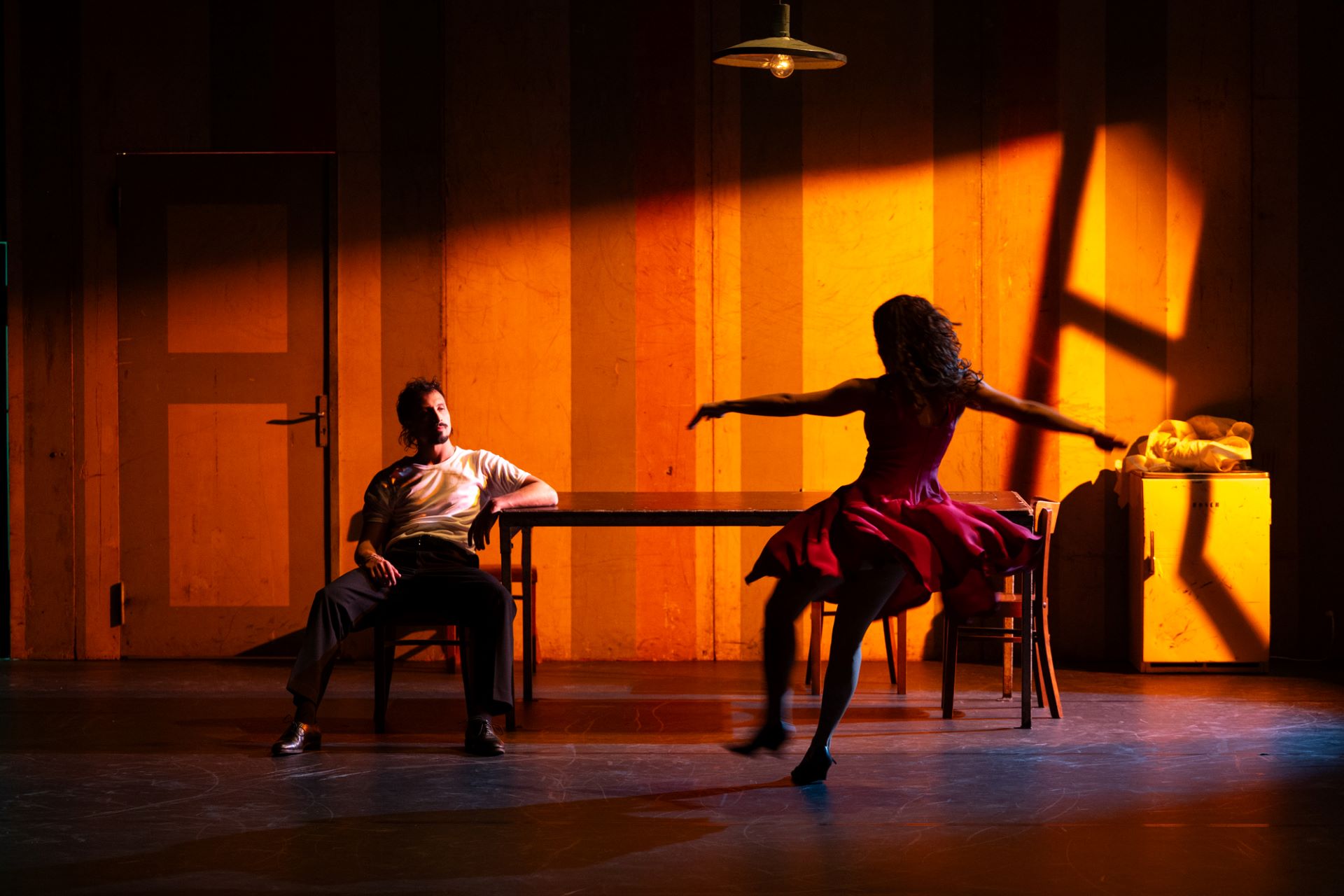
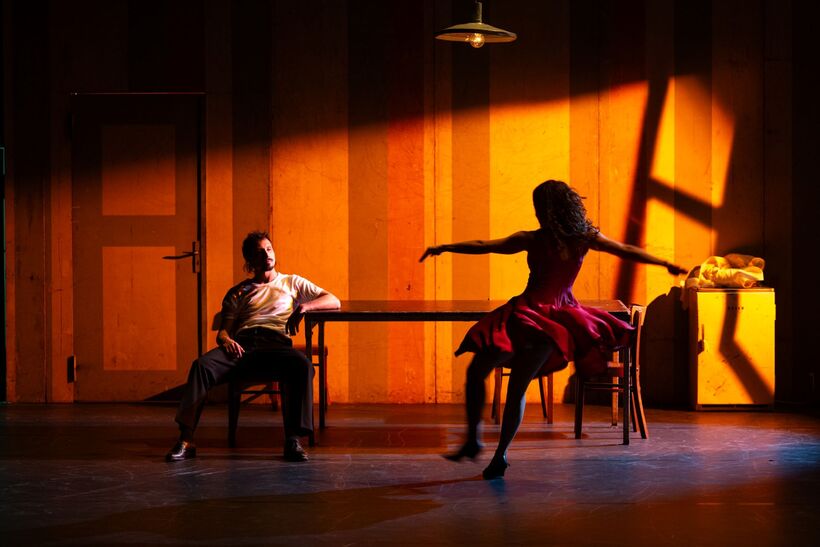
This new work sits in stark contrast with Travelogue I—Twenty to eight, one of Waltz’s seminal pieces from 1993 that was restaged a week earlier. Set within a domestic interior, Travelouge I has the feel of an absurdist sitcom, its humour deriving from characters appearing and disappearing behind slamming doors, and from exaggerated, often intensely repeated actions.
While described as a “timeless” audience favourite on the Radialsystem's website, there are elements that haven’t aged well—particularly a scene that uses Argentine tango to depict domestic violence. A moustachioed man in a white vest throws his red-dressed partner onto a table, thrusting his pelvis towards her, while she flinches and recoils from kicks and grabs. Not only does it raise questions about the necessity of depicting violence against women on stage—the scene seeming to exist purely for dramatic effect rather than broader comment—but also about doing so by employing cultural stereotypes, in this case reductive notions of Latin machismo.
Retrospection That Raises Questions
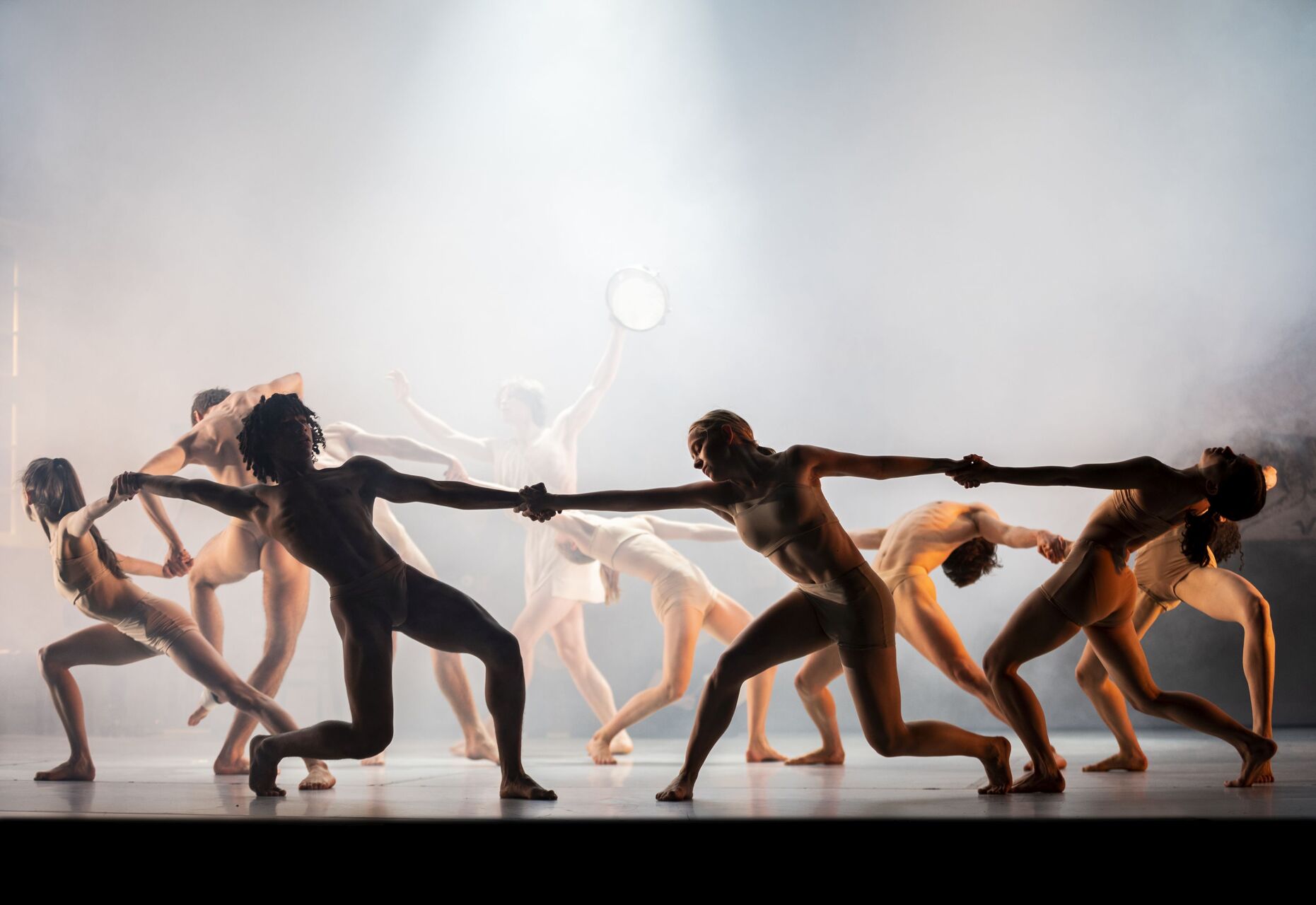
A work doesn’t need to be created 30 years ago to feature scenes that give pause. Former Hamburg Ballet director John Neumeier proves just that with Die Unsichtbaren, his recent work for the Bundesjugendballett. Premiered in 2022 but staged in Berlin for the first time this year, the work strives for profundity, aiming to tell the stories of the “invisible” choreographers who became victims of National Socialism, from Greta Palucca to Harold Kreuzberg.
The young dancers are endlessly impressive, alternating seamlessly between classical ballet steps and expressionist dance–inspired contractions, releases, and floorwork. Yet the work’s hyper realistic style and frequent use of earnest narration makes it feel like a saccharine Disney-style retelling of German dance history. Rudolf von Laban emerging from a cloud of smoke to a Middle Eastern score, wearing a white robe like the Jesus of dance, is particularly cartoonish. Scenes in which dancers march onstage in Hitler Youth costumes, semaphoring their arms while others drift like ghosts in striped concentration camp uniforms, also feel heavy-handed.
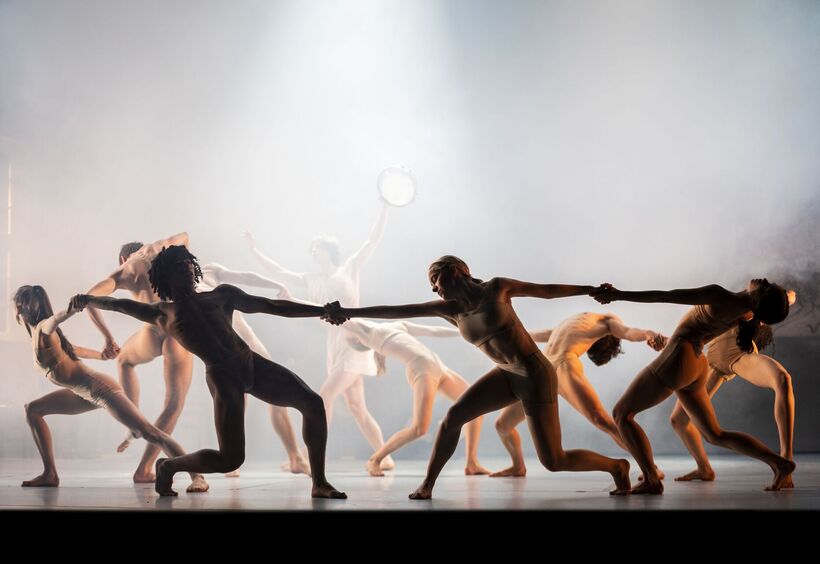
The theatre is the place for exploring difficult topics, yet presenting them in a literal, pantomimic fashion can produce disconcerting effects. One of the most nuanced and thoughtful parts of the Die Unsichtbaren is a staged trial of Mary Wigman and her supposed complicity in National Socialism, raising questions about how we can judge figures from the past who didn’t have the benefit of hindsight. But the fact this is succeeded by the entire cast executing a joyful, commercial-style routine to Bohemian Rhapsody—the only transition being a statement that Wigman died in 1975, the same year Neumeier arrived in Hamburg—feels farcical given the gravity Die Unsichtbaren aims to achieve. By the end, when the cast enters the auditorium to recite a list of names of forgotten artists, this writer is left with tonal whiplash.
Art Under Pressure
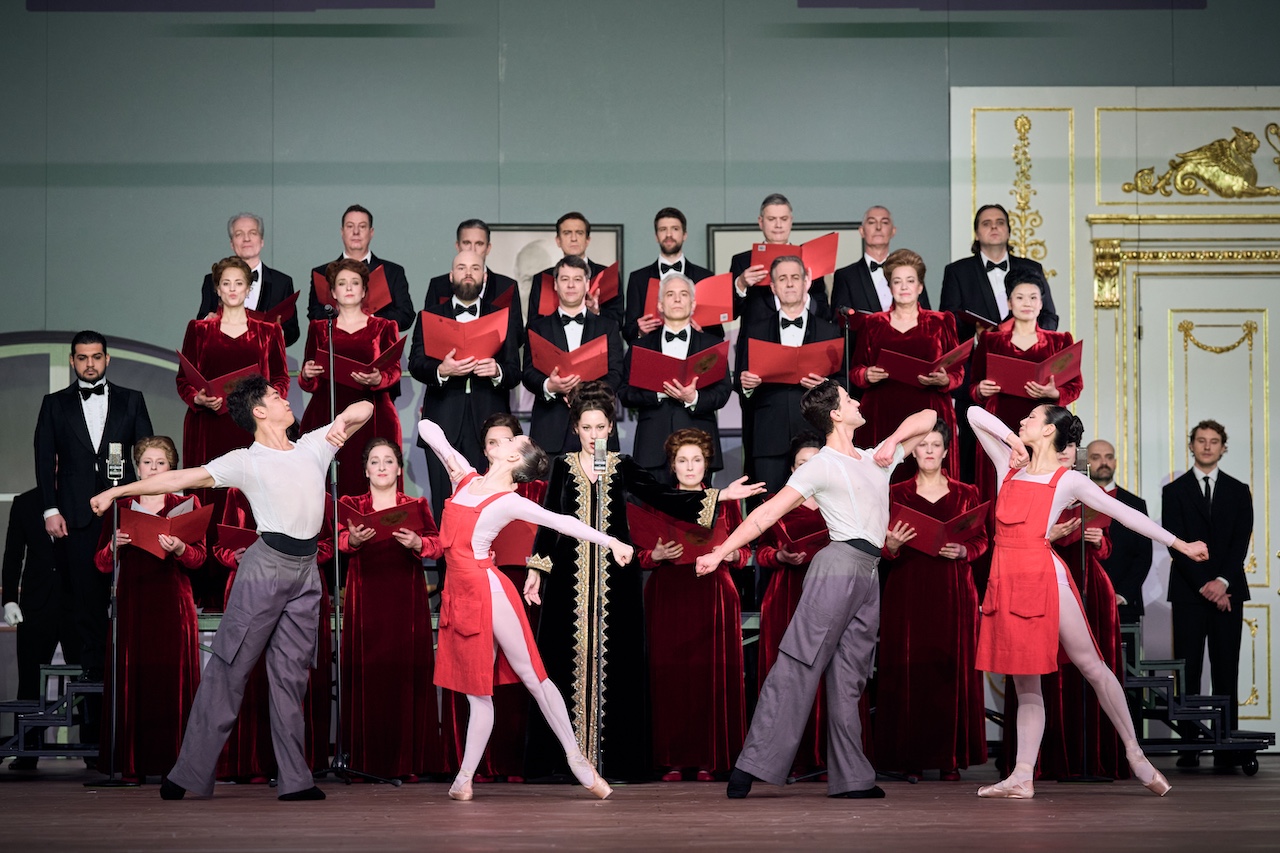
The subject of exile was handled more effectively in Nureyev, performed at Deutsche Oper by Staatsballett Berlin. Following the life, loves and defection from the Soviet Union of the titular ballet star Rudolf Nureyev (danced by David Soares), the work was originally created by director Kirill Serebrennikov (who himself fled Russia for France and Germany in 2022) and choreographer Yuri Possokhov at the Bolshoi Theatre in 2017. After being banned from the company’s repertoire in 2023 following the tightening of anti-LGBTQ+ laws in the country, its revival in Germany marks the first time the work has been performed outside of Russia.
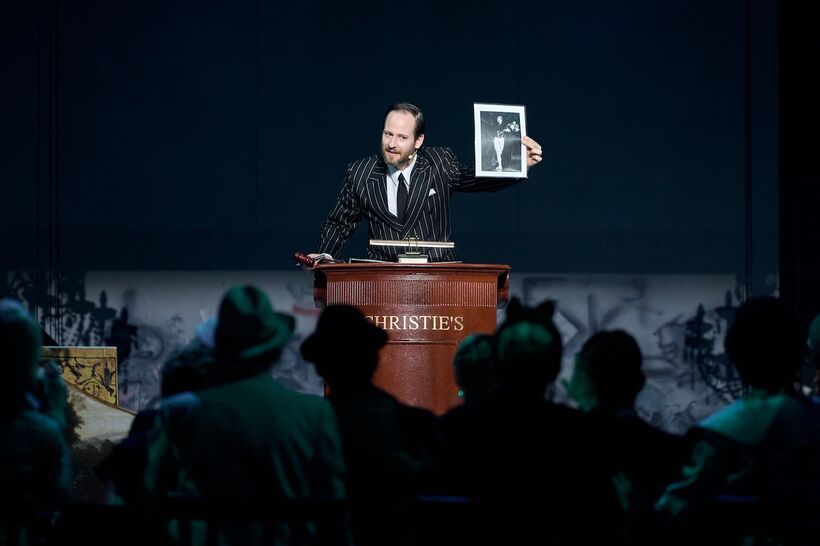
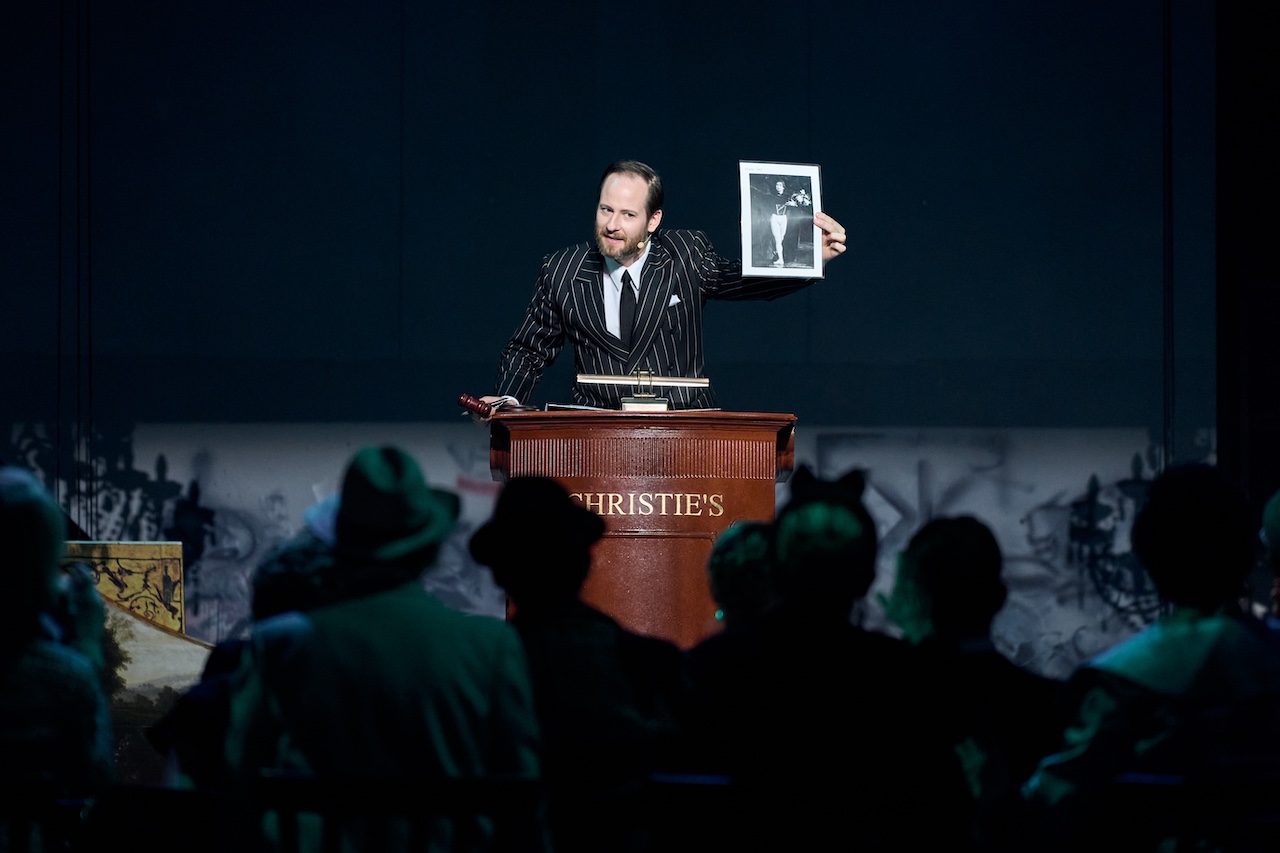
Beyond the contextual weight surrounding its European premiere—cultural TV channel Arte was present to film the opening night—Nureyev stands as an engaging ballet in its own right. Framed around an auction of the ballet star’s possessions after his death, Serebrennikov and Possokhov use each “lot” as an entry point into a period in Nureyev’s life. It’s a clever device that allows the work to melt seamlessly between scenes without being encumbered by the need to recount every detail of the dancer’s biography.
The success of said scenes are less to do with Nureyev himself than the depiction of the broader conditions of the era he inhabited. The sale of a school practice shirt, for example, transports us to his days as a student at the Vaganova Academy in 1950’s Moscow. Here, a shoal of pastel pink–clad dancers sweep across the stage to a swelling score, combining classical technique with playful hip rolls and sassy hand flourishes. Their youthful vigour contrasts with the foreboding, shifting portraits of the Tsar, Lenin, and Stalin lining the back wall of the set, a subtle but clear reminder of the instability under which art must exist. As Nureyev flees and his classmates settle into sequences of more regimented choreography to a choir singing a patriotic anthem, the influence politics can exert on artistic practice becomes uncomfortably evident.
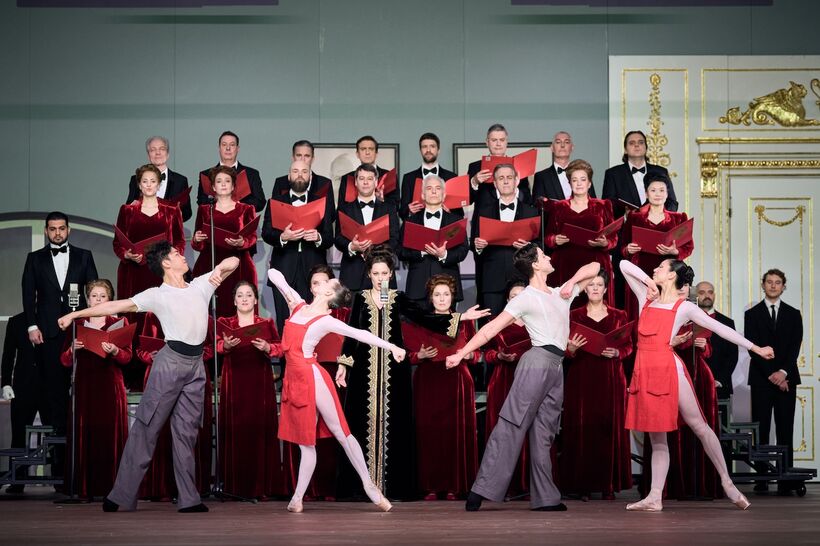
Subsequent scenes range from Nureyev arriving in Paris to meeting his future lover, Danish ballet dancer Eric Bruhn, portrayed by Martin ten Koretenaar. The latter results in a gorgeous duet between the two male leads, closely mirroring each other at a ballet barre before embracing and pursuing one another in snaking pathways across the stage by way of low, luscious jumping sequences.
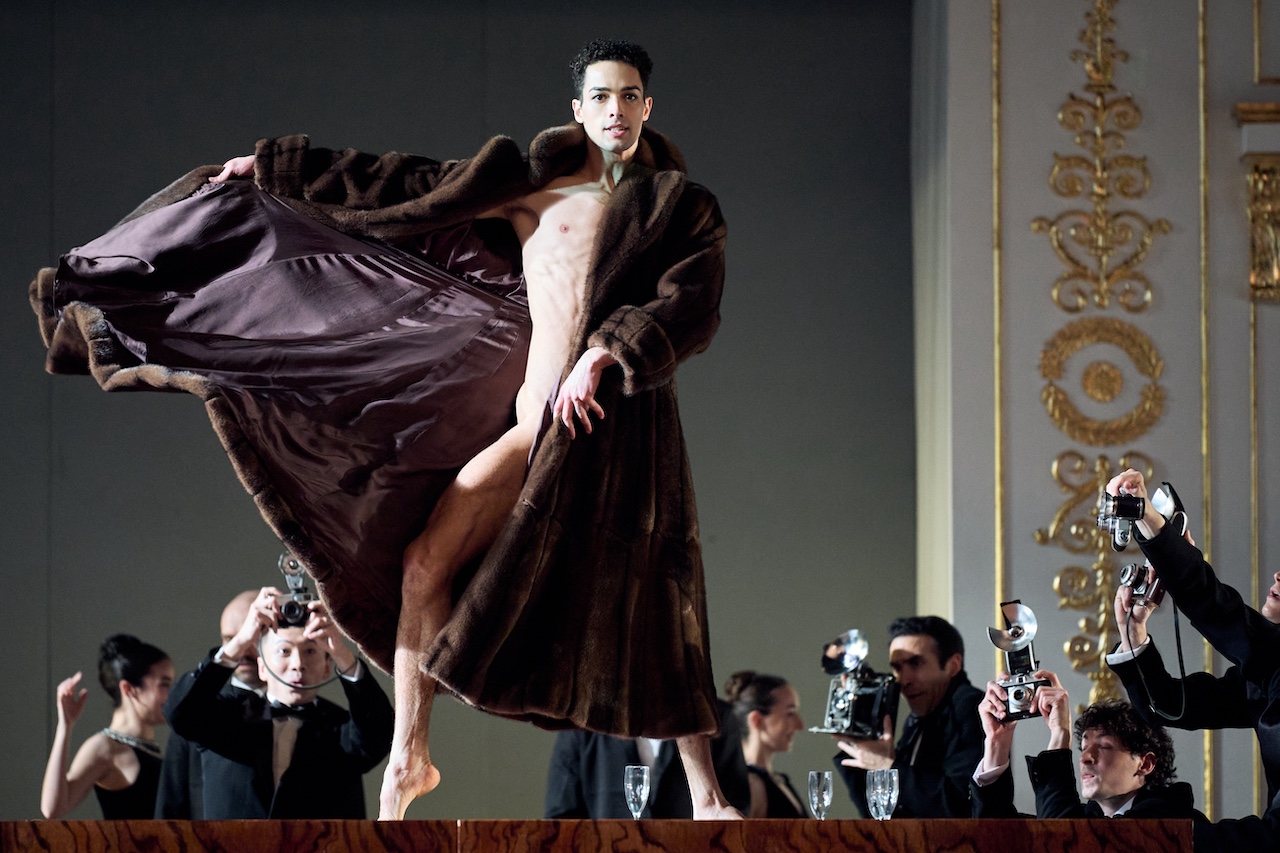
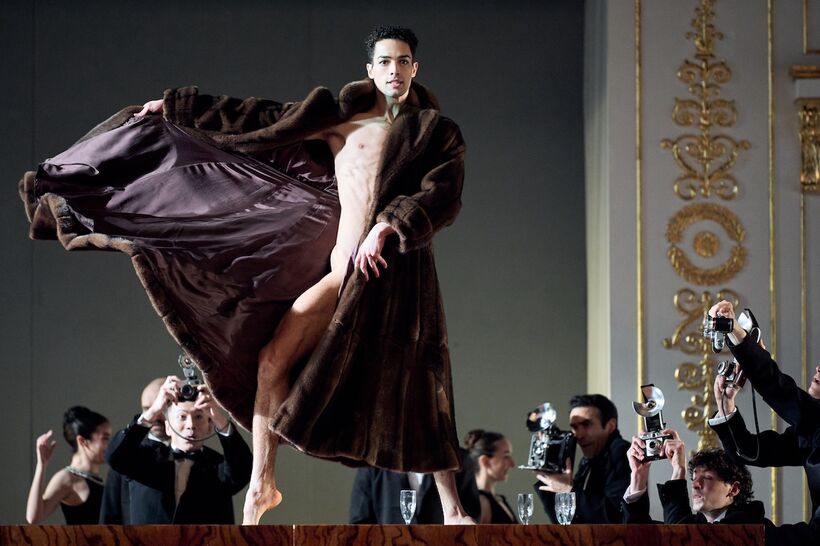
Recitals of impassioned letters to Nureyev accompanied by lyrical solos can feel overly sentimental, though Anthony Tette’s solo to the words of Nureyev’s students Charles Jude and Laurent Hilaire is undeniably captivating, as he skims across the stage like a stone on water, all buttery limbs and fluid articulations. A recreation of Nureyev’s famous nude photoshoot with American photographer Richard Avedon—peppered with expletives and followed by a jazzy number heralding the birth of “Rudimania”—lends the ballet a lighter, more humorous touch.
After this, the work loses momentum. The auction frame disappears until the final scene, while Act 2 becomes bogged down in recreations of excerpts from ballets Nureyev performed in his later years. Still, it cannot erase what comes before. Nureyev’s allusions to past political struggles serve as a timely reminder as we enter another turbulent era in which artists may once again face similar challenges.


.jpg)