Letter from Paris, Autumn/Winter 2025: Same but Different: Variations Within the Known
Dance programming in Paris has recently been characterized by a noticeable reluctance to take artistic risks, largely driven by ongoing budget cuts across arts institutions. With reduced public funding and increased financial pressure, many theaters and festivals are prioritizing established choreographers, local favorites and heritage companies over emerging voices. These survival strategies have resulted thus far in a conservative season marked by repetition and safety rather than innovation, limiting opportunities for younger artists and more daring forms of contemporary dance. While this approach allows institutions to maintain stability in the short term, it also risks diminishing Paris’s reputation as a cosmopolitan center of choreographic experimentation.
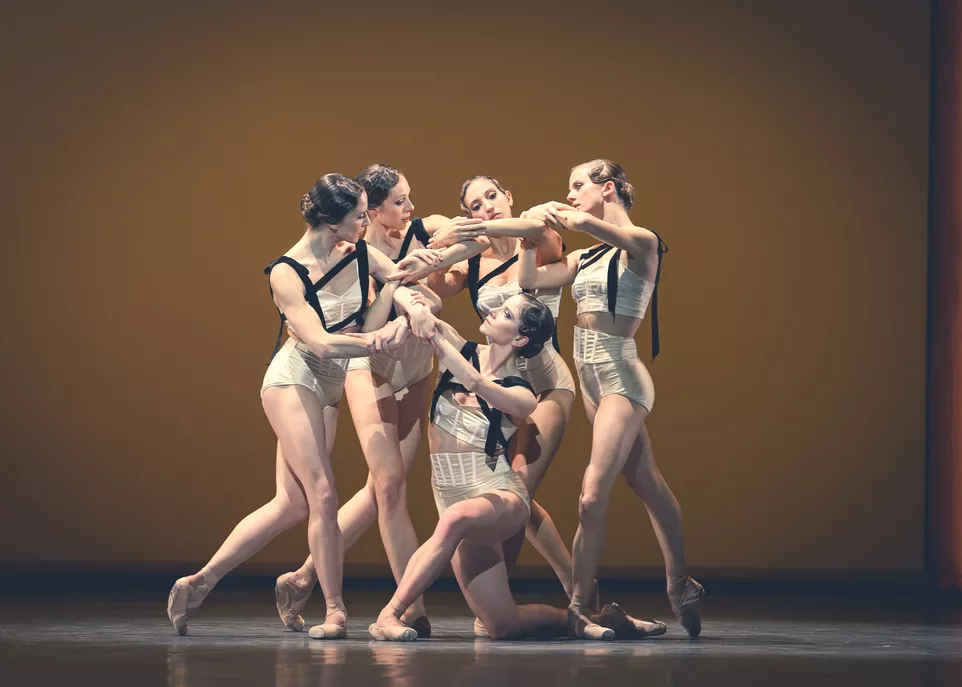
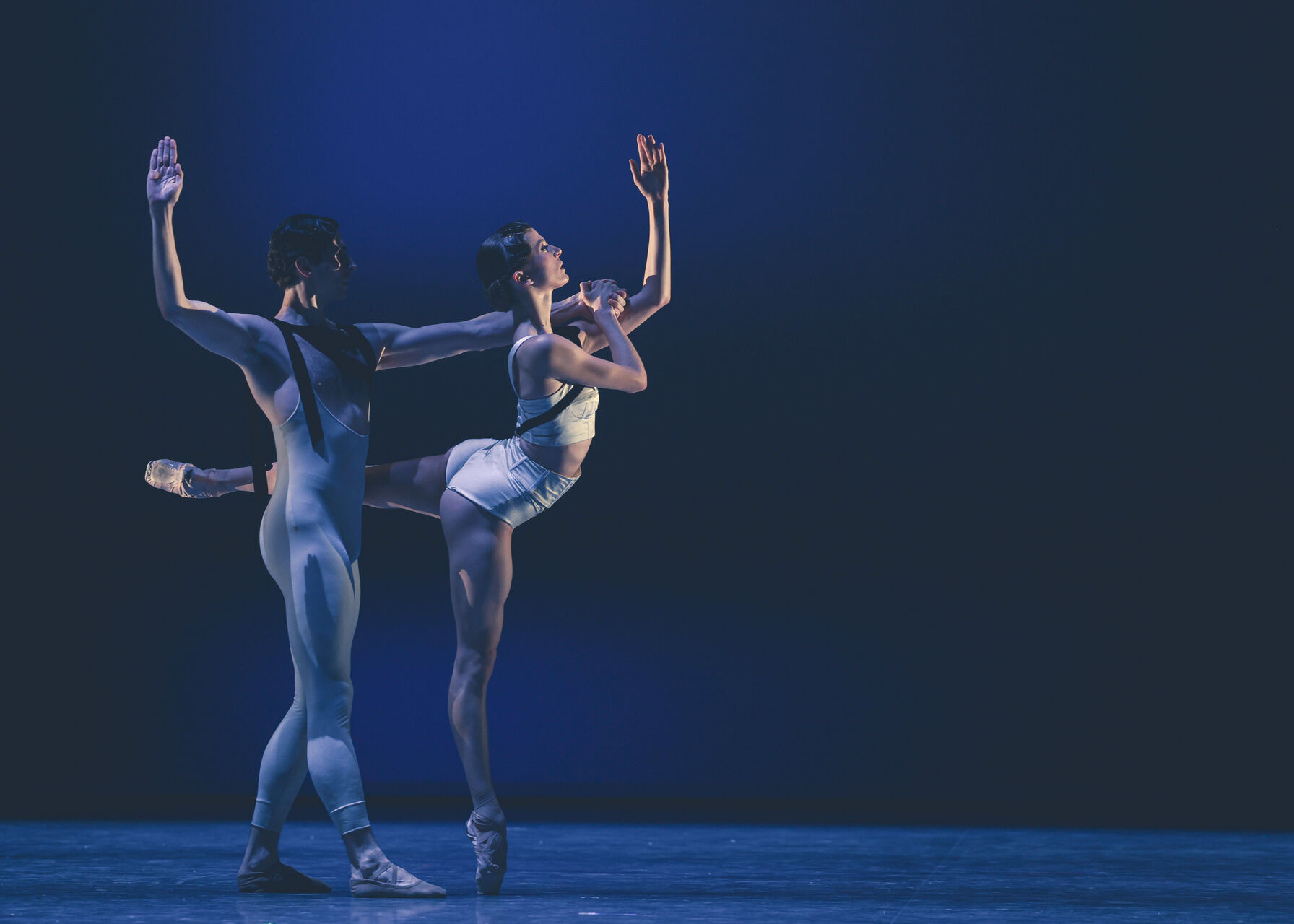
Christopher Wheeldon: Corybantic Games. Photo: Maria Helena Buckley / Paris Opera Ballet.
Subtle Shifts Underway at the Paris Opera Ballet
Although impacted by the same economic context, these constraints are less obvious at the Paris Opera Ballet. Since his arrival as Director of Dance in late 2022, José Martínez has responded to criticisms regarding the company’s frequent contemporary dance commissions by reintroducing a growing number of full-length classical ballets and shorter neo-classical works. Steering the company towards a more balanced season and drawing on the company’s repertoire, the Paris Opera Ballet has thus far weathered funding cuts with greater ease than many smaller institutions. While this is no doubt the result of the company’s larger budget and stature (in addition to receiving public funding, the POB boasts numerous private partnerships and donors), it also reflects an approach to programming that mines existing resources, pairing, for example, new works with those in the company’s sizable repertoire. While the Paris Opera Ballet has not pursued commissioning new works of ballet with the same zeal that many of its international peers have at New York City Ballet or The Royal Ballet, the company’s triple bill Racines (Roots), that ran from 6 October to 10 November, featured two new additions to the company’s repertoire.
Seen on 29 October at Opéra Bastille, Racines opened with Georges Balanchine’s Thème et variations, a rigorous homage to the Russian tradition of Petipa and Tchaikovsky, created in 1947 and performed by the Paris Opera Ballet since 1993. Celebrated for its demanding choreography, the 23-minute piece requires technical precision, musical sensitivity, and an elegiac refinement of intricate ensemble lines. While the latter was not at its smoothest within the corps de ballet, soloists Inès McIntosh and Francesco Mura’s poised partnership and crystalline technique were highlights of the piece. The pair brought Balanchine’s exquisite abstract geometry into sharp relief through their clear lines and warmth, despite the cold color palette of bejewelled tutus, tiaras, and chandeliers in homage to Petipa’s Sleeping Beauty and the Saint Petersburg of the choreographer’s youth.
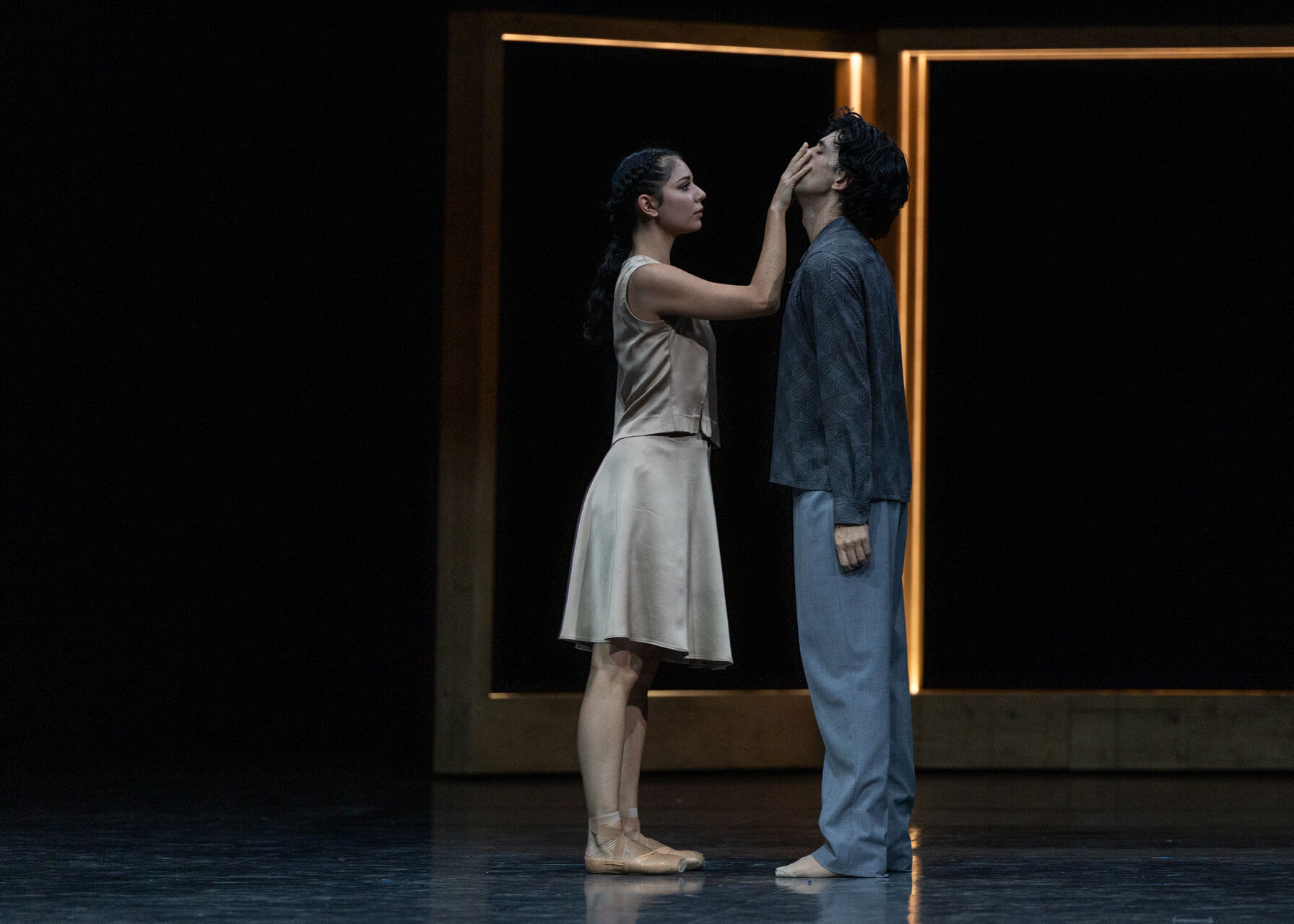
Thème et variations was followed by Mthuthuzeli November’s Rhapsodies, a new addition to the Paris troupe’s repertoire following its premiere in 2024 at Ballet Zurich. Continuing the theme of cultural roots with an homage to George Gershwin and his South African heritage, November’s choreography emphasizes rhythm and mood, eschewing the classical formalism of the preceding piece, while displaying an equally complex musicality. Set within a large pliable wooden structure that allows dancers to sit inside individual frames that resemble large windows, a small ensemble weaves in and out of this minimalist set, alternately performing and observing soloists and duets as they unfold centre stage. November’s choreography is a study in contrasts. The women’s languid turns on pointe are paired with sweeping, wide, travelling steps. Dynamic shifts between the upper and lower body are underscored through angular bent arms paired with spiralling intertwined legs and feet. The women wear vaguely vintage dresses that loosely reach their calves, while the men are clad in casual earth-toned trousers and tops. The romantic encounter that occurs within an otherwise undefined group feels derivative of the movie musicals already associated with Gershwin’s score, yet on 29 October, soloist Célia Drouy transcended clichés with her striking lyricism during the featured pas de deux. What appears at first glance to be derivative of mid 20th century ballet phrasing infused with jazzy undercurrents is, in fact, a different style of timing, sculpted from brief but regular pauses, casual breaks in fluidity that offer sophisticated syncopations and a deep responsiveness to the music inspired by urban dance forms. Rhapsodies offers a fascinating glimpse into how new rhythms can invigorate otherwise familiar movement motifs. Coupled with unremarkable costumes and dramaturgy, however, the piece is a promising curiosity rather than a resounding success.
The Racines program closed with Christopher Wheeldon’s Corybantic Games, an abstract, neoclassical ballet created in 2018 for The Royal Ballet set to Leonard Bernstein’s Serenade after Plato’s Symposium. Invoking the ecstatic dances of the ancient Greek Corybantes, the short ballet dispenses with linear narrative, focusing instead on athleticism, classical form, and interpersonal dynamics. Powerful turns and leaps drive performers across the stage, as splayed arms and limbs sculpt diagonal lines. Dancers clad in white leotards and bodysuits splashed with black accents sporadically interrupt the music’s frenetic pace to pose in profile, another nod to Greek art. The otherwise bold movements attempt to match Bernstein’s bombastic score, but Corybantic Games gets a bit lost in its own coldness. Without a narrative thrust or an emotional anchor, it begins to feel like one relentless cacophony. Despite the ballet’s shortcomings, the cast was exemplary, particularly étoile Bleuenn Battistoni and première danseuse Hohyun Kang, performers whose elegant form never wavers while diving into the exacting bravura Bernstein’s music demands.
The Return of Full-length Ballets
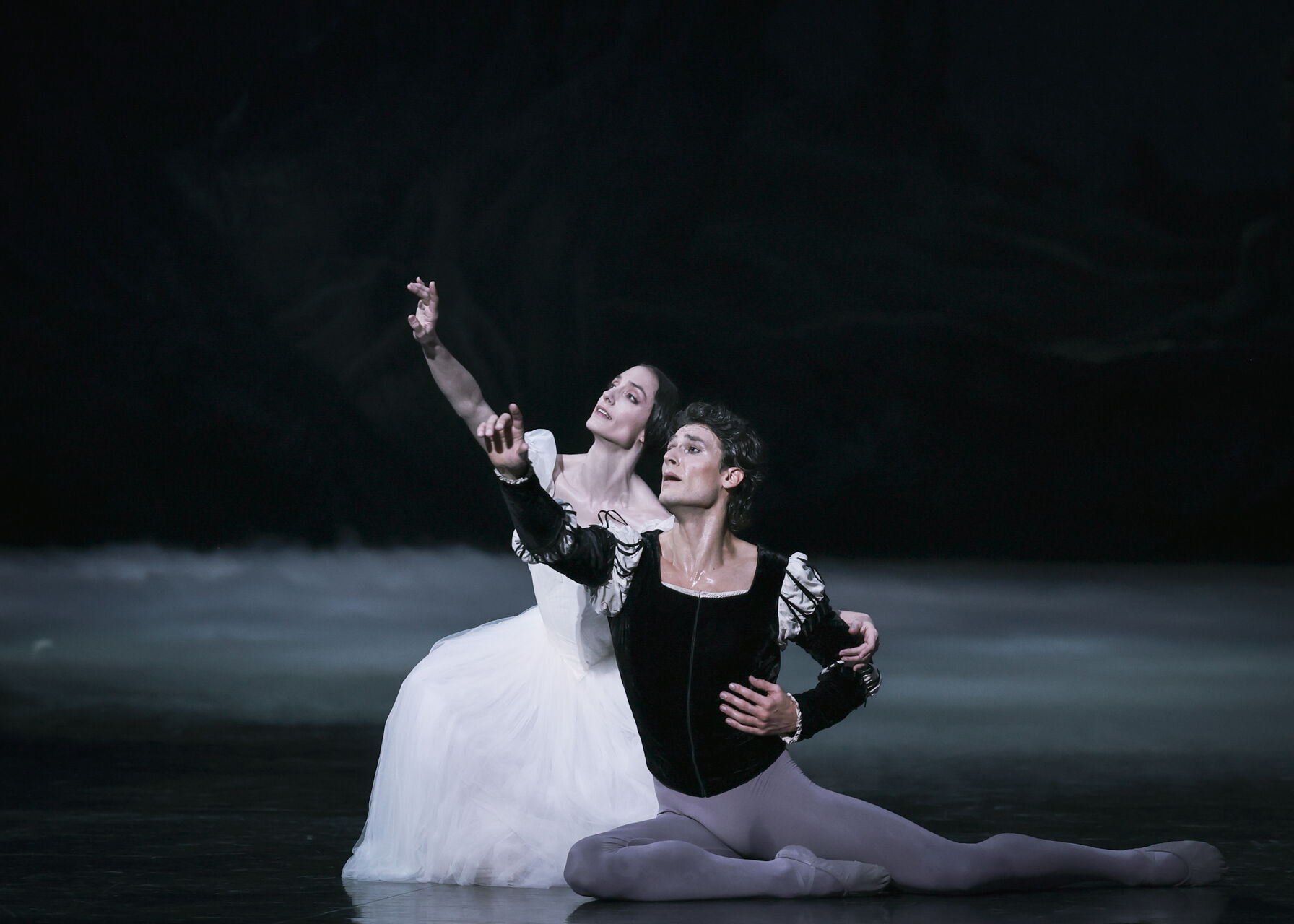
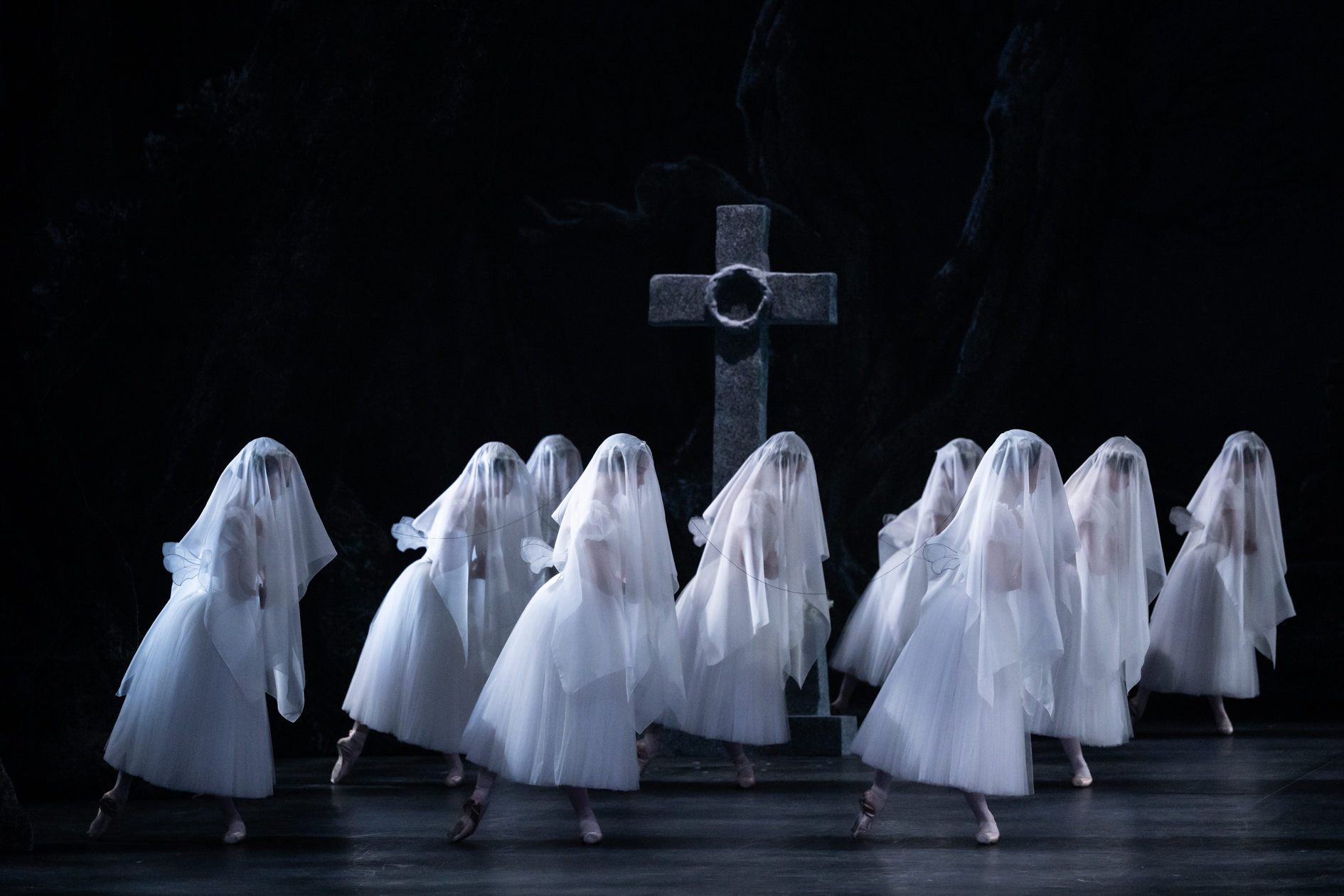
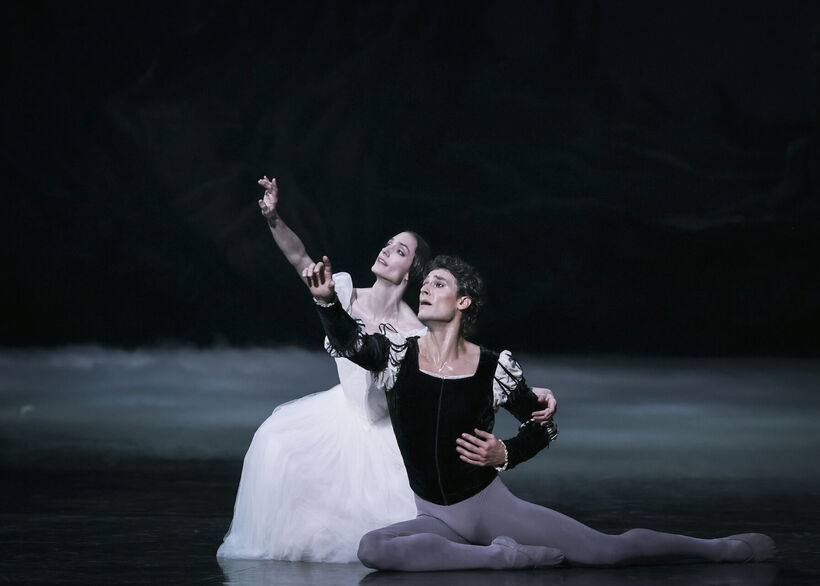
Running simultaneously at Palais Garnier throughout the month of October, Giselle has become such a staple of the Paris Opera Ballet’s repertory that one might be tempted to question its reprise again this season. But it is precisely this regularity that has allowed the company’s soloists to experiment with and refine their interpretation of the ballet’s various leading roles. Giselle is intimately linked to the company’s heritage, having premiered in Paris in 1841, and today’s dancers utilize the ballet’s two acts to showcase the clarity of their epaulement, musical restraint, and refined footwork. This is particularly true in Act II, when Clara Mousseigne and Hohyun Kang bring their cool dramatic tones to the role of Myrtha, Queen of the Wilis. Dancing the title role on 21 October, Dorothée Gilbert performed her penultimate Giselle, a role she has reprised numerous times during her tenure with the company. In recent years, she has been partnered by Hugo Marchand, an extroverted performer whose powerful ballon is an excellent contrast to Gilbert’s otherworldly Giselle. Gilbert is technically assured and compellingly expressive without over-embellishing. Her many seasons of Giselle are a reminder that the POB refreshingly avoids treating the ballet as a museum piece on regular rotation, but as a living benchmark—something against which dancers, styles, and new approaches are measured.
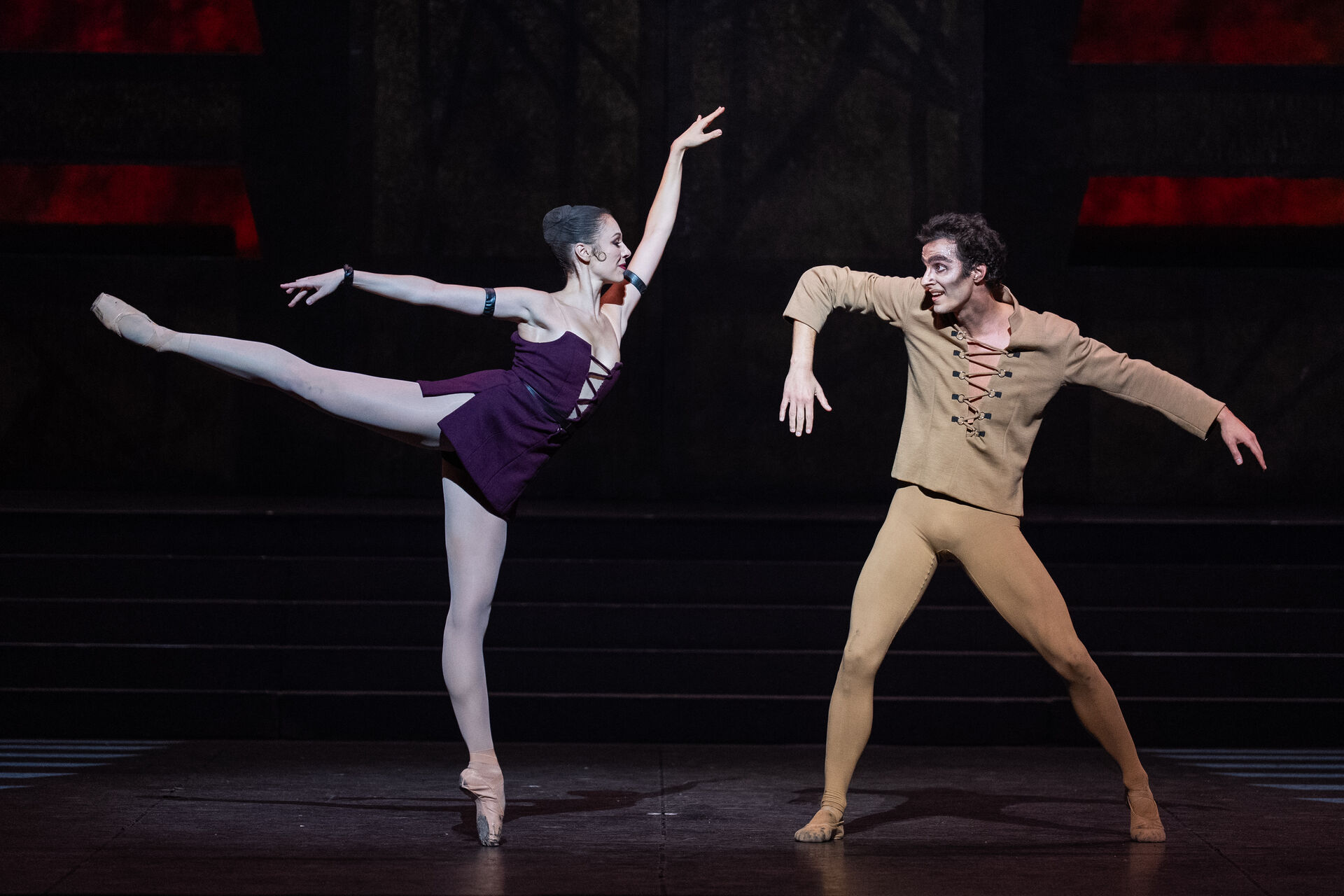
After a long absence, in December the Paris Opera Ballet revived Roland Petit’s Notre-Dame de Paris, based on Victor Hugo’s classic novel. Created in 1965, this dramatic work features Petit’s neoclassical choreography set to Maurice Jarre’s music, and Yves Saint Laurent’s costume designs. Revived to celebrate the production’s 60th anniversary in the company’s repertoire and set against the backdrop of Notre Dame Cathedral, the production depicts a wistful Quasimodo pining after Esmerelda. Petit’s signature style leaves one half of the body executing classical lines while the other breaks that mould through angular, flexed extremities. Étoile Roxane Stojanov captivated as Esmeralda, perfectly channelling Petit’s blend of sensuality and theatricality during the 10 December performance at Opéra Bastille. She glided through his pas de deux effortlessly and radiated genuine warmth in her connection with the tilted Quasimodo, performed by Jérémy-Loup Quer. The corps de ballet added a lively, colorful dimension, fusing medieval motifs with retro flair: many of the men in Mondrian-inspired ensembles of bold black lines and blocks of color, the women in short, 1960s-style tunics of bulky fabrics, striking a balance between period references and Petit’s playful modernism, that nonetheless appears dated now, particularly in the use of materials.
Ballets of the recent past, like Notre Dame de Paris, raise interesting questions about reception and how performances age: close enough to our own time to feel familiar, yet distant enough to reveal shifting tastes, aesthetics, and values. Revivals invite us to look not only at the choreography itself but also at what has changed about it, including our expectations of narrative clarity and design. Some works gain depth and resonance as their historical contexts become clearer, while others risk appearing fixed in the era that produced them, their once-radical gestures softened over time. Notre Dame de Paris may fall into the latter category, though certain passages remain striking today. Unfortunately, the ballet’s clichés and illustrative dramatic tensions overpower the choreographer’s exquisite talent for formations and intricate partnering.
While the 2025–2026 season has not been especially bold or surprising, the Paris Opera Ballet’s repertoire remains sufficiently varied to avoid aesthetic fatigue and to engage a wide range of sensibilities. The programming highlights the dancers’ ongoing versatility while placing works from different eras and styles into renewed dialogue, inviting new discoveries alongside canonical works. In the current economic climate, dance institutions will increasingly need to pursue inventive approaches to maintain compelling programming during budget constraints by rethinking scale, collaboration, and creative process rather than relying on costly production elements.