
“Dance dance,” an informal term used to describe choreography that foregrounds movement itself, emphasizes the virtuosic body and its physical potential as the primary medium of expression and creation. In contrast to the conceptual and experimental tendencies that have shaped much of contemporary choreography, it celebrates clarity of movement and technical mastery. In Italy – whose dance history is closely tied to the birth of classical ballet – such an approach resonates strongly with both artists and audiences. In Rome, the highlights of “dance dance” during the first trimester of 2026 can be traced by looking at the Teatro dell’Opera di Roma (TOR) dance season and selected offerings from Orbita|Spellbound National Centre for Dance Production, and the smaller but promising Teatro della Cometa. In the absence of Equilibrio – Festival di Danza Contemporanea di Roma, which suddenly disappeared from Rome’s cultural programme after nineteen editions, the artistic offerings of these institutions become even more significant for sustaining the vibrancy of the metropolis’ dance culture.
Letter from Rome, January–March 2026: “Dance Dance” across the eternal city
“Dance dance” reclaims the sheer power of the moving body by celebrating virtuosity, physical skill, and the expressive potential of movement itself. In Rome during the first trimester of 2026, the vitality of “dance dance” was on full display in the Neumeier / Godani / Millepied triptych, the Ansa and Bacovich / Astolfi double bill, and the full-length work bySharon Eyal, Into the Hairy. Aesthetic clarity, artistry, solid technique, and excellence revealed the enduring impact of ballet culture, while also proving that ballet remains a living art form, constantly open to transformation.

Ballet Tradition Revisited: Neumeier / Godani / Millepied
The Neumeier / Godani / Millepied triptych just concluded at TOR (17–22 March 2026) and is part of a season that has little in common with Timothée Chalamet’s opinion about opera and ballet as being dead artforms. The 2025–2026 ballet season, curated by étoile Eleonora Abbagnato, combines classical repertoire with neoclassical and contemporary ballet works, including offerings from prominent choreographers such as Angelin Preljocaj and Marco Goecke, and director A. J. Weissbard, who is finalising the much-awaited BURN, scheduled for the end of April. The three pieces of the Neumeier / Godani / Millepied triptych, all performed en pointe by female dancers, were retouched and refined to the needs of the corps de ballet in the presence of the choreographers: 87-year-old John Neumeier (in excellent shape), Jacopo Godani, and Benjamin Millepied. Presented on the TOR main stage on 18 March, the triptych highlighted some recent tendencies in ballet, celebrating male creativity as part of a curatorial direction that prioritises renewing ballet culture. Yet, if there is something that genuinely still requires further improvement in TOR dance programming, and arguably in the ballet and contemporary dance world more broadly, it is the need to boost the visibility of female choreographers.
In Neumeier’s Spring and Fall, originally made in 1991 for the Hamburg Ballet, jumping (a synonym for spring) and catching are two of the main ideas of the choreographic material that is elaborated on in the male-female duets in particular. Imbued with a flair of American modernism, the female dancers often throw themselves into the air and are caught by their male partners, who harness the momentum of their movement. In this respect, the ethereal étoile Susanna Salvi is striking, caught mid-air like a straight candle. Clad in midi white dresses that reach their calves and long, loose hair streaming behind them, the women embody freedom, grace, and lightness. Exposing their bare torsos, their male counterparts appear strong, oscillating between disciplined movement and playful handstands and upside-down positions. Set to the Serenade for Strings by Antonín Dvořák and performed live by the TOR orchestra, Spring and Fall, predominantly abstract, emerges as a dynamic choreographic feat in which dancers and choreography appear perfectly attuned with one another.
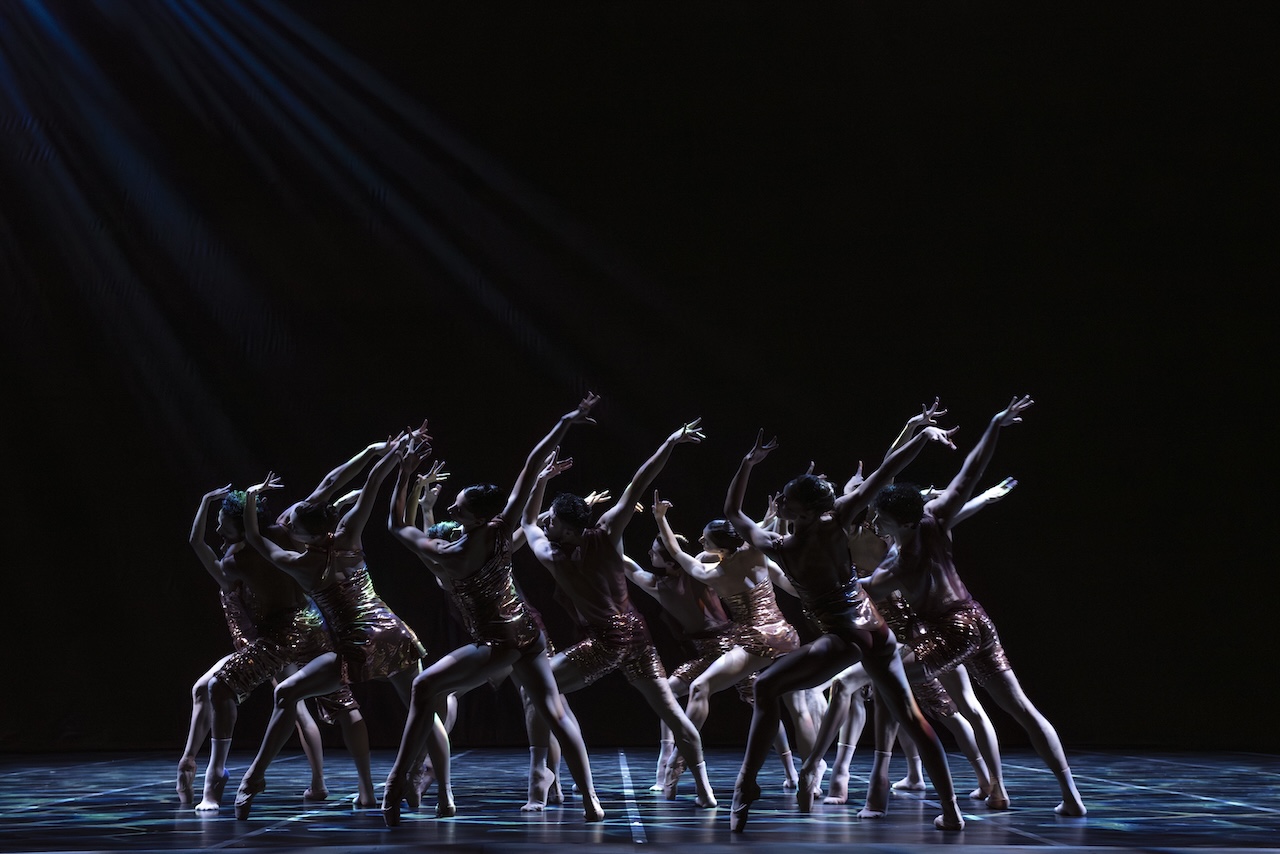
Moving away from the contrast between the seasons of spring and fall/autumn and the metaphors that may evoke, the second part of the triptych opened with Echoes from a Restless Soul, a piece originally made by Godani for the Ballet Frankfurt in 2016. Godani, a leading soloist for William Forsythe’s Ballet Frankfurt, was the first to succeed him as the director of the by then renamed “Dresden Frankfurt Ballet Company”. Contrasting Neumeier’s white hues of purity, Echoes from a Restless Soul introduces a darker mood, intensified by Maurice Ravel’s Gaspard de la Nuit, performed live on stage by pianist Massimo Spada. The atmosphere is evocative of the bottom of an aquarium or the deep dark sea where only a few rays of sunlight may reach — indeed the light, as well as the shiny costumes, reminiscent of fish skin, both designed by Godani, reinforce this aquatic image. Abandoning Neumeier’s linearity, the dancers perform a dance vocabulary that enriches the ballet technique with undulating, wavy motions, accentuated by the expressivity of their bare arms and legs and combined with a rapid tempo. Moving together or separately, the dancers contract and expand the space; within this continuous transformation of the immaterial space, Jacopo Giarda affirms once more a powerful presence in roles that demand a dynamic approach to movement. Godani’s Echoes from a Restless Soul succeeds in hypnotizing the audience with restless choreography infused with mystery and obsession.
The triptych concludes with a selection of Philip Glass’s compositions, among them recorded excerpts from Einstein on the Beach and Songs from Liquid Days, used for acclaimed choreographer and filmmaker Benjamin Millepied’s I Feel the Earth Move. The piece is an expanded version of the work originally made in 2017 for a six-member American Ballet Theatre cast. Glass’s minimalist music, filled with vibrant energy, ignites excitement in both the dancers and audience, contributing to the sense of aliveness that Millepied seeks to evoke with this work. Elegance and grace are interlaced in an intense choreography that treats movement almost visually, unfolding with continuity and flow, even in the deliberately slow duet featuring Giorgia Calenda and Claudio Cocino. Dressed in leotards designed and made by Rocco Iannone, creative director at Ferrari, the dancers not only look but, most importantly, feel at ease in their bodies, a detail that highlights the importance of the relationship between garment and the moving body.
Investing in the virtuosic body: Aterballetto and Spellbound Contemporary Ballet
The next curatorial offering from Rome, running from January to May, comes from Orbita|Spellbound National Centre for Dance Production, a centre providing residencies to Italian and international artists that culminate in open sharings, combined with a rich and proper contemporary dance season. Curated by dance producer Valentina Marini and “orbiting” around various venues across the city, the Orbita dance season presents different contemporary dance voices, mainly drawn from the Italian dance scene – again, here, female choreographers are the minority across the season when compared with male artists. At the core of Orbita’s production activities is the work of Mauro Astolfi, director of Spellbound Contemporary Ballet company and resident choreographer at the centre, whose work was part of a double bill shared with Aterballeto, the resident company of the only National Choreographic Centre in Italy, located in the Emilio-Romagna region. The double bill, performed on 2 March, underscored two distinct artistic approaches, taking advantage of dance virtuosity.
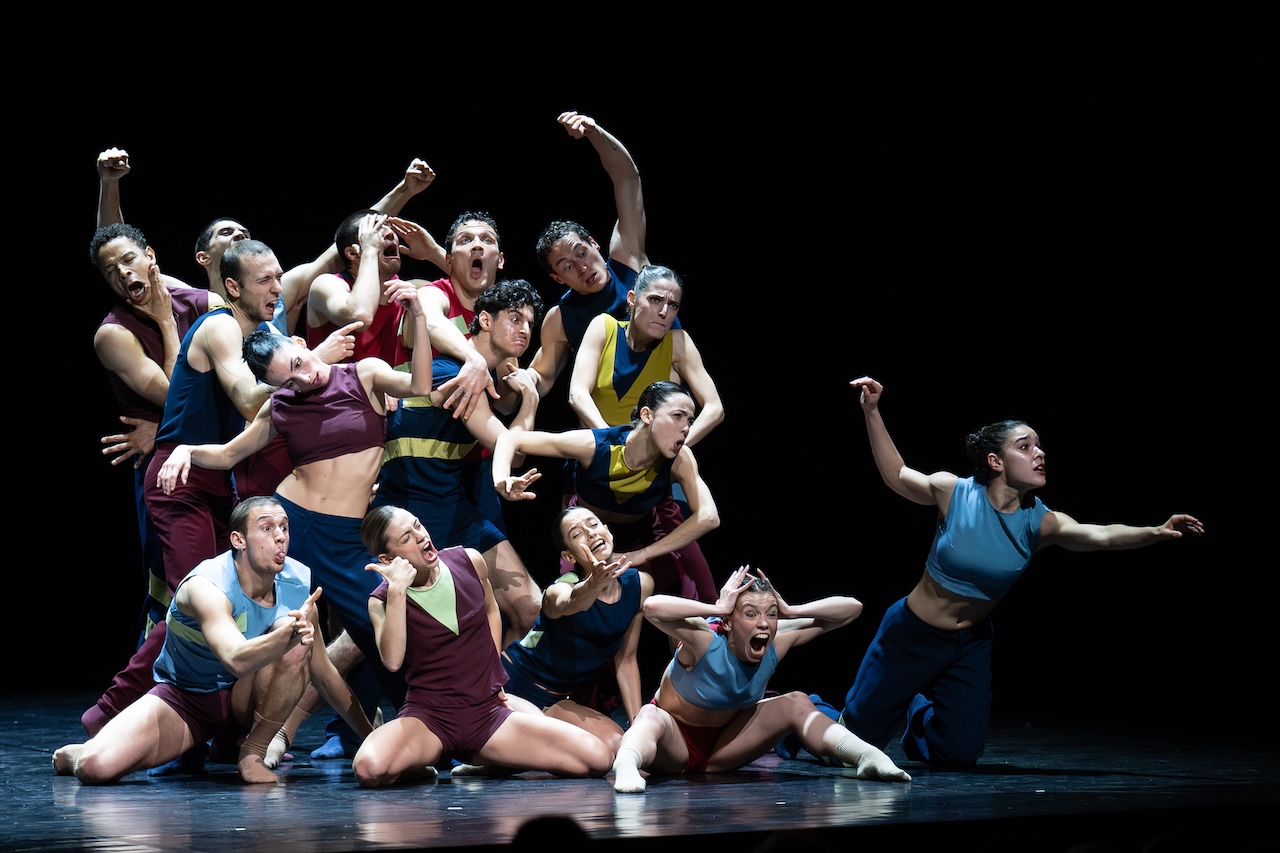
In Rhapsody in Blue by Iratxe Ansa and Igor Bacovich, the sixteen dancers of Aterballetto undulate their bodies under a large full moon (light design by Eric Soyer), to the rhythm of Bessie Jones’ Beggin’ the Blues. Jones’ song serves as an introduction to George Gershwin’s musical composition that is emblematic of the cultural melting pot of the United States of America of the mid 1920s and lends its name to the piece. Driven by the frenetic and exhilarating rhythm that blends jazz elements with classical music, the dancers indulge in the pleasure of movement, responding emphatically to the musical stimulus, form, and continuous variations. Holding hands, they form human chains or gather in tight groups, allowing bodies to emerge, be transported, or assisted in diving through space. In a variety of group configurations, the space between them feels alive, breathing and pulsating. Single gestures, when performed collectively and in close proximity of one dancer to another, are amplified. Although the choreographic interpretation of Gershwin’s music occasionally seems illustrative, Ansa and Bacovich’s choreography appears quite inventive, taking advantage of the impressively flexible and seemingly limitless bodies of the dancers. Their Rhapsody in Blue proposes a hybrid choreographic language that fuses theatricality and exuberance with solid ballet technique.
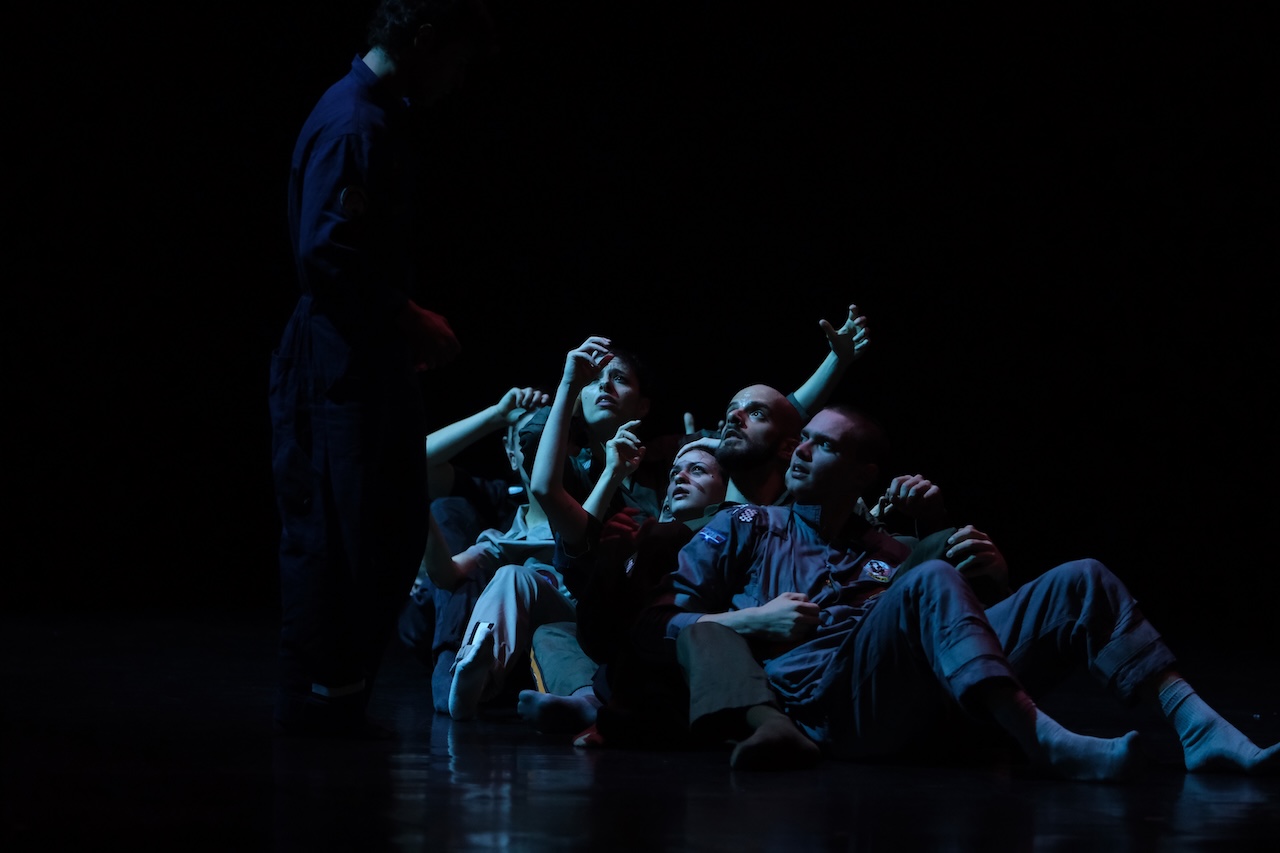
Evoking surprise, shock, or impression encapsulated in the everyday use of the phrase “holy shit”, Astolfi’s Holly Shifttakes a step further to reflect on the moment of personal or cosmic shifts. Leaving behind the lightness of Ansa and Bacovich, the work introduces a dark atmosphere of wonder and quest, enhanced by Marco Policastro’s light design and Davidson Jaconella’s original soundscape – at once soothing and unsettling, atmospheric and earthy. Dressed in earthy-coloured, military-style uniforms (costume design by Anna Coluccia), the dancers become entangled, climb on each other’s shoulders to construct human ladders or manipulate each other in urgency, looking to understand each other as human beings. Their bodies seem liquid, almost boneless, exhibiting a dynamic affirmation of their presence in space; they move spasmodically or often in an animalistic – if not instinctive – manner, embracing syncopation while expressing angst. Astolfi’s Holly Shift, a transfixing experience as a whole, embodies resistance and the fear of changing when everything deepens in a comfortable stagnation, conveying disorientation, necessary before taking a significant and unfamiliar step into the unknown.
Exploring the “non-human”: Sharon Eyal Dance
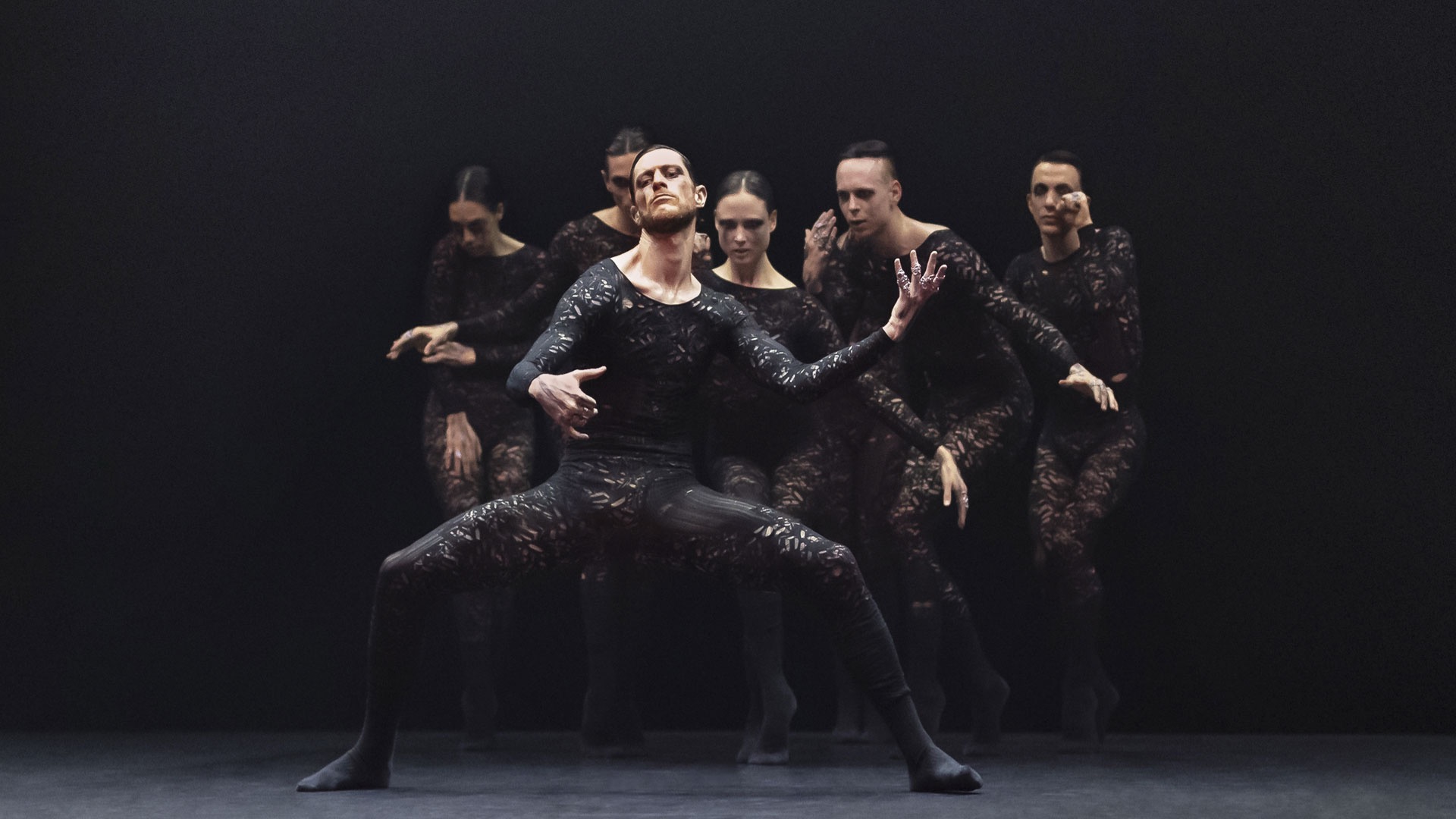
At the beginning of the year, France-based Israeli choreographer Sharon Eyal inaugurated the residency programme at Teatro della Cometa, a small, intimate theatre facing the Capitoline hill. Into the Hairy, performed on 19 January, had to be adapted to the tight space of the theatre, thankfully without sacrificing its hypnotic and mesmerising atmosphere. In its opening scene, the dancers form a shape resembling a flower that opens and closes. Dressed in laced bodysuits designed by Maria Grazia Chiuri - Christian Dior Couture, they behave as if they are a breathing organism, magnetically staying connected throughout the work. Framed by an original soundscape full of liquid and cracking sounds and oriental melodies, composed by London-based artist Koreless, the dance ensemble rotates seductively around a circle, sensually moving their pelvises with an almost erotic and mourning gaze, intensified by the black tears painted on the faces of the dancers. Washed in the red light of Alon Cohen, their bodies gradually acquire nonhuman qualities – approximating felines as suggested by their slow, tiptoe cat-walking. Amid these alluring motions and the repetitive gesture of feeling shame, a hand suddenly placed between the legs and onto the pubic bone of a female dancer looks rather invasive and aggressive. Eyal’s work, co-created with Gai Behar, is intensely visual, mystical, and mysterious, blended with elements of orientalism that open Into the Hairy to a variety of interpretations: from the vulnerability of beauty to the experience of being a woman.
“Dance dance” is undeniably fascinating, even spectacular, celebrating the full potential of the moving body and human creativity. Often exploring universal or abstract themes and communicating directly through emotion, it can be easily accessed by a broad audience, at times offering a temporary escape from personal hardship and the harshness of our world. However, thought-provoking choreography, centered less on emotion and spectacularity and more on the everyday tangible frictions that shape our contemporaneity, remains more urgent than ever.