Martin Maryška: Art, including dance, is today often interdisciplinary and sometimes political. You originally studied journalism and political science. When you speak of light as political, is there a point where these fields come together for you?
Pavla Beranová: What is beautiful about light is precisely that it connects physics and philosophy, physics and art, art and spirituality. Light has certainly been intertwined with politics in history, from Amon-Re to the Sun King. When you mention it, what comes to my mind is rather ancient Greece, where the theme of light appears quite frequently. One example among many is Platonic philosophy.
Martin Maryška: Ancient Greece had Plato's cave, the Gothic period had light as God, and then there was the "Enlightenment". Is there any contemporary myth about light?
Pavla Beranová: Not quite a myth, but a cult saying there must be a lot of light. In our Euro-American civilisation, we have a sense that everything must be bright, lit up… There is simply too much light. Advertisements shine, monuments shine, attractions shine, and we have light festivals and light shows. Perhaps this connects with the cult of positivity, so that everything is clear and flooded with light. Yet darkness also has something to it.
In the absolutely wonderful book In Praise of Shadows, Jun'ichirō Tanizaki writes about the role of darkness and the importance of shadow in Japanese architecture. He begins, curiously, by noting that in Europe and America toilets are too bright because we must see everything clearly. Yet such an environment is almost clinical and does not permit a sense of well-being, let alone contemplation. This is a good illustration of cultural differences in the understanding of light. I feel that light tends to dazzle us in our everyday European life.
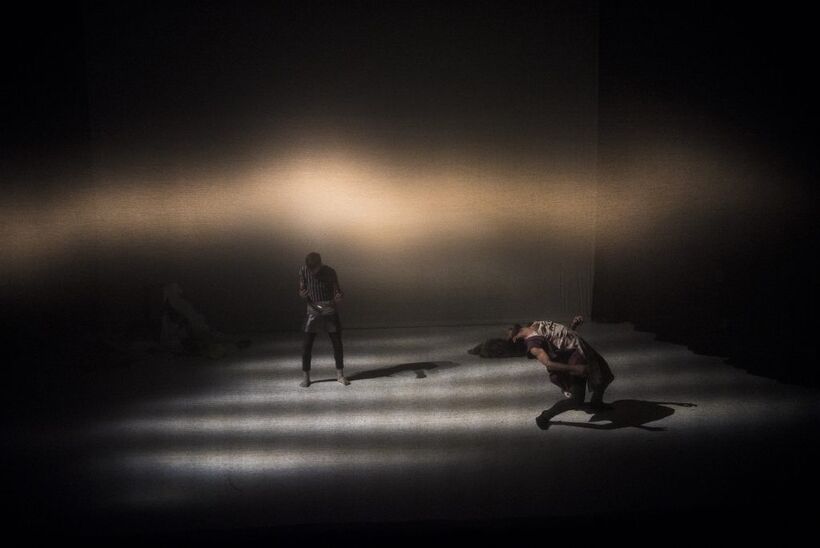
Martin Maryška: You say that there is too much light. Isn't that a temptation for lighting designers? Whoever holds the source of light in their hand wants to shine, after all.
Pavla Beranová: On the other hand, it is considerably easier to shine when there is darkness all around. All of lighting and its perception depends on contrast.
Martin Maryška: So how do you work with darkness, with the invisible? Where is the boundary between the moment when light simply makes a body visible and when it visually appropriates it – even perhaps objectifies it?
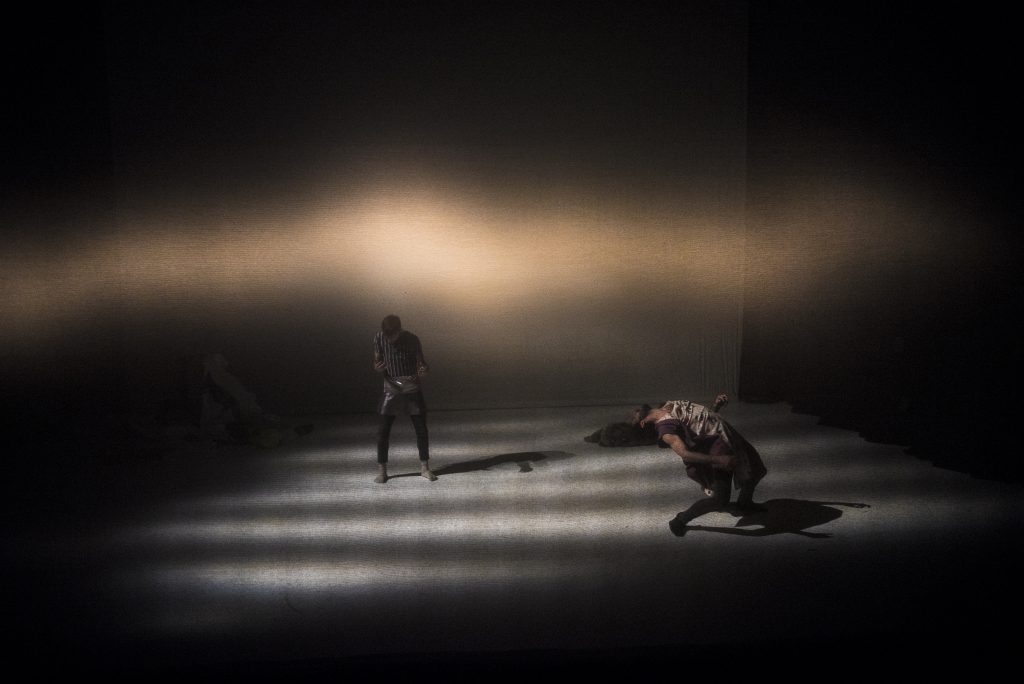
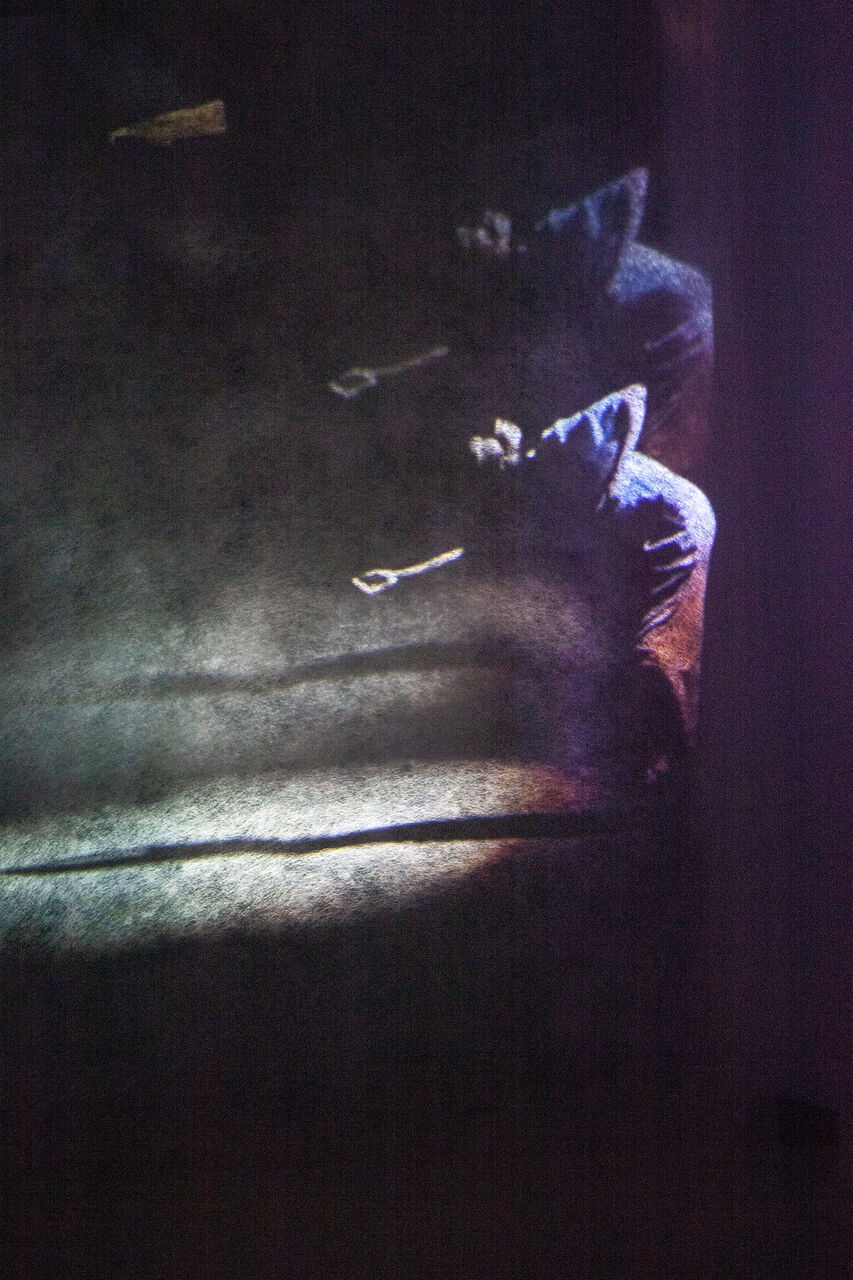
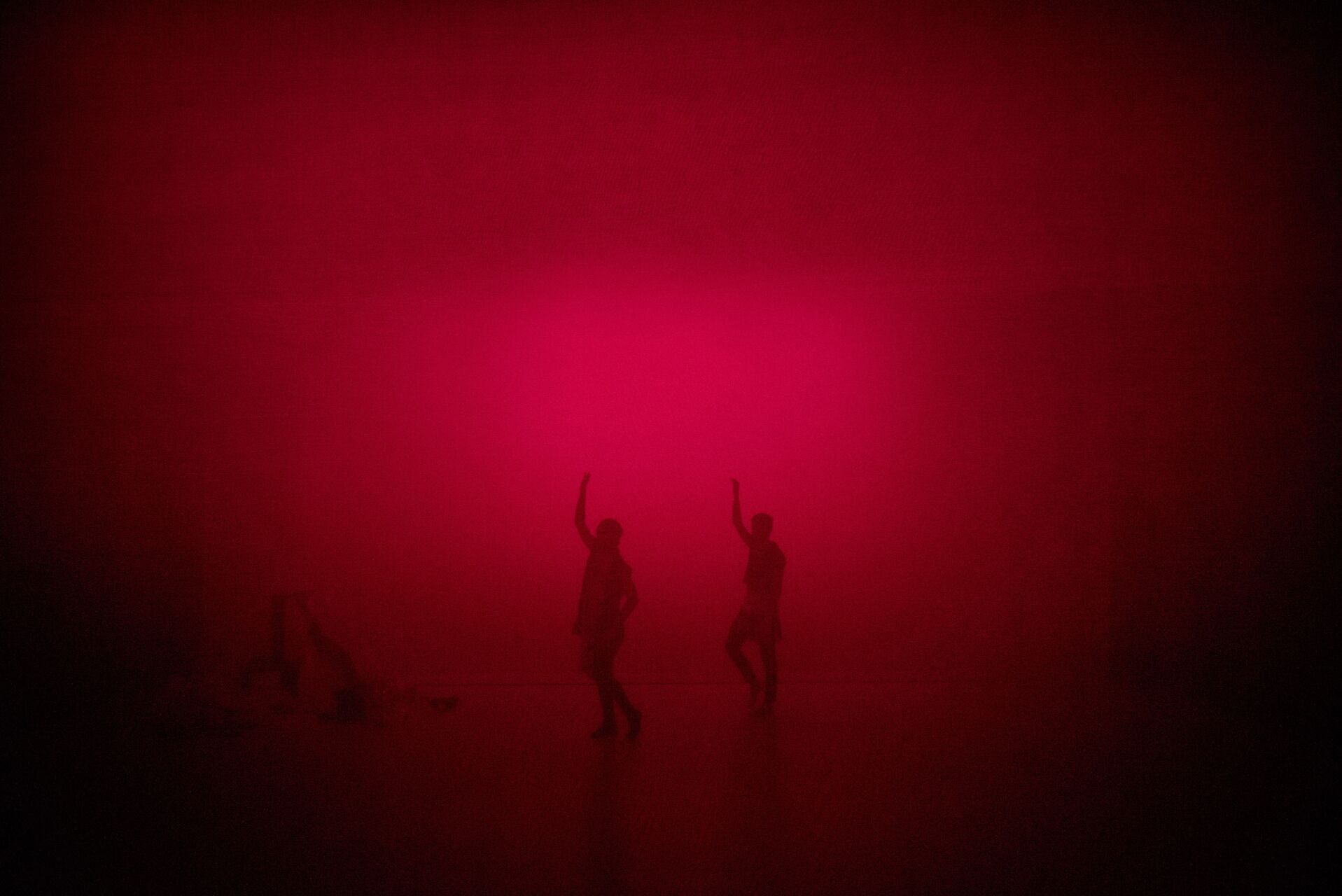
Pavla Beranová: Deciding what should be seen and what should not be seen is the essence of a lighting designer's work and their collaboration with the other members of the team. Leaving something in darkness is a very powerful tool, because what we do not see has, in fact, infinite potential. Darkness can conceal anything and, if it is deep enough, we cannot see how large a space it actually fills. That is also one of the functional principles of theatre. Shadow and darkness stimulate the imagination and create tension.
As for "visual appropriation", you are probably referring to performances where the lighting takes over and becomes the primary focus. Of course such things exist, but I do not think this happens too much in contemporary dance because choreographers usually concentrate very strongly on movement and do not let it fade into a sort of lighting spectacle. Yet what does come to mind in this connection is an opera I saw years ago at the Staatsoper in Berlin. It was imposing – I still show certain scenes to students – but it seems that the transition from independent artistic creation to collective theatrical work was not easy. The lighting design essentially "clubbed to death" some of the other elements, which goes against the purpose of opera and theatre. I remember the headline of one review: Too Many Beams Killed Rameau – and since then I have been careful. My ideal, which I share with many other designers, is that the audience leaves a performance enchanted or moved yet does not know why.
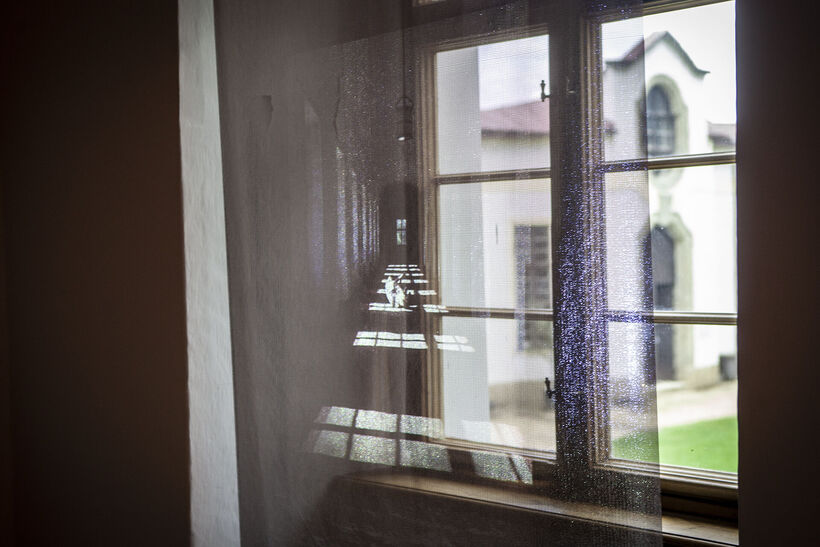
Martin Maryška: Is darkness simply the absence of light? I mean this in the physical sense as well, not only as a metaphor.
Pavla Beranová: I suppose so. Darkness is the absence of light but it is terribly difficult to imagine what it would be like if light did not exist. I am curious to know what the total absence of light would be like. I should undergo darkness therapy one day but am a little afraid of it and keep making the excuse that I don't have the time.
Martin Maryška: And yet, when you are in the dark during therapy, something does actually enter – but it is not light.
Pavla Beranová: Under visual deprivation conditions, various images begin to form – somewhat like hallucinations. I have so far tried it for only one hour, and interesting things were already happening.
Martin Maryška: Today it is beautifully sunny. Yet some people feel anxiety from such light, more than from darkness. They feel as if the sun somehow obliges one to be positive, just as you mentioned… Light also causes premature skin aging, just as it causes degradation of paper, as you write in your book. Is your relationship to light developing and, if so, is it intensifying or deteriorating?
Pavla Beranová: Daylight and sunshine will never cease to fascinate me, regardless of the side effects. What is developing, however, is my relationship to artificial light. I go through periods when I do not want to work with it and turn instead toward projection or daylight. I also don't always have a purely positive relationship to shaping light, meaning there are moments when I work more with other elements in the space in question. Every morning when I see the sun, I think of the alleged dying words of the Romantic painter Turner: "The sun is God." He painted it throughout his life, and in every imaginable form – the light in his work is sometimes almost metaphysical.
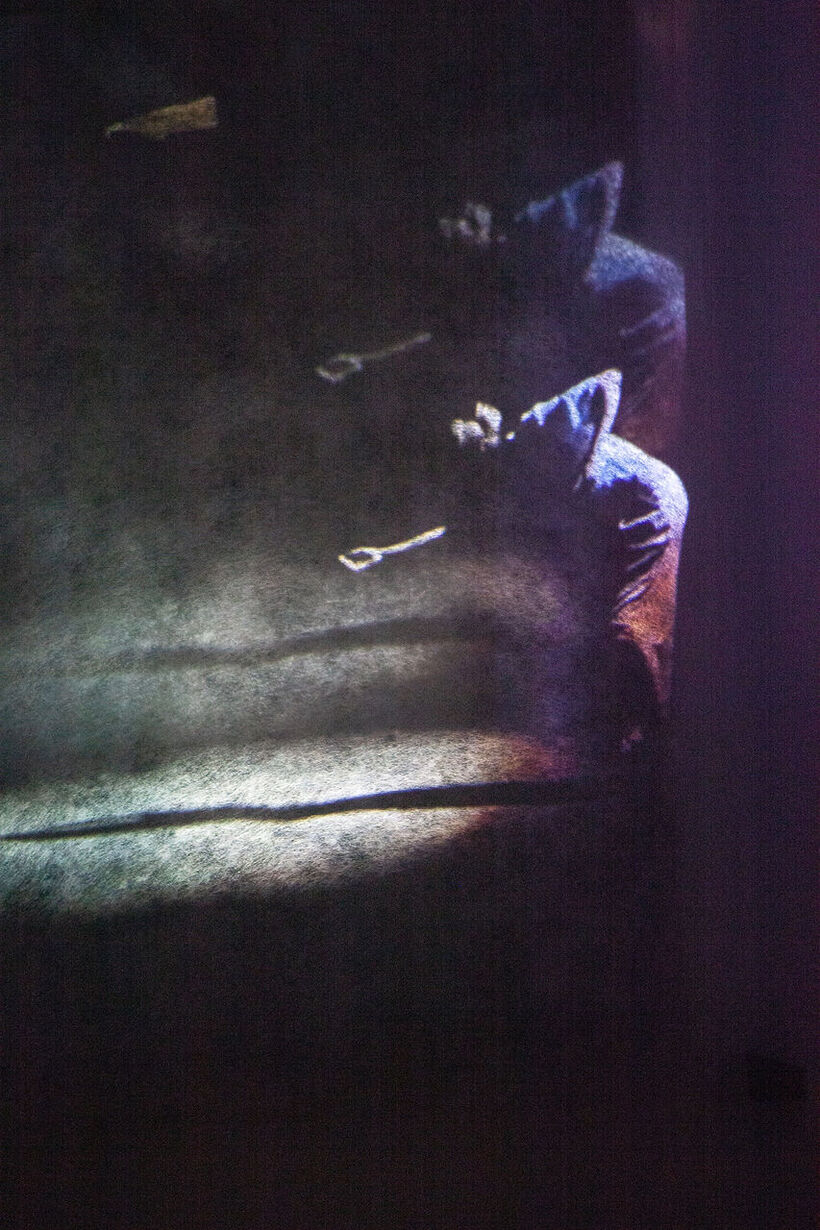
Martin Maryška: Ten years ago, when we were studying at the Janáček Academy of Performing arts in Brno, where you teach now, lighting design was only just establishing itself as an artistic discipline. And now at last the lighting designer can say: "Light is God…
Pavla Beranová: One could always say that – it was just that the others didn't know it! The ideal is when light shares the space with other theatrical deities and they create beautiful things together. I discovered stage lighting in France when I was there as a secondary-school student, and at the time I considered it a perfectly regular profession I wanted to pursue, in the way someone might want to be a doctor or an architect. After returning to Prague, I discovered it would not be so simple. Now lighting design is already fairly established in theatre, but conceptually approaching the lighting of exhibitions or architecture is not yet standard, for example. So there is still a need to demonstrate how important light is. As I mentioned in the book, it goes almost unnoticed because it is omnipresent and always available. It can fill any space, yet attention is not drawn toward it. And yet how, precisely, light fills a given space is fundamental.
Martin Maryška: You come from theatre and the performing arts, but your book is about light in museology. How does your collaboration work – both with choreographers and directors, and with curators?
Pavla Beranová: I am fortunate in having collaborators who allow me to enter the process early. I can thus bring a perspective that leaves its imprint on the final form. In theatre this is expected – the lighting designer participates in the overall conception and contributes ideas about how to formulate the space and the message. With exhibitions it is more complex, and my level of involvement depends on whether it is an exhibition of art or something else. With curators, collaboration is less self-evident than with choreographers and directors.
Martin Maryška: What do choreographers most often underestimate about light?
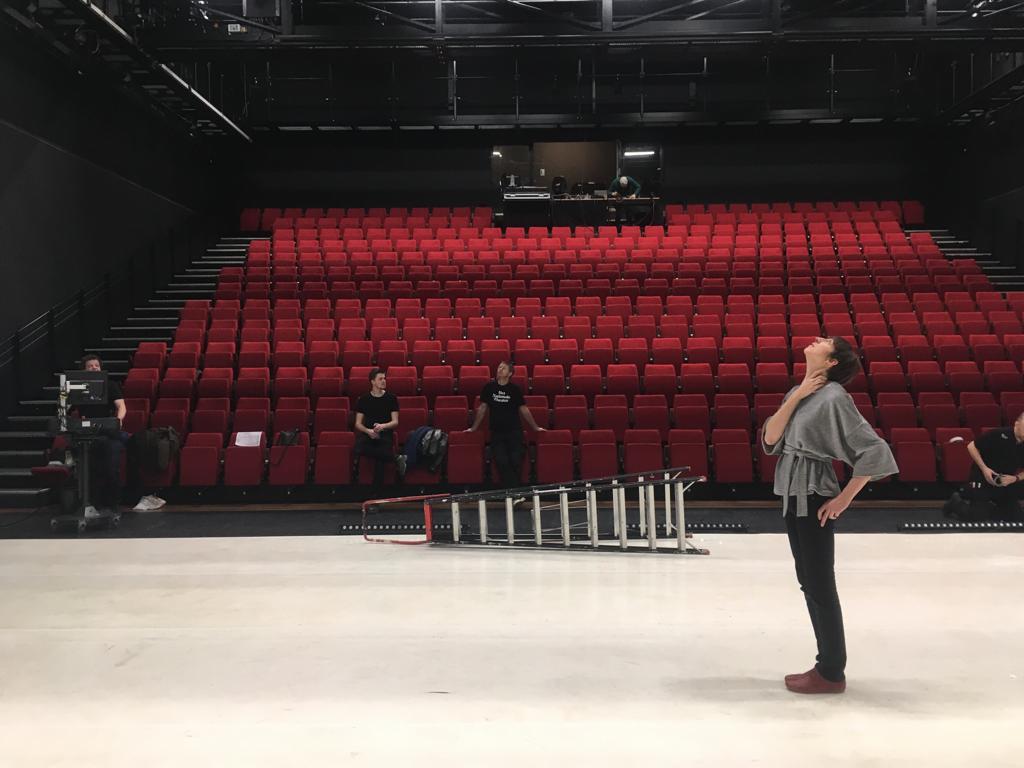
Pavla Beranová: I think choreographers – though not only them – most often underestimate its potential. So they invite light into the process far too late and thus deprive themselves of a symbiosis between light and movement. In practice, it is usually not possible for the entire rehearsal process to take place with the final lighting, but it is entirely possible and conceivable to hold several lighting rehearsals, even at the beginning of the process. None of us can precisely imagine in advance what movement will do to a specific lighting setup, meaning how it will look. My experience is that when choreographers in the studio or rehearsal room see the real possibilities offered by light and materials, they immediately begin to make creative use of that potential.
Many of the things I have done in contemporary dance came about in the studio. For example, with Rita Gobi (ed. note: a dancer, choreographer and dance teacher of Serbian origin) we can no longer imagine it any other way. Also because in Hungary, where she is based, there is usually very little time for rehearsal in the theatre space – one or two days, including the premiere. So Rita moves, I work out what I can do, we discuss it, and then we simply apply it at breakneck speed at actual scale. I should add that without real "dance" movement this process does not work at all. The visual experience is a combination of specific movement under specific light, and the one without the other is not really worth rehearsing.
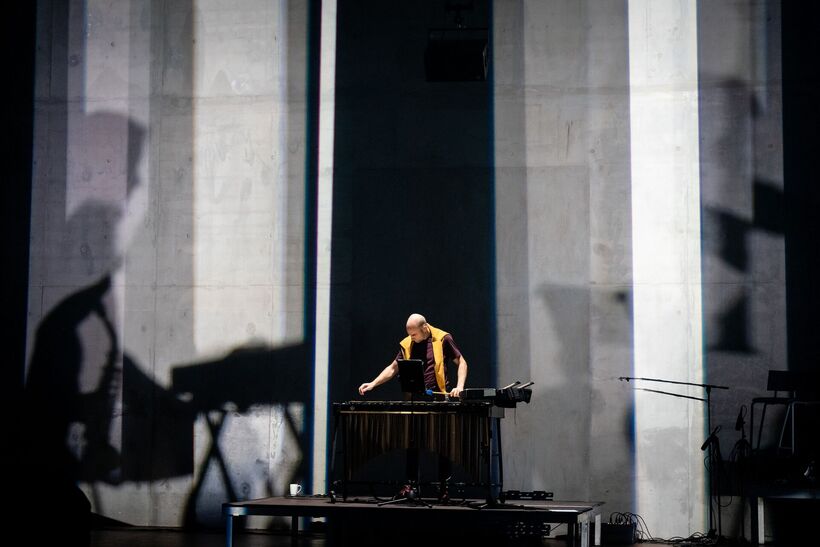
Martin Maryška: You collaborate with the SE.S.TA Centre for Choreographic Development, which also produces Dance in the Gallery series. What can be done with light when dance leaves the black box and enters the white box?
Pavla Beranová: As galleries tend to have bright walls, the light becomes more diffused. This means it is not possible to achieve the same results with lighting scenes based on high contrast, accent lighting, and forms emerging from darkness. And anyway, would it even make sense? Why should dance be in a gallery if it formally looked exactly the same as in the black box of theatre?
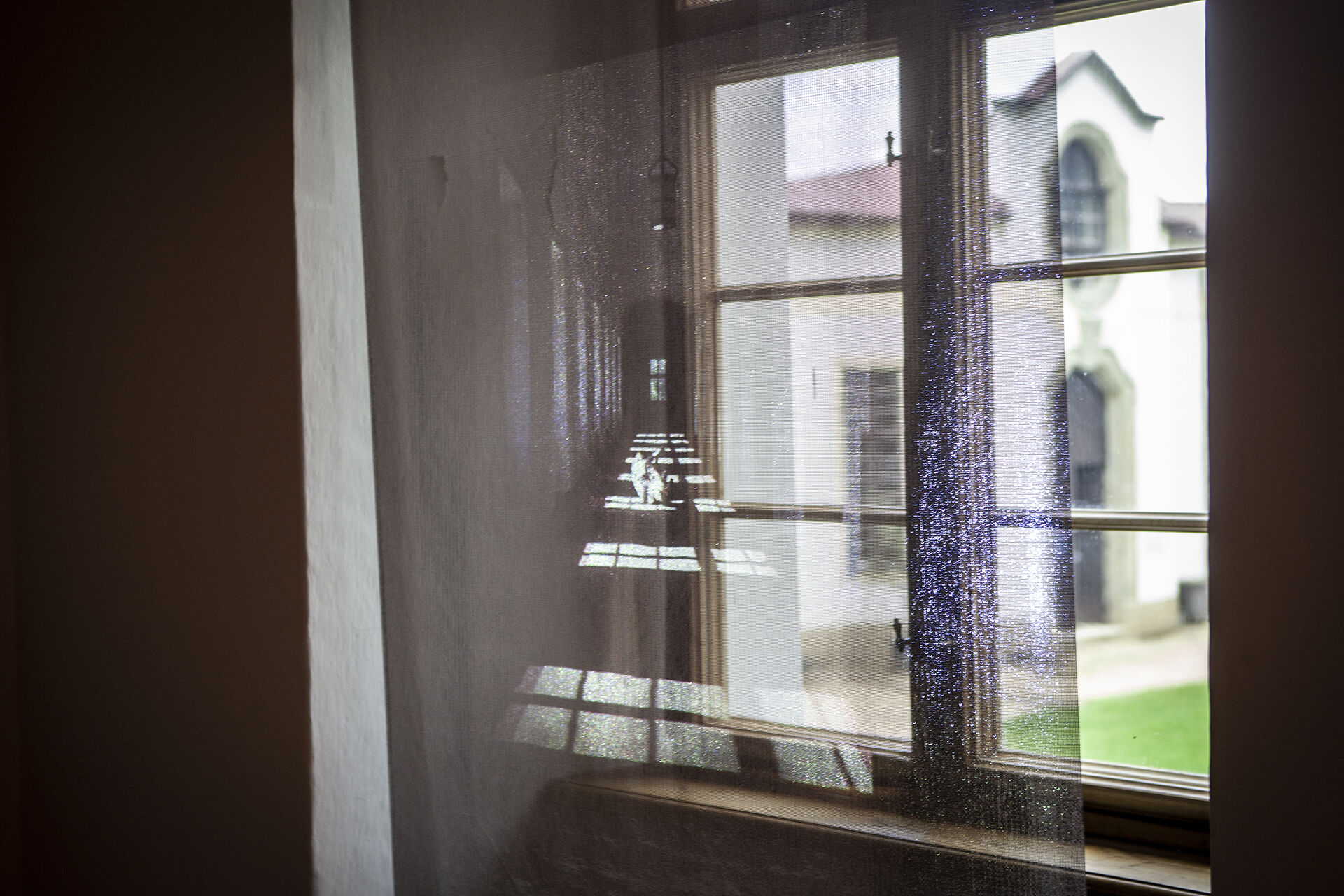
So this cannot be regarded as a limitation but as an opportunity to work with different tools. How often does a lighting designer find all the walls and the ceiling white? Moreover, there are usually other elements in the space that can be sources of inspiration: windows, views through into other rooms, glass vitrines, plinths… and of course works of art. So even though one perhaps cannot draw on the same kind of magic as in the black box, other – and entirely unique – effects can arise. Something like white magic.
Martin Maryška: You have also done work in Žďár with SE.S.TA; KoresponDance is primarily an open-air festival. What sense is there in thinking about lighting design for site-specific dance performances en plein air?
Pavla Beranová: It is always something of a gamble. What is of value is to think about the moment of transition from natural light to artificial: in daylight, theatrical lights are barely visible, but as dusk falls they gradually emerge until you suddenly notice that the space is lit by them alone.
Alternatively, one can reflect sunlight. I have seen a production where they directed sunlight using golden reflectors, but you can only rely on that in countries where it is usually sunny. I personally enjoy working with daylight, for all its unpredictability. In Žďár two years ago, I filtered daylight through colour filters and projected light onto windows that connected with the space behind them. Both these effects were heavily dependent on the actual state of the sunlight at any given moment.
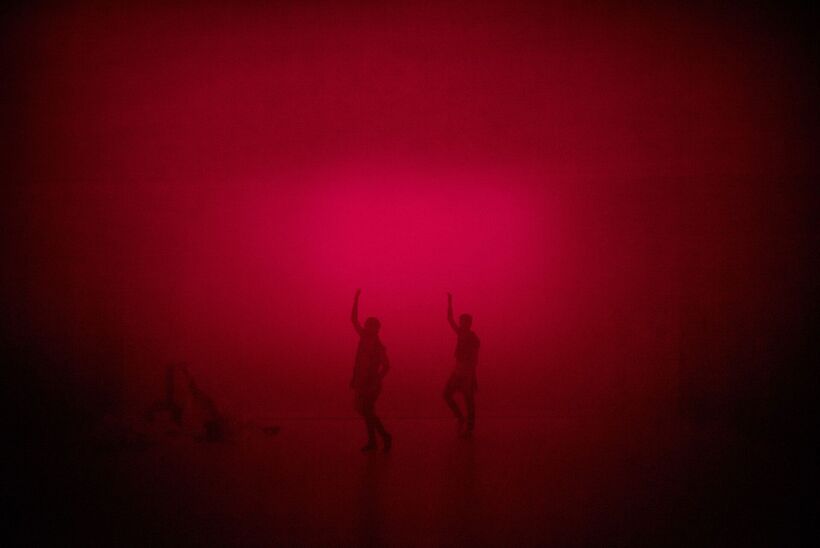
Martin Maryška: We have spoken about what light does to a work of art. Now, what does light do to the body of a performer when it strikes it?
Pavla Beranová: A living body becomes an image, and that is the best thing about it. Some images, however, only work with real performers: you cannot design the lighting for a work of contemporary dance with stand-ins and then perform it with dancers. The lighting situations work only with the magnificent movements of real dancers. They remain living bodies, but the overall result is an image that they help create. I feel that professional performers generally come alive under the lights. Dancers, above all, perceive the light and interact with it.
Martin Maryška: You say that dancers come alive under the lights. This might be the proverbial glow of the spotlights. How else do they perceive light? How does it change the way bodies move?
Pavla Beranová: We would have to ask the dancers. I would also say it is quite individual. I do think, however, that light – specific light forms and beams – as well as the overall atmosphere almost certainly influence how they move. Light can be a partner and a point of orientation, but to a certain degree can also complicate a dance performance, dazzling and disorienting… So, during rehearsals, dancers learn to move "against the light". The ideal lighting for a specific scene need not be ideal for the dancer at all.
Once, long ago, I experimented on interaction with light at an open class run by one of the choreographers I was working with. We were putting together a performance of John Milton's Paradise Lost, in which Samir Calixto (ed. note: performer and choreographer) had a solo lasting several minutes in a single "contra" light. For the class, he brought three similar lights on wheeled stands, let us improvise, and slowly moved the lights around. It was extremely interesting. You feel how the light is directed at you and how it gradually leaves you again, and you find yourself for a moment in the gap between the illuminated areas, where nothing can be seen.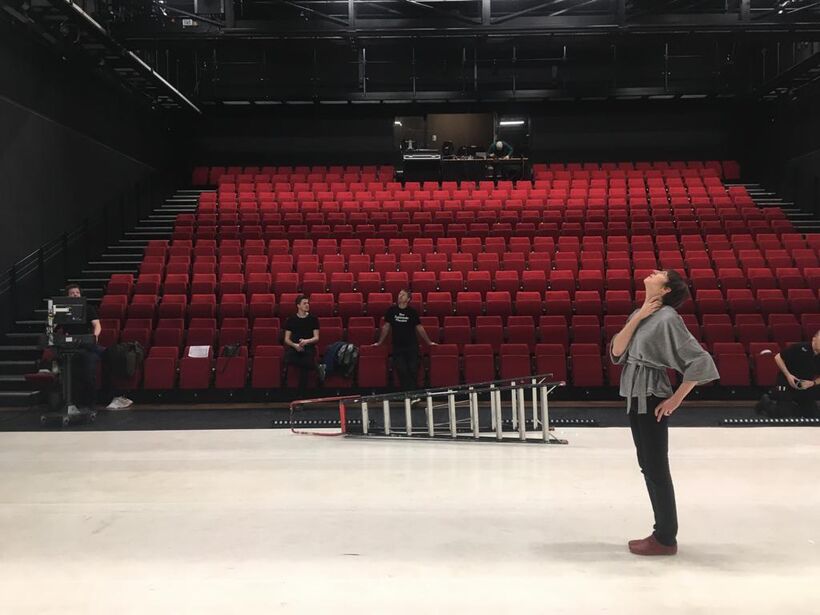
Martin Maryška: What is the difference between lighting a body in dance, in opera and in drama?
Pavla Beranová: In opera and drama, I am less concerned with the bodies than with the space. Opera must be spectacular in its totality, while the individual "bodies" are not so important. In dance, by contrast, sometimes even small movements must be visible and attention must be concentrated on them.
In drama it is somewhere in between. Spectacularity is not so important but there must be focus. It is also essential that the actors' faces are visible most of the time. It is an argument that many lighting designers do not like – lighting so that they can be seen – but it is necessary. If you cannot see an actor's face, you feel you cannot hear them properly either.
Martin Maryška: How does light as metaphor shift into light as physics? How do we perceive, for instance, a halo? Does that metaphor have a physiological basis?
Pavla Beranová: Light metaphors or phenomena such as the halo certainly have some reflection on the physical level. I am not a specialist on this topic, but real light is a form of energy, radiation. And a halo or aura without doubt symbolises the emanation of similar energy. In general, I think physics and philosophy are closer to each other than it might appear at first glance. I do, however, tend to distinguish between light as a physical phenomenon and metaphysical light, as understood by Platonic or Neoplatonic philosophy, as in that metaphysical sense you can be illuminated by light even in complete darkness. That is – with a little luck…
Martin Maryška: Are you interested in light from the physical standpoint – the theory of relativity, light as a wave, light as a particle? Does that feed back into your work?
Pavla Beranová: It is not reflected much in practice. I deal with light intuitively. For me, physical phenomena are rather a source of inspiration – I am interested in the universe, in the distances within it, in the speed of light. The theme of wave motion and vibration has fascinated me for many years. I began engaging with this theme when I did the lighting design for a staged concert by Cello Octet Amsterdam some years ago.
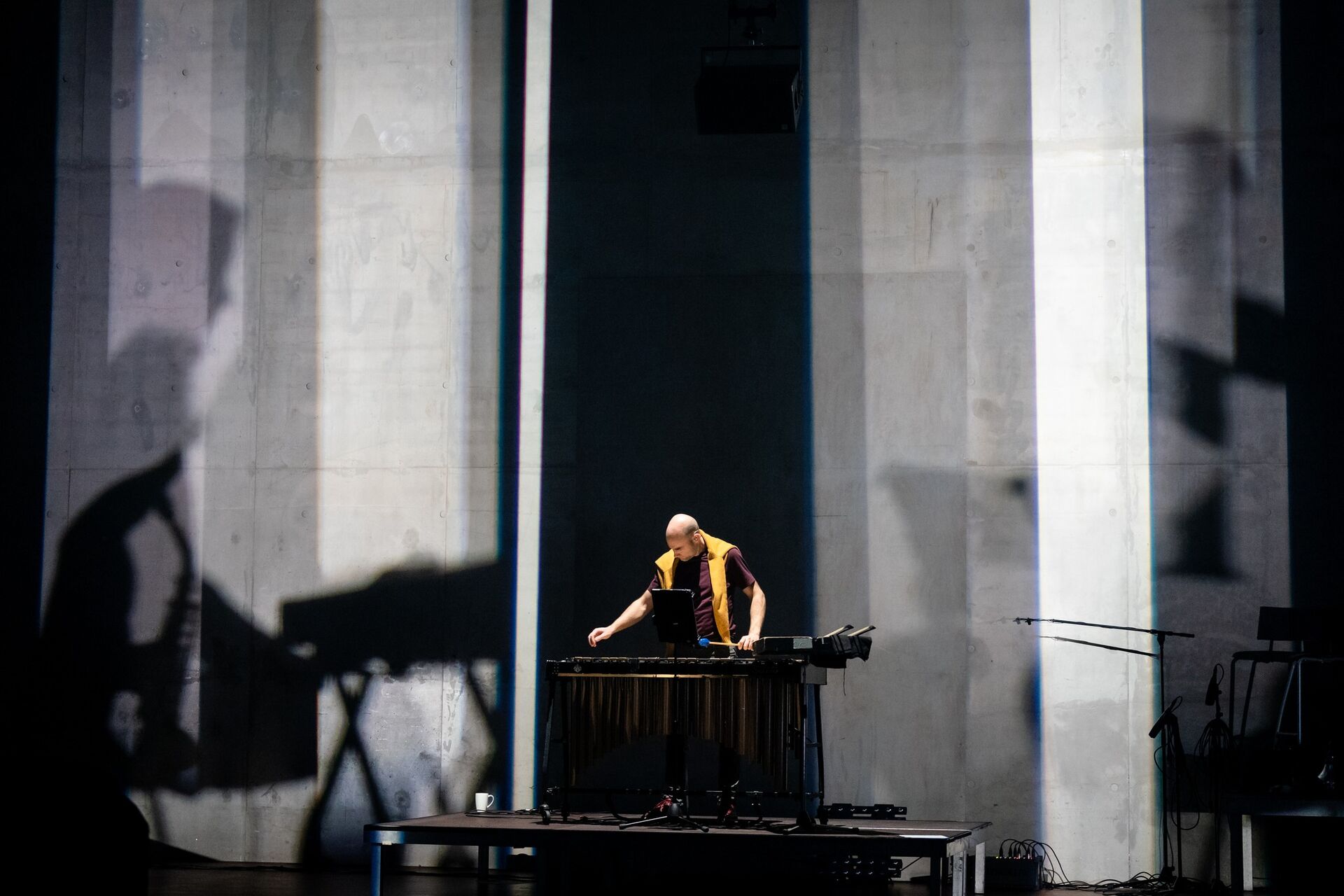
It was the composition Summa by Arvo Pärt, performed by eight cellists. Apart from the fact that you could physically feel the vibrations thanks to those eight cellos, the music, the movement and the light all seemed to have frequencies of their own, yet met in surprising harmony at certain moments. Recently, I transformed my fascination with wave motion into the installation Everything is Vibration at the Minimal Music festival in Amsterdam. In this case, it was music by Eliane Radigue and, also thanks to the sun, all the elements – musical and visual – met again at certain moments, and you could truly feel a kind of trembling in the room.
Martin Maryška: Let me ask about technology. How do you tell when it's excessive and should be scaled back? When is technology too seductive?
Pavla Beranová: I hope I am able to assess that. Technology is seductive. In lighting and projection, it is developed to such a degree that one would sometimes like to shape the themes around the technology itself. I try not to do that. I look for the technology that will allow me to do what I actually need. Of course I profit from the rapid progress – some things are now simpler, cheaper and more accessible. Yet I am a minimalist, tending to reduce rather than add, for example when working with daylight. We have so many technologies and possibilities today that it is difficult to perceive what the essence of a given moment in theatre or dance should be. And I try to go toward the essence.
Pavla Beranová is a lighting designer, artist and educator. She studied media studies and journalism at Masaryk University, and theory and history of design and new media at UMPRUM. During her studies, she worked in the lighting department at Archa Theatre and completed two internships in Paris that fundamentally influenced her professional direction: at C2RMF (Centre for Research and Restoration of Museums of France) under Jean-Jacques Ezrati, and at the Lumières Studio founded by Odile Soudant, focused on architectural lighting. She worked at the ACT Lighting Design studio in Brussels from 2011 to 2015, where she participated in lighting installations and large-scale stage productions. Together with Vladimír Burian, she led the Studio of Lighting Design at JAMU in Brno for several years. Today she creates lighting concepts for theatre, exhibition projects and architecture, while also teaching lighting design at DAMU in Prague.
Source: NAMU