
From the open-air theatre of Circo Massimo to the industrial site of Teatro India and the gardens of Villa Massimo (Accademia Tedesca Roma), the moving body told stories, activated and transmitted memory, resisted control, dreamt, and yielded to pleasure. This letter focuses on the highlights from Rome’s summer dance season – reconstructions, new productions, and improvisational quests – as presented by Teatro dell’Opera di Roma (TOR) and the Fuori Programma and Sempre più Fuori festivals, but undoubtedly there was much more to see and do in a city that never rests.
Letter from Rome, July 2026: Something “Old” - Something “Borrowed”- Something “New”
Following a period of cultural drought, at least for dance, when July arrived in Rome, it felt like two months squeezed into one: a lot of performances in a short time. Amid the excessive heat waves, works by John Cranko, Maguy Marin, Sita Ostheimer, Gruppo Nanou, and Panzetti/Ticconi across Rome’s various summer stages became small oases in an otherwise compact cultural calendar.

IT’S NIGHT AGAIN by Panzetti / Ticconi with Dance Theater Heidelberg. Photo credit© Manuela Giusto-Sempre Più Fuori festival 2026.
Advertisement
Something “old” & something “borrowed”: Shakespeare’s tragic love story, biblical sin, and Ravel’s music re-choreographed
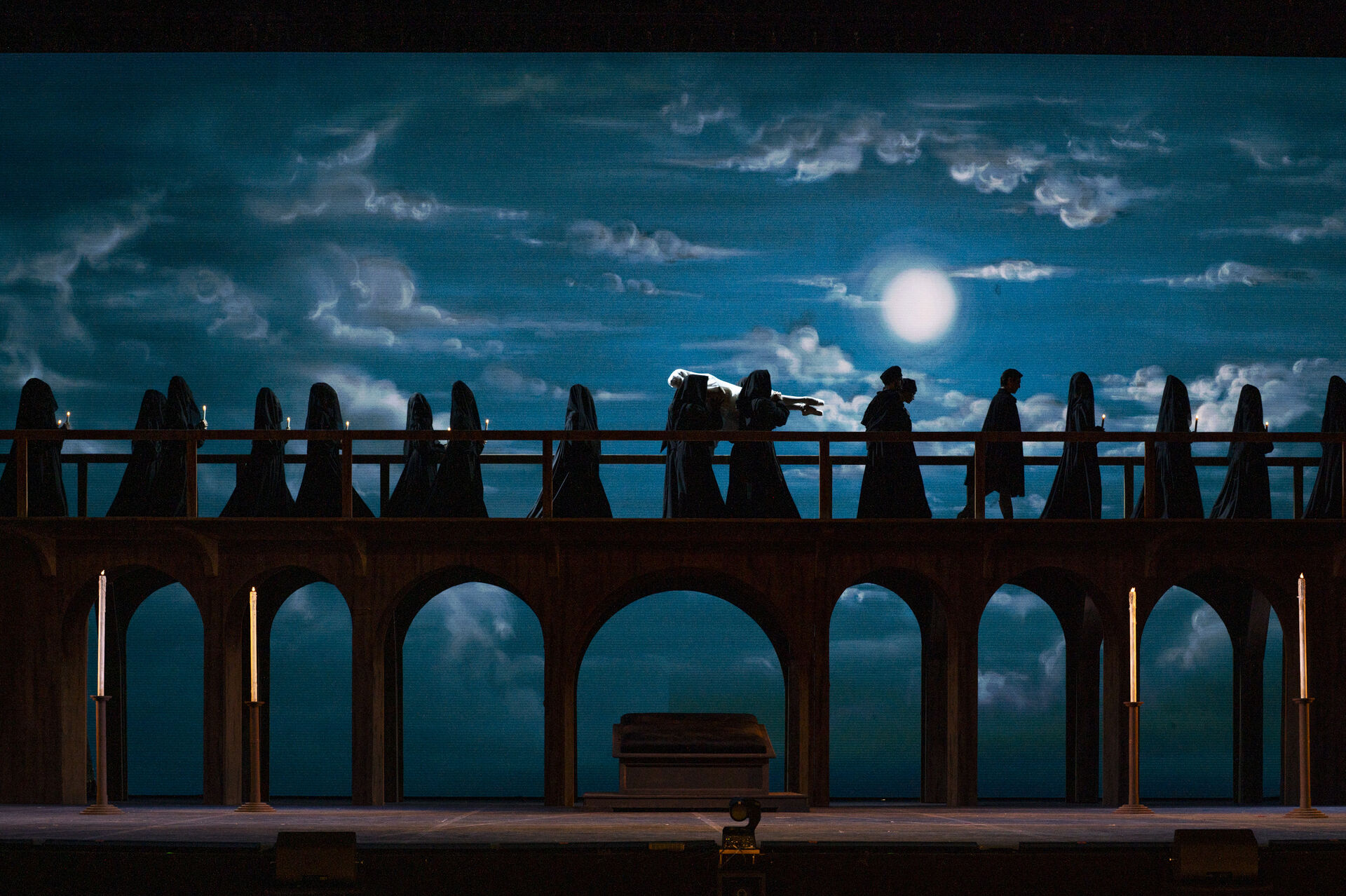
Every summer, TOR curates an outdoor programme of concerts, operas, and ballet performances. For the current season, John Cranko’s reconstruction of Romeo and Juliet (1962), Shakespeare’s well-known bloody love story fused with swordplay and carnival scenes, was one of the must-see ballet performances. From the 24 July performance, it was clear that what made Cranko’s narrative ballet particularly compelling was its blending of emotions, theatricality, and everyday physicality to portray the characters as real humans; the dancers often broke the rigid vertical posture of the balletic spine to express tiredness, anxiety, or despair. The live streaming of the choreography via close-ups on two screens on either side of the stage revealed a wealth of detail in the dancers’ facial expressions – such a meaningful intervention by TOR for the open-air theatre of Circo Massimo, with its 5000-seat capacity! Susanna Salvi in the role of Juliet was ethereal and convincing, gradually leaving behind her girlish innocence, and Gabriele Consoli as Romeo, genuinely cute but with an occasional lack of balance. Prioritizing movement composition over storytelling, Cranko’s choreography sometimes felt as if it was lacking balance between scenes, yet, Sergei Prokofiev’s inimitable music, performed exceptionally by TOR’s corps de ballet and live orchestra, ultimately filled the audience with a burst of emotions.
Another reconstruction that stood out for its elegant and intimate choreography was Duo D’Eden (1986) by Maguy Marin, performed as part of a double bill dedicated to the French choreographer, alongside Grosse Fugue (2001) during the Fuori Programma (FP) festival (21 June–10 July). Loosely inspired by biblical sin, Duo D’Eden is a male-female duet, interpreted by Michele Merola Contemporary Dance Company (MM CDC) dancers Mario Genovese and Fabiana Lonardo, depicting a tender romantic relationship. Against a soundscape of heavy rain (composed by Marin), it unfolds as a delicate choreography of mutual care and trust. Clad in dirty and bruised skin-color leotards, the bodies seem ruined as if from a distant past, tired as if they had walked for centuries to reach to the present – a perfect complement to the surrounding industrial ruins of Teatro India. Their faces, covered with handmade masks by Monserrat Casanova, look primitive with the male’s eyes drawn wide open and the female’s eyes arrested in an eternal sleep. The man is charged with the role of looking after the woman, staying alert to ensure she is always safe. He lifts and carries her in various positions while she rolls, cuddles up, or balances on his body. He supports her and she never disconnects from him, doing everything possible to avoid returning to the ground. In this rather asymmetric yet tender relationship, Duo D’Eden approaches eternal love with a spirit of romanticism, at the same time both touching and creepy.
If, in Duo D’Eden, the woman is represented in her pure fragility, in Grosse Fugue she regains ground, finding the strength and vitality to claim space and seize life. Grosse Fughe is based on a choreographic interpretation of Ludwig Van Beethoven’s propelling and dramatic Die Grosse Fughe Op.133, adapted for a MM CDC female quartet. Through a dynamic and energetic movement vocabulary that combines jumps, pointed feet, and arched backs, the dancers gradually begin to expose their tiredness, falling and allowing their weight to sink to the floor while hitting the ground. The change in their physicality makes us notice the passing of time, as if these women were gradually transitioning from the freshness of their youth towards the weariness of mature life, right before our eyes. Marin’s Grosse Fugue is an homage to the woman and the different stages of her life, celebrating femininity and passion under the shadow of pain and disappearance.
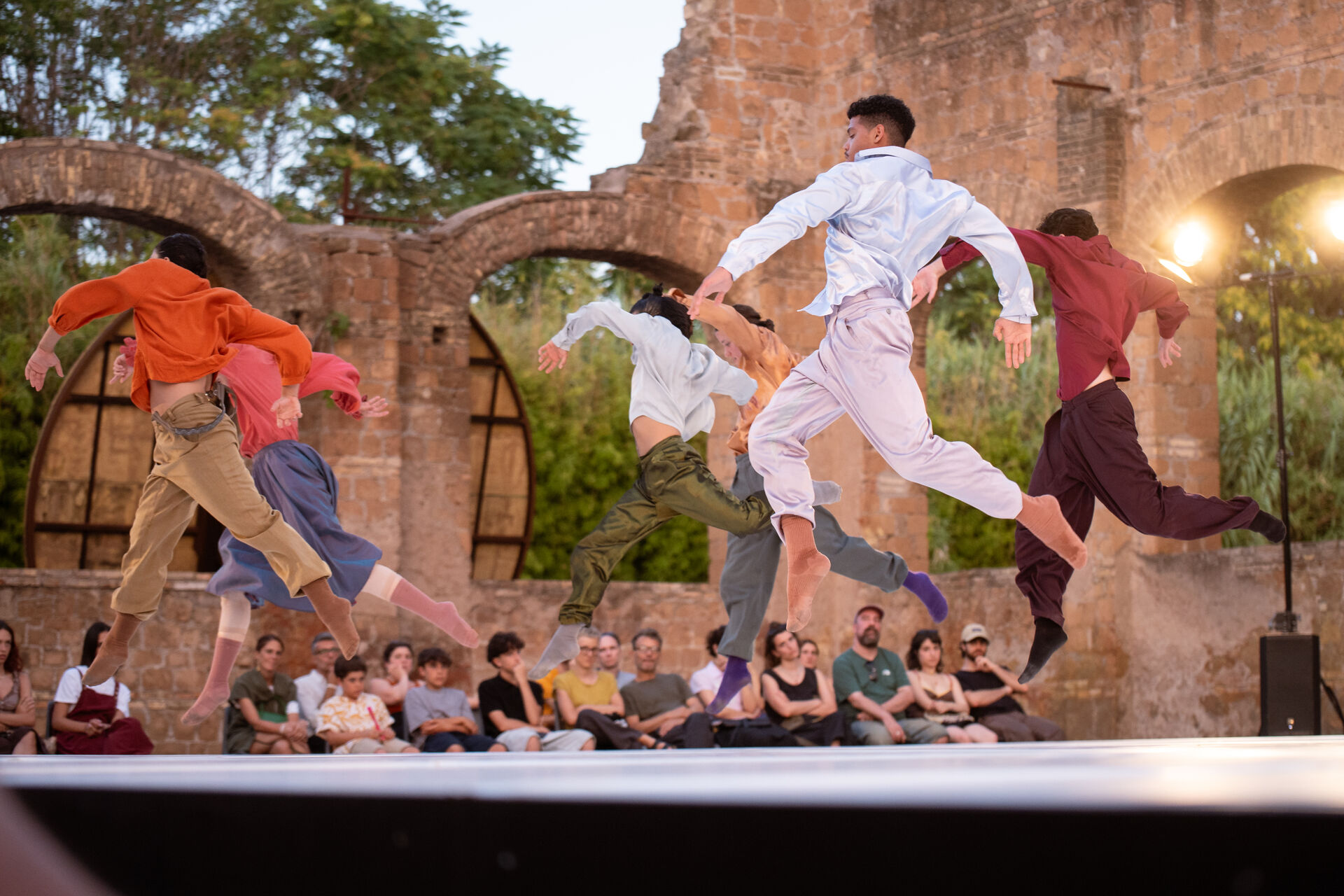
In contrast to Marin’s precise choreography, Hasard & Bolero (also part of the FP festival) materializes through a looser choreographic structure, combining a pedestrian attitude with a movement quality that activates multiple centres of the body. Performed by the international cast of the Ruhr-based MiR Dance Company, both pieces are choreographed by Sita Ostheimer to Maurice Ravel’s scores, with the first part, Hasard, serving as an introduction to the second part, Bolero. In Hasard, brief moments of togetherness, performed through expansive, wavy movements, deep lunges, and spirals, emerge only to quickly disappear. Occasional body slaps, claps, and stomping feet evoke the gestures of Flamenco dance culture, acting as subtle reference to the Spanish dance tradition, organically fused with the dancers’ curved backs, turning and jumping bodies. These references gradually echo in Bolero as the dancers, one by one, begin to display their dance skills while the rest of the group supports and empowers them vocally. Ravel’s well-known music composition slowly intoxicates them, causing them to lose control and indulge in its aural vortex, in a skilful organization of movement material that explodes under the music. But what really makes our bodies vibrate? The choreography? The passionate performers? Or Ravel’s incomparable music, a guaranteed recipe for success?
Something “new”, somewhere between autonomy and command
Countering the traditional view of choreography as an art of command, William Forsythe once proposed it as a practice that “can promote the dancer’s autonomy” (The “Bamdialogue” public forum, 2003). It is within this frame that the premiere of Playwork by Thomas Bradley, Ad Libitum by Simon Le Borgne, and Goldroom by Gruppo Nanou, all performed at FP, are approached through an on-the-spot decision-making process.
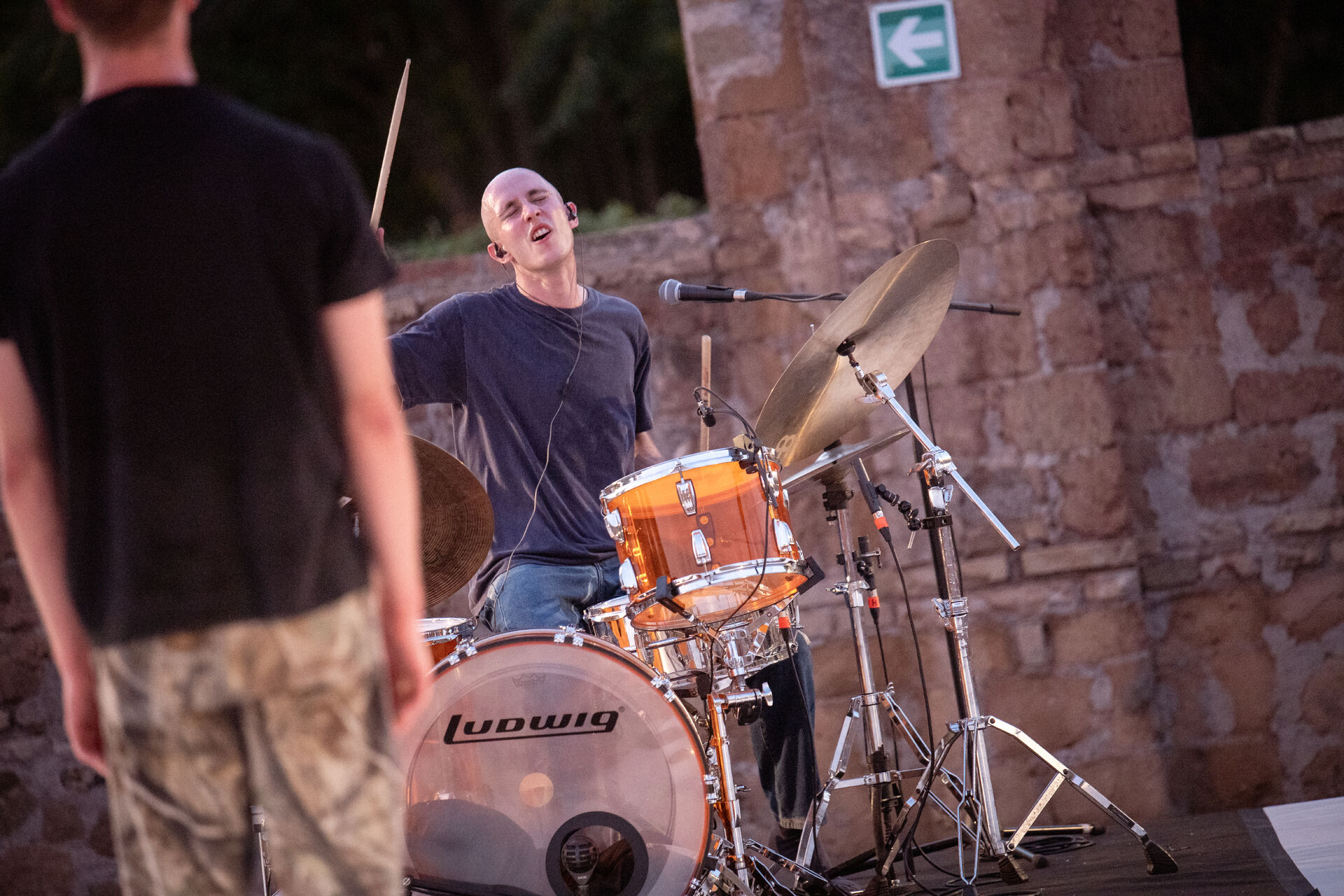
Playwork is an improvisational piece by an international quartet led by Bradley, memorable for its elaborate and elegant costumes (also made by Bradley) that make use of geometric designs and multi-layered folds to bring a doll-like quality to dancers’ movements. Playwork encounters the unexpected but playfully flirts with a lack of cohesion. Ad Libitum, as the title suggests, is a duet driven by the impulse of pleasure, grounded in intense listening between two outstanding performers: Simon Le Borgne and Ulysse Zangs, who remain closely in sync. Their connection lies in the dialogue between dance and music, which was composed and played live by Zangs (both dancer and musician). Demanding heightened presence, almost an improvisation practice, it follows a linear climax that increases in energy and dissolves with a warm embrace between the two of them.
Gruppo Nanu’s Goldroom is a durational live performance set to the music of Bruno Dorella, supported by an audiovisual system for capturing and broadcasting movement. Performers and audience members seemingly come and go at will, while three monitors offer live details of the dancers’ moving bodies and shifting views of their random and isolated actions, often mixed with altered temporalities. Face masks, a long blue sheet, garments that introduce different characters and golden corridors that alter the reflections of the bodies create an atmospheric, yet mysterious environment observed by our gaze and the surveillance system. Building on existing research developed in Redrum, the company’s previous work, Goldroom destabilizes narratives and undoubtedly leaves each audience member with a different memory of its fragmented composition, making us reflect on what is true: our lived experience or what will remain as an archival record on the surveillance cameras?
A recent piece by performance duo Ginevra Panzetti / Enrico Ticconi, IT’S NIGHT AGAIN (Italian premiere), was presented as part of the multidisciplinary festival Sempre Più Fuori (6–17 July) in a double bill paired with Enzo Cosimi’s adapted version of Venere vs Adone, a piece dealing with the vanity of narcissism and self-love.
Commissioned by the Dance Theater Heidelberg, IT’S NIGHT AGAIN is a quartet piece that embodies the emotions and situations that usually emerge during the dark hours of the night, when dreams, desires, and fears are activated, but also when singularity and togetherness occur amid the noise of a night club. The quartet’s synchronicity is almost constant – occasionally lost and then refound – while the slow-motion effect accentuates the dream-like quality of the dancer’s actions. Under the hollow soundscape (composed by Demetrio Castellucci), clubbing gestures give way to choreographies of cheering and celebration, alienated from their everyday rhythm. A bowing sequence, as if at the end of a performance, is repeated to seek audience approval, whilst exaggerated breathing, almost mimetic of the gasp with which we sometimes awaken from a nightmare, makes the bodies inflate and deflate. Dummies in the dancers’ mouths are a constant reminder of the fear and loneliness that the night can evoke, throwing them away signals growth and independence.
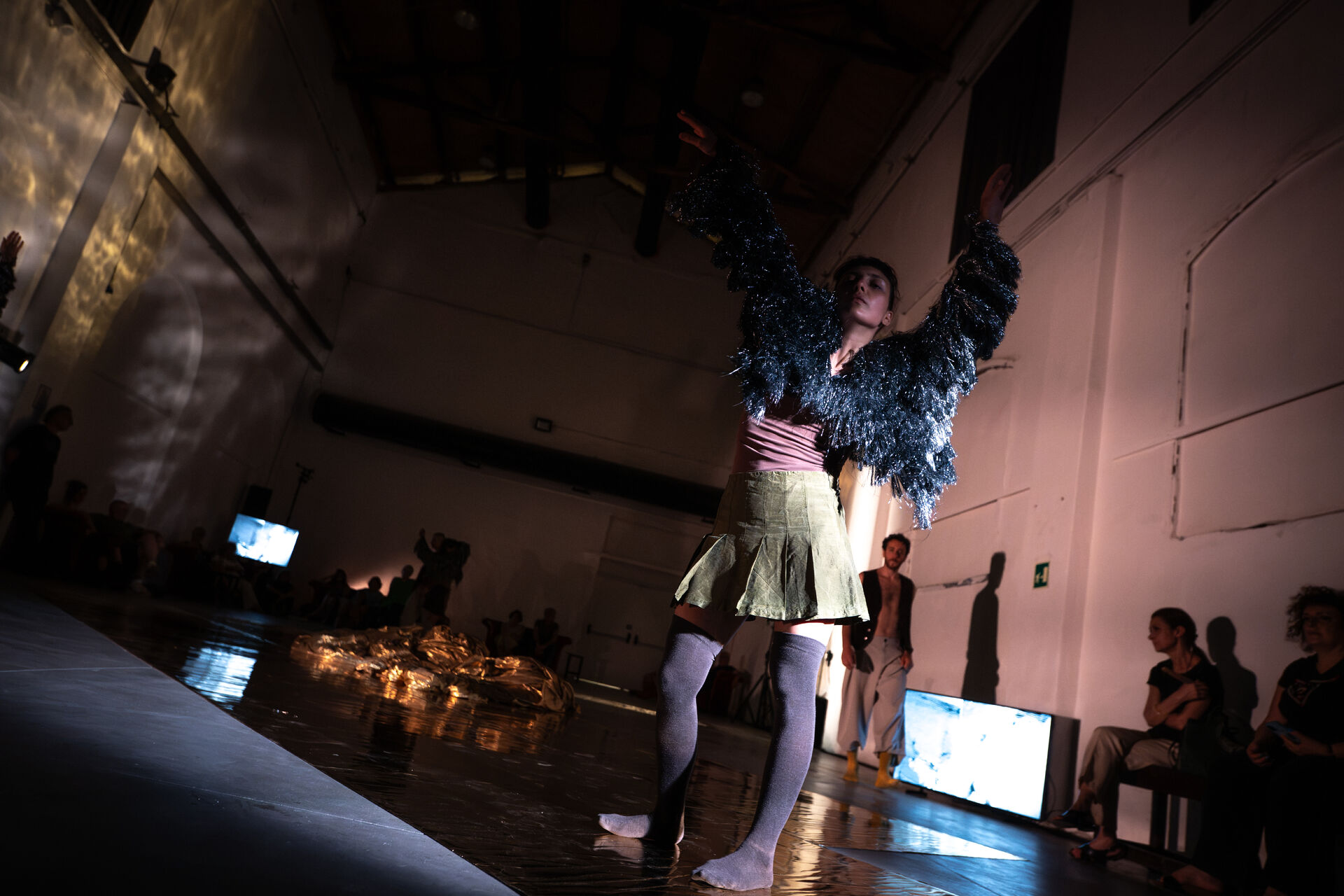
In a dream-like sequence, the dancers move unexpectedly yet organically from one situation to another and IT’S NIGHT AGAIN confronts the concept of the sleeping body and the insomniac body, merging dreams and nightmares, day and night, reality and illusion. Interestingly, the idea of REM sleep appears in Juliet’s death-like slumber, Eve’s closed eyes in Marin’s Duo D’Eden, and the dreamy-nightmarish environment of Goldroom. What in real life manifests through the resting, immobile body, these performances weave into their dramaturgies, revealing the ways the active body, and its functions, at rest still fascinate artists and audiences alike – an “old” idea lingering in time, re-emerging as “new” and “borrowed” from real life.