While Adriana Štefaňáková is responsible for both the concept and the choreography and is on stage herself for most of the time, Liubov Maltseva has given the work its visual form and occasionally appears in it as a performer. The evening consists of three chapters that build on one another and develop thematically. The strongest motif is digital noise and the overload of the present, the demands that social media place on people, and the difference between internal experience and the view of the external eye—the camera, which increasingly represents the lens through which others see us and through which we see ourselves. Štefaňáková frequently addresses social phenomena in her work, and she has long been interested in the themes of digitalization and the blurring of the lines between online and offline life—she explored this in last year’s performance Privacy Policy. She will also examine these issues in the open-air piece Overexposed, which she created for this year’s TANEC PRAHA.
Youth in the Shadow of Digital Noise. Adriana Štefaňáková’s triptych offers a clever and insightful commentary on the present
Adriana Štefaňáková made a notable debut to dance audiences last fall as a performer in Miřenka Čechová’s production Hostage. Now, as PONEC Theatre’s artist-in-residence for 2026, she has presented her own full-length work Triptych: Genesis/Metamorphosis/6’7, which is a witty and intelligent commentary on the age of digital overload.

Genesis refers to the first book of the Bible and the theme of origin and creation, while Metamorphosis is an allusion to Kafka’s metamorphosis. In these chapters, the artist focuses more intensely on the body and turns inward; thematically, they relate to growing up, maturing, and inner transformations. In contrast, 6’7 engages in a more intense dialogue with the audience and is much more of a social commentary.
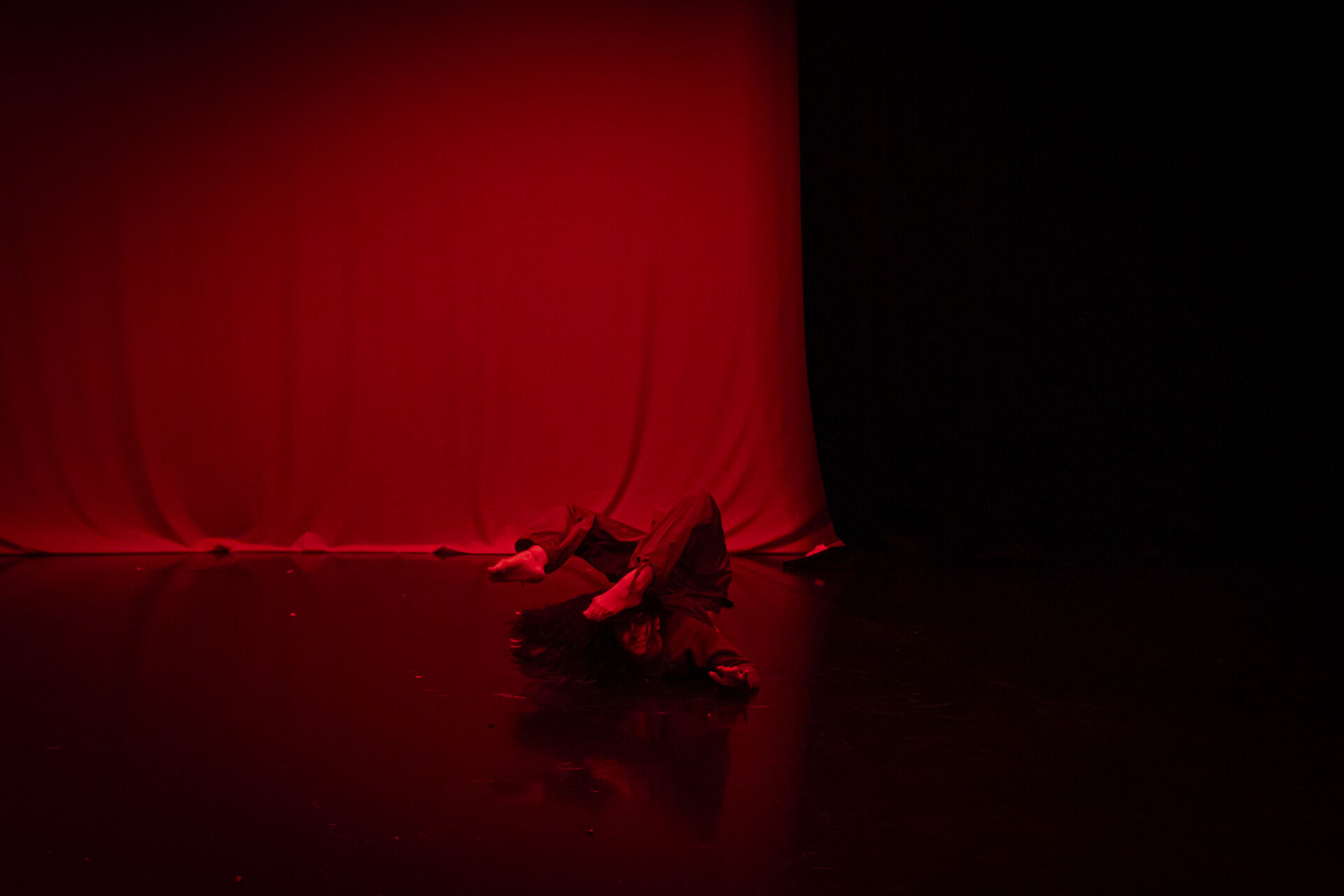
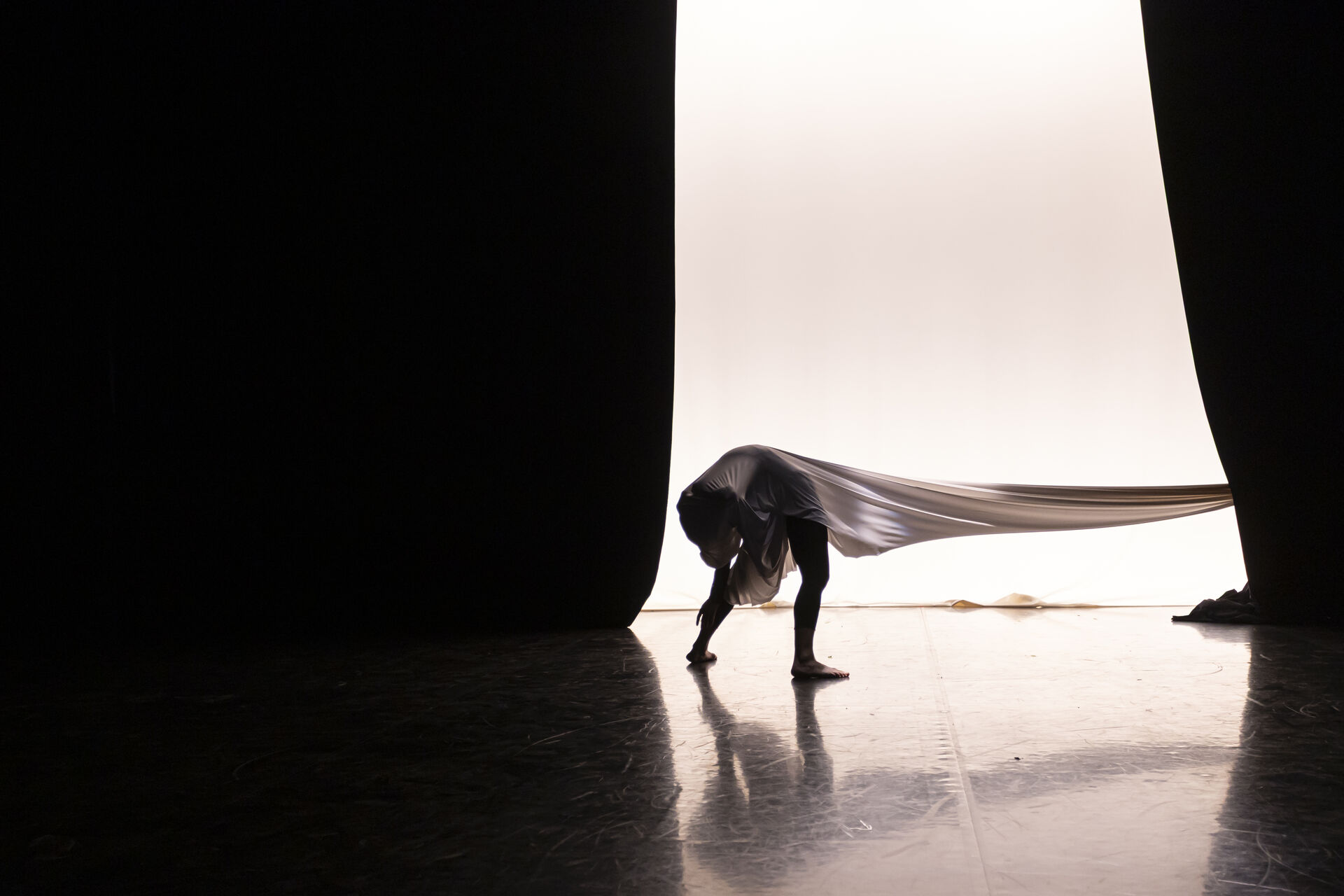
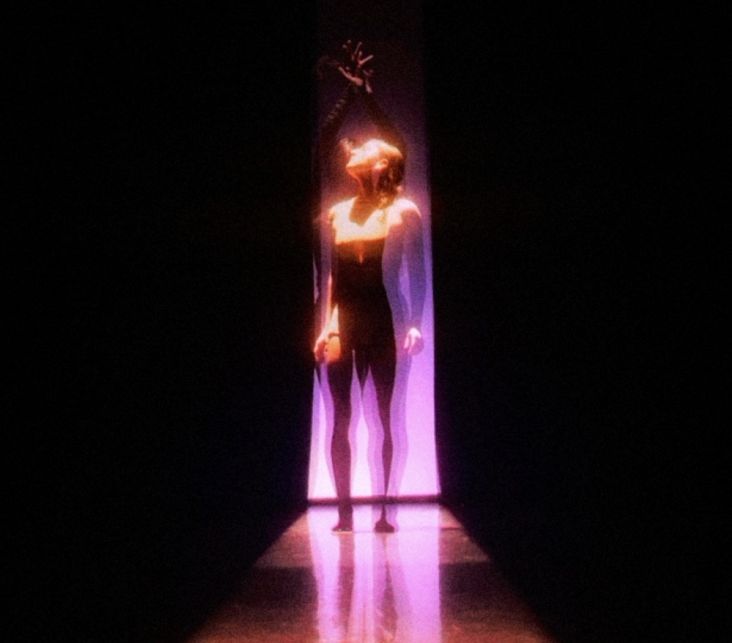
The production opens with a shadow image of a figure undulating behind a piece of fabric, its shape reminiscent of a glowing smartphone screen. The dancer’s figure gradually penetrates the fabric, drawing closer to the audience, becoming entangled in it until she fully emerges—as if gradually being born, hatching from a cocoon. Štefaňáková’s movement, mirroring the fabric she occasionally works with again, is soft and fluid. Yet at the same time, it is filled with great tension.
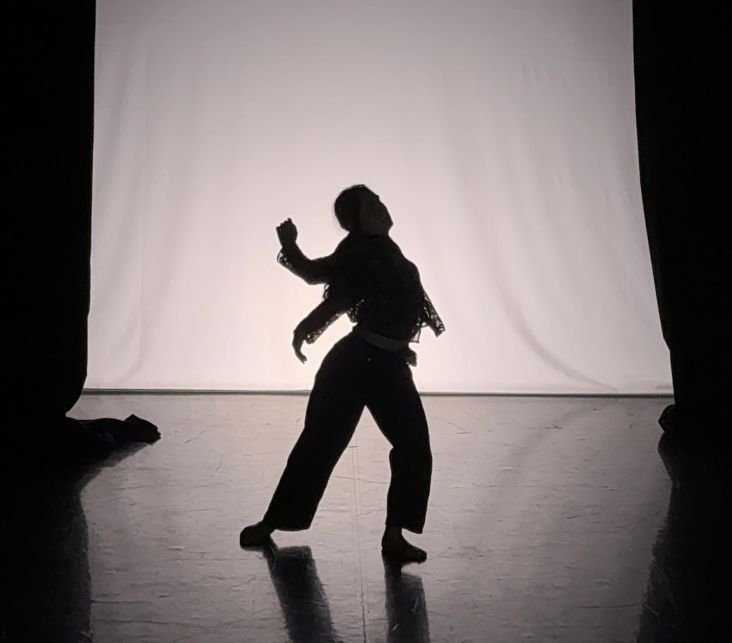
In the first part of the evening, the artist works extensively with floorwork and also draws on her precise dance technique and background in classical dance, which she studied at the Prague Dance Conservatory.
At times, she refers directly to classical ballet technique, mimicking the well-known positions used at the barre and thus returning “to the beginnings”—that is, to her own beginnings in dance. She gradually modifies, sharpens, and accelerates the movements until they form a captivating sequence.
Classical ballet technique also permeates her choreography through the frequent use of attitude, arabesques, and other extensions, all executed with technical precision. Thus, even those audience members who value the aesthetic experience above all else in dance will find something to appreciate. Genesis and Metamorphosis, in particular, offer plenty of this.
The work gradually shifts from a focus on physicality and the artist’s more personal themes to social commentary. Here comes one of the few more awkward moments, as the transition to an explicit commentary on the digital world is too abrupt, even forced, and highly didactic. Suddenly, all kinds of notification sounds familiar to iPhone users begin to ring out. They create such a cacophony that they can even provoke anxiety, especially if someone recognizes, say, their own alarm clock in the jumble of sounds. At the back of the stage, a white screen shaped like an iPhone display unfolds once more, and as Štefaňáková continues to dance, Reels—short videos from Instagram—begin to play behind her. Anyone familiar with social media trends will recognize many of them—such as memes from this year’s Met Gala, which took place just a few days before the premiere.
Štefaňáková presents a dystopian image in which a live art carries the same weight as a funny animal video—both compete for the same attention from an overwhelmed user.
The songs heard in the videos are also among the latest viral hits, making it clear that the artist respected the ephemeral nature of today’s social media and that the final selection was made just before the performance. Many of the videos projected behind the performer are funny and engaging. It therefore becomes increasingly difficult to focus on her—many audience members laugh out loud at what is happening behind the dancer. The scene brilliantly mimics our scattered attention, but also the digital space in which it is increasingly difficult to capture attention, even if the content is of the highest quality. Štefaňáková presents a dystopian image in which a live art carries the same weight as a funny animal video—both compete for the same attention from an overwhelmed user.
In the final scene of the first two parts of Triptych, the performer repeats a TikTok dance, which is simultaneously performed by two dancers on the “screen” behind her. She uses the very end of the first part of the evening for a biting commentary, as humorous captions appear behind her—for example, that the music and choreography were chosen by an algorithm, and that originally six dancers were supposed to perform, but the scaled-down version is the result of grant policies.
In the era of digital Dada
The two parts of the evening are separated by an intermission, but it also serves a functional purpose—in the theatre foyer, visual artist Liubov Maltseva creates a live installation out of herself. She sits in an extravagant fur coat and sunglasses at one of the tables, baking cookies. She films herself on her phone in the typical vertical format for social media. This creates a paradoxical situation where dozens of people are watching her, but she isn’t speaking to any of them—she’s speaking into the lens to a potential audience of future anonymous consumers. The scene is quite absurd—Maltseva “bakes,” like many other influencers, in an outfit that is not in the least bit suited for the kitchen, while flour flies everywhere.
As the audience moves back into the hall and the final part of Triptych, titled 6’7—referencing an absurd trend that perfectly embodies brainrot culture—begins, Maltseva admits to her colleague that she messed up the cookies. She tries to remedy the situation and brings a dessert instead, and then some salty sticks, but she trips every time and both end up scattered on the floor. The third part of the evening is largely a dialogue between the two performers, who authentically embody their friendly relationship on stage and subtly introduce themes of failure and disappointment into the theatrical space. This raises the question of whether a person can fail in the digital space just as often as in the offline world, and whether they receive the same understanding.
Probably not quite. Štefaňáková attempts to create a dance for social media while Maltseva films her, but she fails. She mechanically repeats a TikTok choreography, but in the end she always “let go too much” and steps out of the camera’s frame. “Both Liubov and the algorithm rejected Adriana,” appears in the titles on the projection screen, where other witty comments addressing the situation on stage also alternate. Thus, especially in the final part of the production, the author demonstrates that she possesses not only strong dance technique but also a charismatic stage presence and a sense of humour.
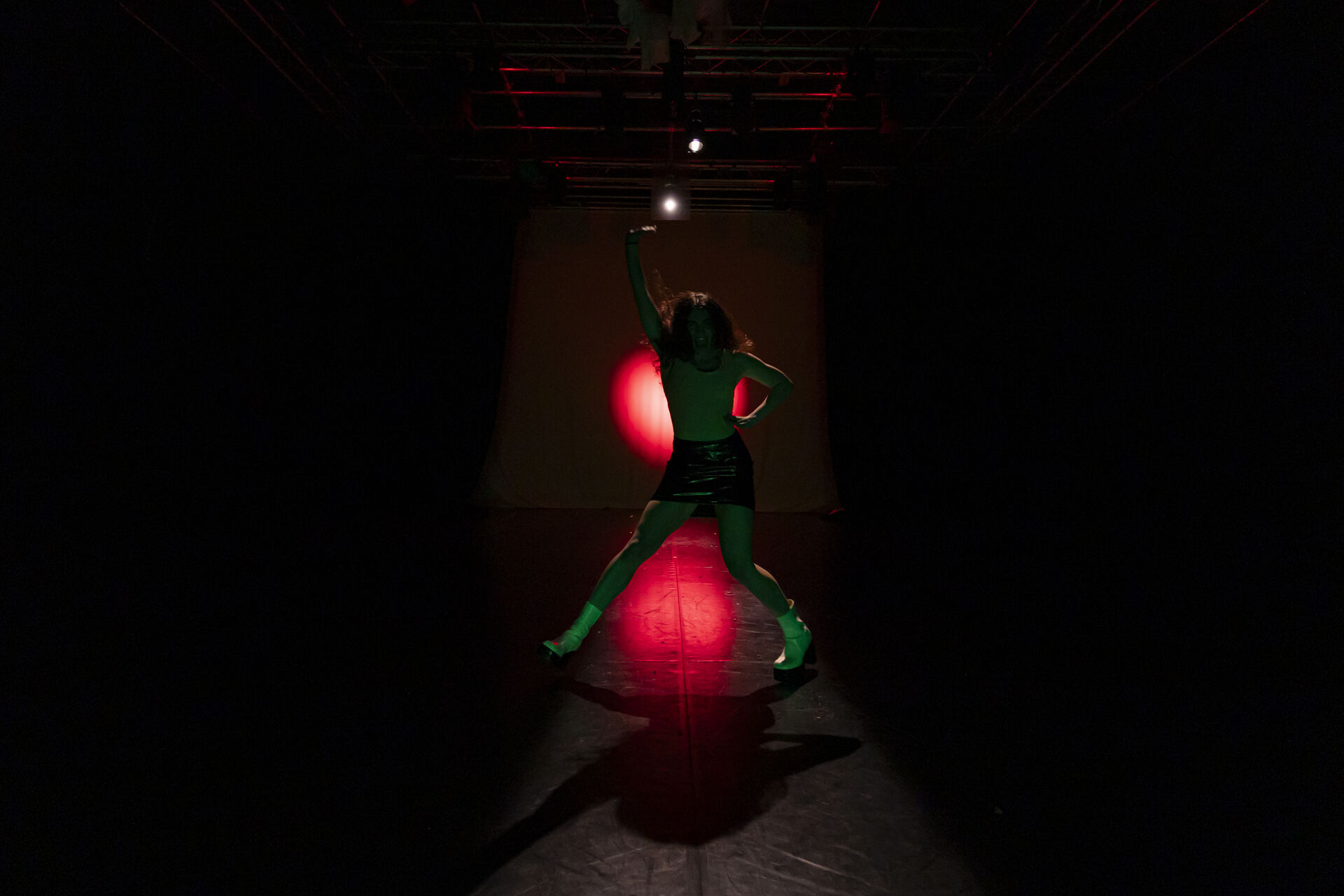
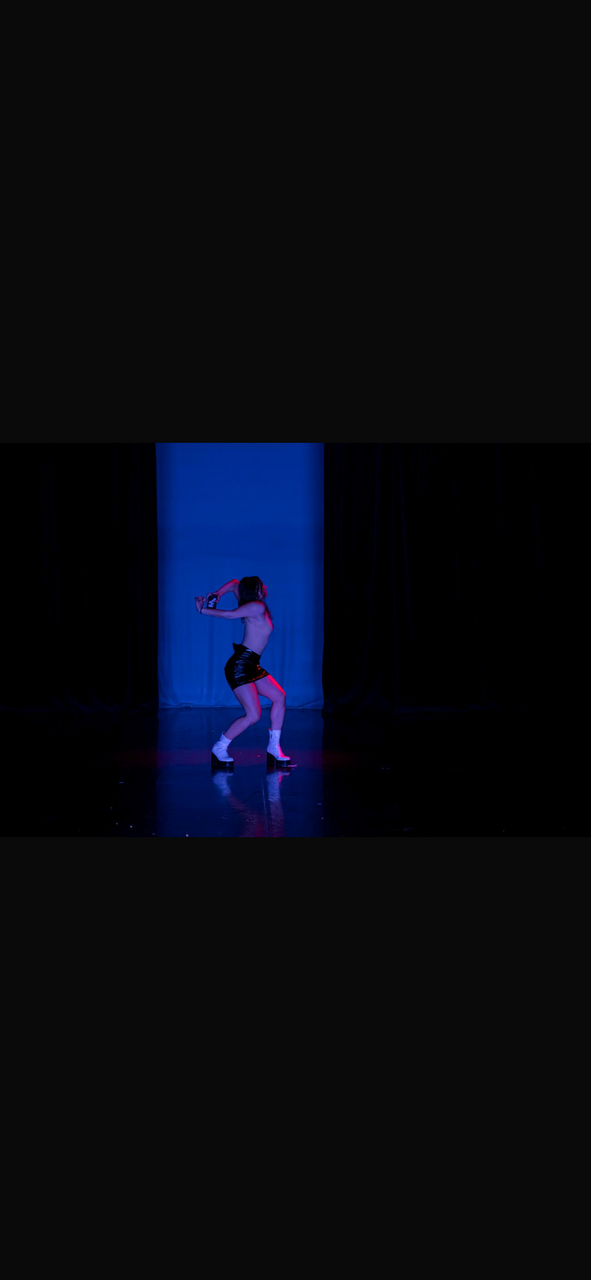
A very similar motif—a certain discipline of movement to conform to conventions—recently appeared in the production Keep laughing! by the Burkicom dance company. It thus seems that the perception of excessive spontaneity and relaxation as undesirable for contemporary society is more widely shared. At the urging of her colleague, the dancer eventually changes into a sexy miniskirt and heels—which work better for the social media eye—and once again performs a catchy sequence designed for a digital audience.
The evening concludes with a group dance improvisation, to which both performers invite the audience, and gradually a large portion of it actually joins in. This gesture can be seen as an invitation back to reality, to an authentic shared experience. However, the figure of the final collective improvisation has appeared so frequently in productions lately that it can come across more as an excuse where a different conclusion to the performance might have been needed. That said, Adriana Štefaňáková’s Triptych is an excellent debut on the authorial art scene, and her creative drive is wonderful news for Czech dance.
Written from the premiere on May 14, 2026, at the PONEC Theatre.
Triptych: Genesis/Metamorphosis/6’7
Concept: Adriana Štefaňáková
Choreography: Adriana Štefaňáková
Performer: Adriana Štefaňáková
Dancers in the video: Veronika Prielozna, Klaudie Sojková
Costumes: Adriana Štefaňáková, Liubov Maltseva
Set design: Adriana Štefaňáková, Liubov Maltseva