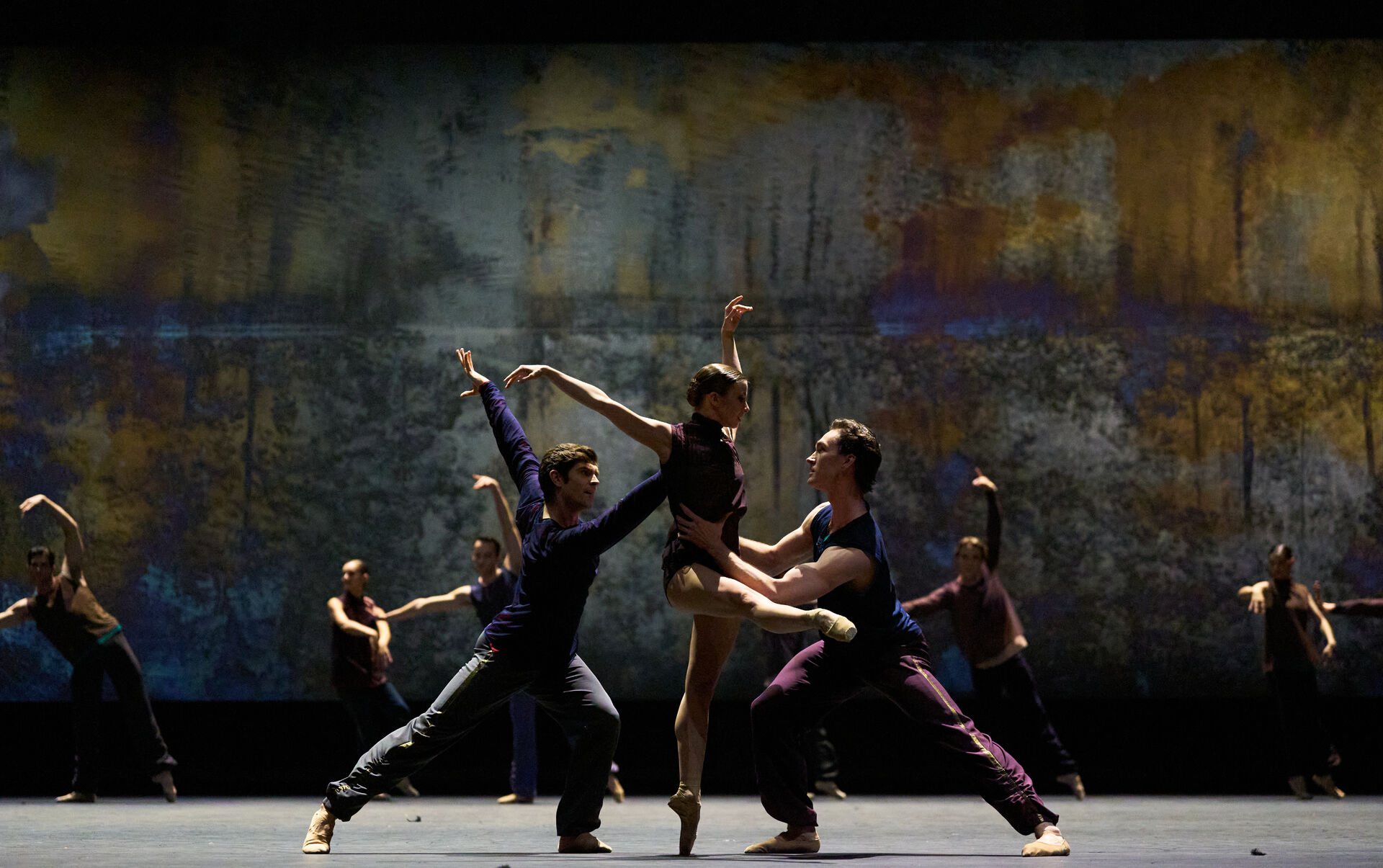
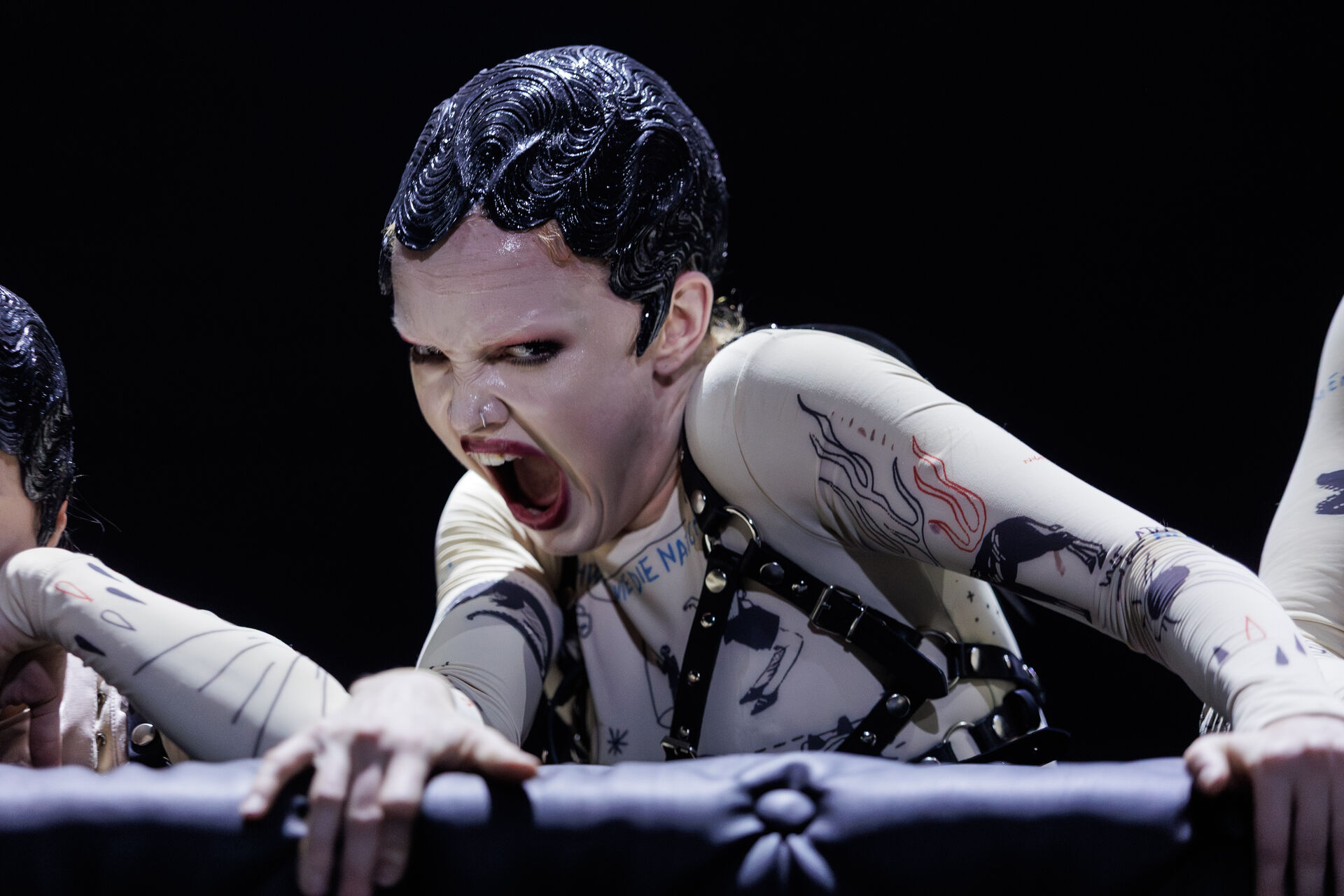
Line U8 of the Berlin metro system cuts through Alexanderplatz and the city's harder edges — where you never quite know what you will encounter. Marcos Morau’s Wunderkammer, created during his residency at the Staatsballett Berlin and premiered in October 2025, feels like that line. The title refers to Renaissance and Baroque cabinets of curiosities: meticulous collections that organized the world through wonder, but also through hierarchy and exclusion. Morau’s inversion is at once simple yet disquieting, for where the Wunderkammer once assembled objects, here the only specimens are living bodies in motion. The Staatsballett Berlin — which has travelled far from its classical origins since Sharon Eyal’s tenure — proves perfectly equipped for the journey.
The corps operates as fluid matter, fractured by solos of searing intensity and duets that open pockets of vulnerability within the mass. Lines, triangles, and pyramids form the dominant geometries, constantly disrupted. A rotating platform, an aggressive advancement toward the orchestra pit, and a confrontational relationship with the audience shatter traditional distances, cycling through grotesque Chaplinesque theatricality, explosive techno sequences, and Weimar-era dystopic cabaret aesthetics. True to his style, Morau works by saturation, not narrative development — meaning arrives through accumulation, images and bodies pressing together until they induce vertigo.
The music by Clara Aguilar and Ben Meerwein oscillates between techno pulses and fragile vocal fissures; when the singing breaks through — “Do they still remember”, “Oh, darkness, you embrace us, to erase us” — the machinery cracks open. Silvia Delagneau’s costumes ignite in the dark, where identities multiply and transformation becomes possible. Far from being merely an aesthetic stance, the “sanctuary of the night” emerges as a political proposition rooted in the promise of creating situations where norms dissolve and diversity arises as an option. When the dancers descend into the orchestra pit, the dynamic mirrors the city itself, one that absorbs what emerges at its margins and converts it into a shared language. The result is emotionally overwhelming, and in places genuinely devastating, not merely displaying wonder, but practising it.
.jpg)
The myth of the blonde
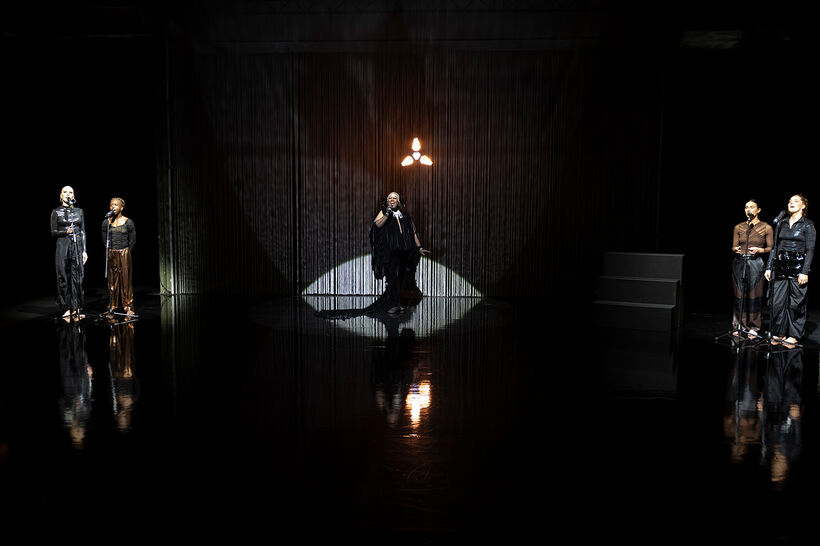
At Radialsystem, Christoph Winkler’s Four Non Blondes — a Sophiensaele 2024 premiere — proved to be a brilliant choreographic concert unpacking the cultural history, racialized undertones, and political significance of blonde hair. The result of a genetic mutation that emerged around 11,000 years ago in northern Europe, blonde hair appears in only two per cent of humanity. Statistically rare, yet freighted with extraordinary cultural weight: youth, purity, whiteness, aspiration, rebellion.
.jpg)
Four non-blonde performers and a singer work through this iconography with intelligence and dry wit, the movement language shifting between hip-hop inflections and club aesthetics to a fractured, almost malfunctioning physicality — gestures interrupted mid-flow, as if the body were being edited in real time. This oscillation between fluency and breakdown is one of the work’s central devices: the “blonde ideal” constructed through repetition, strain, and disruption rather than embodied smoothly. The dramaturgy moves between Nietzsche's “blonde beast”, the calculated cost of maintaining Princess Diana’s iconic shade, and the ubiquity of Barbie. Large screens project AI-generated videos cycling through seamless transformations — Merkel, Taylor Swift, Hillary Clinton, Giorgia Meloni, Ilary Blasi — pointed juxtapositions without being didactic. Winkler is not interested in condemning blonde mythology, but in exposing the mechanisms by which cultural meanings attach to bodies and how they can be questioned, parodied, and partially undone.
The mother of African contemporary dance
Returning to Radialsystem — a venue that is at its best during the spring, where before and after the show you can sip a drink and hang out next to the Spree — I came across a programme centred on Germaine Acogny, widely recognized as the mother of African contemporary dance and recipient of the 2021 Venice Biennale’s Golden Lion for Lifetime Achievement. The series Unexpected Lessons — Knowledges of Body and Sound, which will unfold across the 2026–27 season, opened during the long Pentecost weekend. On 24 May, there was a workshop led by Patrick Acogny, the 25 May saw the Berlin premiere of Greta-Marie Becker’s documentary Germaine Acogny — The Essence of Dance, the first of two performances of her solo Somewhere at the Beginning, directed by Mikaël Serre, plus LA PALABRE Space, a tea, reading, and resting room with artistic interventions held in the evenings.
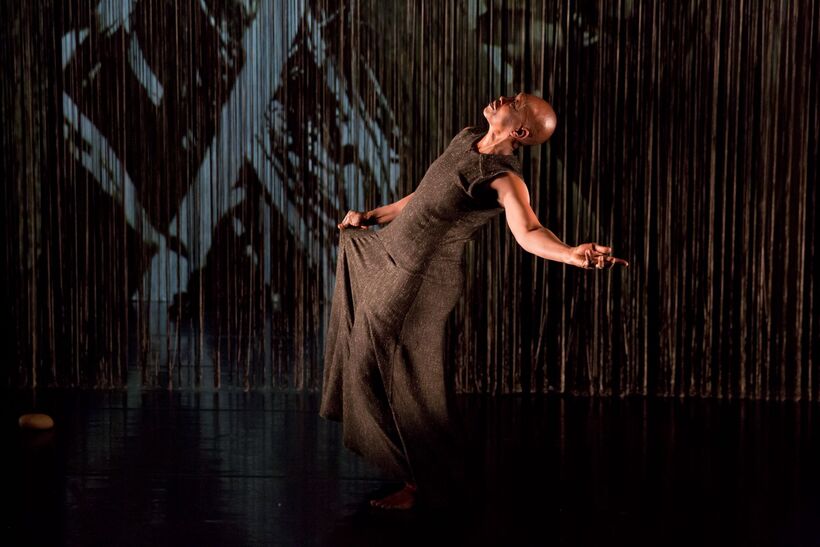
The documentary follows the movement of memory, folding backward and forward through a life of departure, exile, return, and transmission: l’École des Sables in Senegal, the direction of Mudra Afrique, the Golden Lion in Venice, Stravinsky’s grave at San Michele toasted with vodka and a cigar, the Grand Prix de l’Académie des Beaux-Arts in Paris.
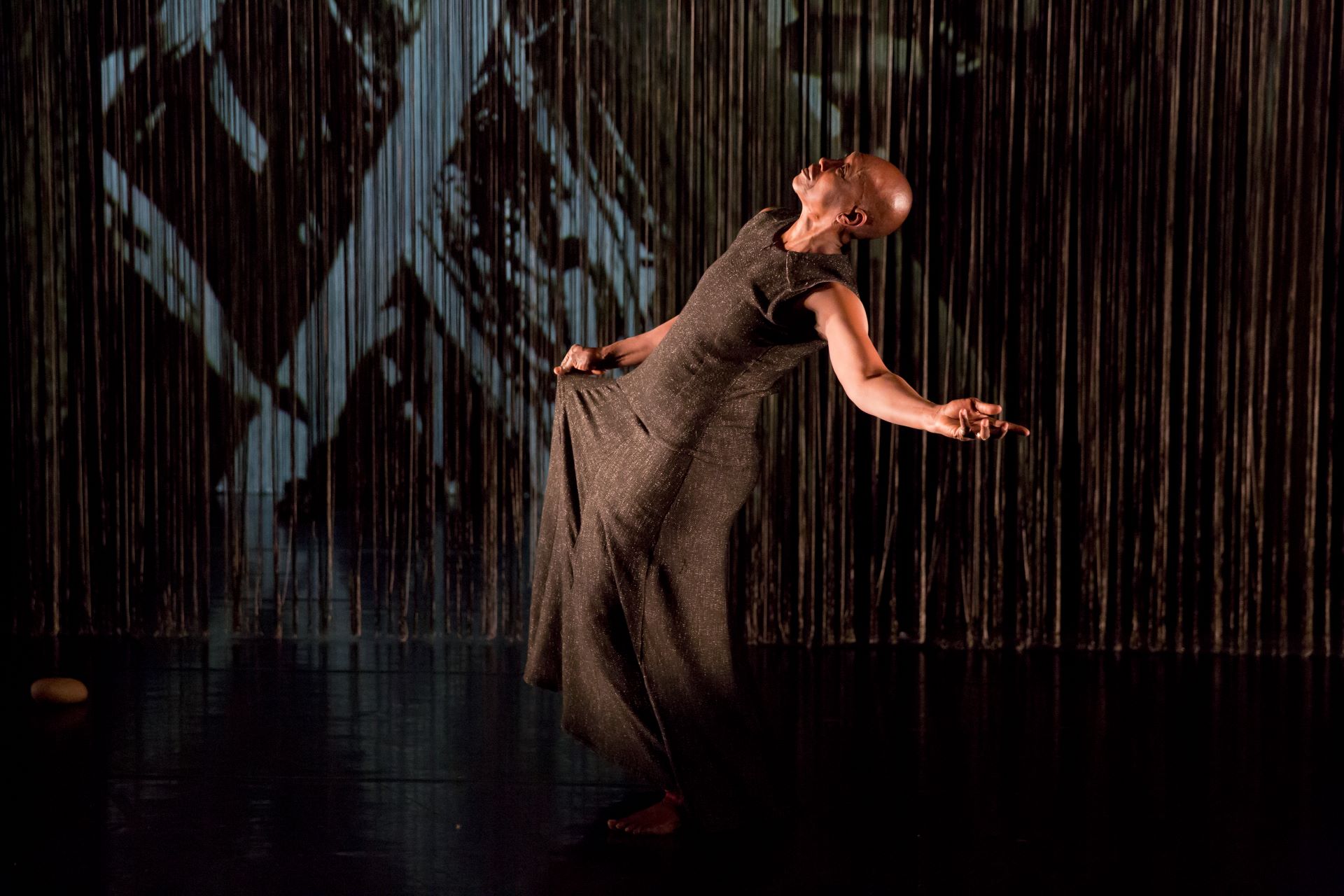
It was in the live performance of Somewhere at the Beginning that Acogny’s philosophy truly manifests, and where we discover, almost in passing, that her third given name is Pentecôte. It is a striking, poetic coincidence, given that the weekend’s celebrations fell on those very days. Now over the age of 80, her body does not merely perform choreographic lines — it stands on stage as a living historical archive. The stage is sparse but charged: candles, cushions, a book — her father’s autobiography — that she eventually cradles, and parts of which are projected onto video, flour, and an armchair. Objects that accumulate meaning the way her body does. Her physical vocabulary blends the grounded power of traditional African steps with the sharp contractions of Western modern dance. The solo recounts the stories of departure and return, exile and homecoming, the weight of tradition, the institution of polygamy and the loneliness that each of these carries. The solo unfolds as an unsparing, vulnerable search for identity, and it is here that her phrase surfaces and refuses to leave: “if you don't know where to go, look where you come from”. Origin, in this regard, is not nostalgia but navigation.
The choreography of the unexpected
From the Spree to the Havel: the Potsdamer Tanztage means leaving Berlin and the region altogether, travelling to the FABRIK POTSDAM — another venue that comes alive in the spring warmth, surrounded by greenery, best enjoyed with a beer next to the water. Now in its thirty-sixth year, the festival maintains a commitment to working outside institutional centres of gravity, and Thomas Hauert’s Where is everybody? felt very much at home here.
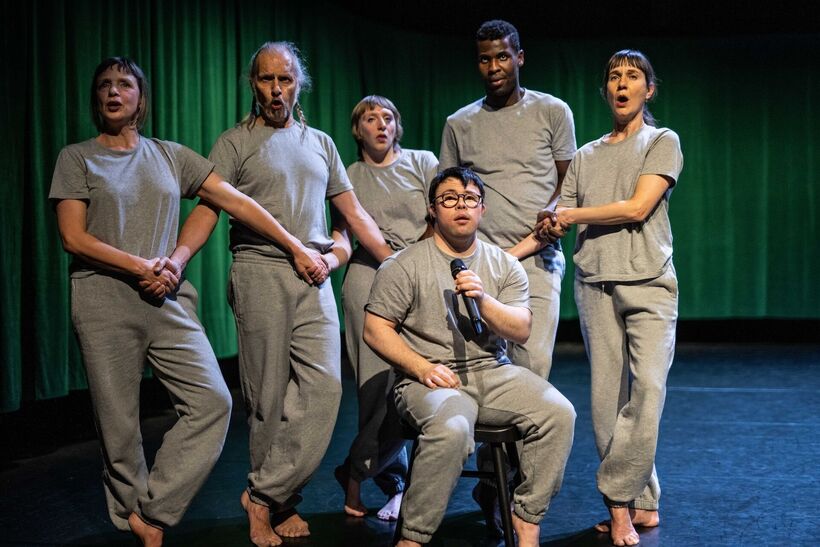
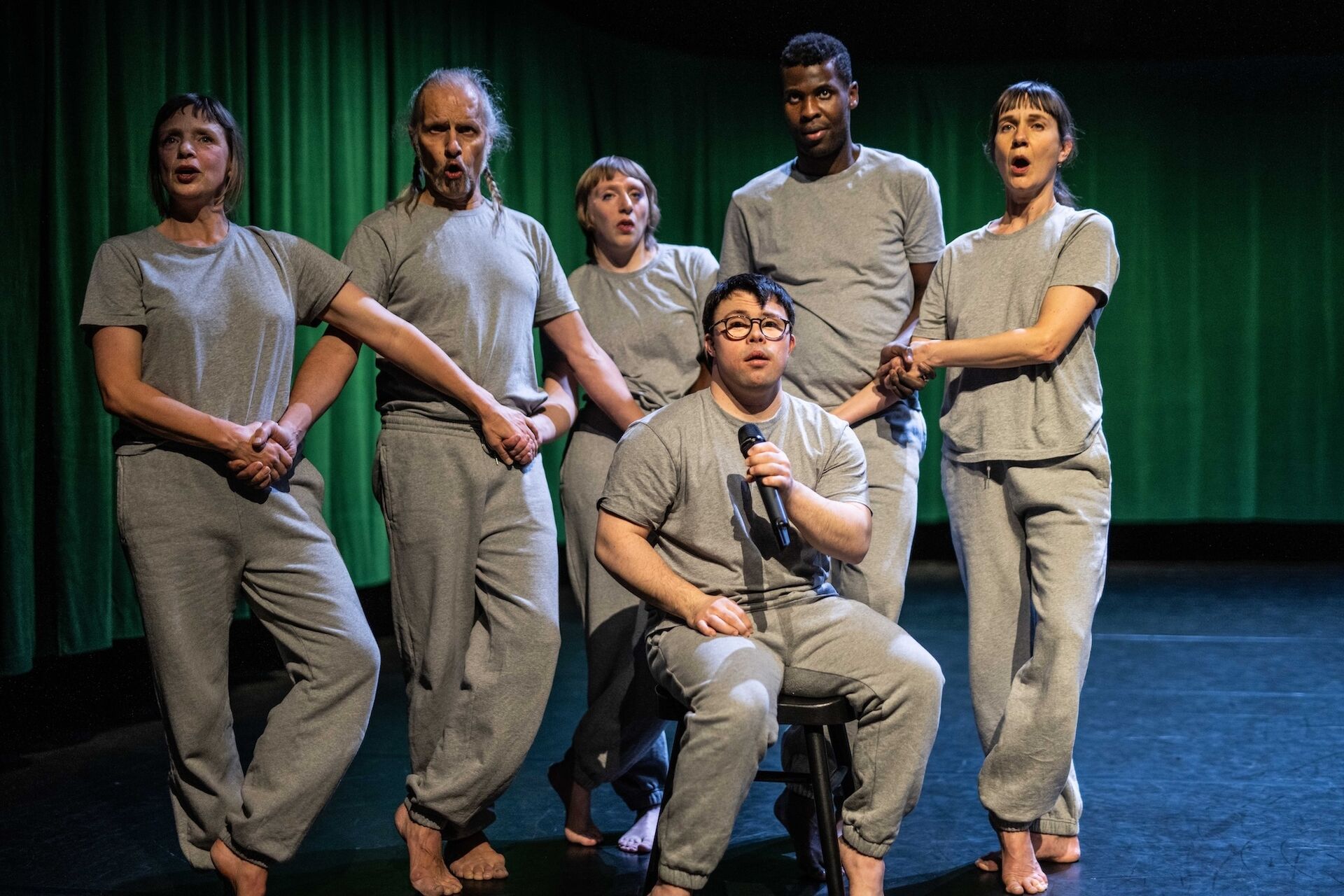
The production brings together six dancers from ZOO and Platform K, with different backgrounds and physical abilities, but pushing beyond conventional inclusion: the starting point is asking what aesthetics emerge when a marginal perspective becomes the organising principle rather than an accommodation?
Names and music track numbers are drawn at random from a basket, distributing agency and keeping hierarchy genuinely open. The soundtrack draws from the performers' own emotional attachments — Salvatore Sciarrino alongside George Michael's Freedom, performed live in an almost karaoke style; Ravel's Piano Concerto in G Major. Against the backdrop of a large green curtain, (adapted from Hauert’s earlier FLOT, 2018, CCN Ballet de Lorraine), the performance begins in grey-suited uniformity, with micro-gestural tasks, before a performer in a bright, colourful bodysuit enters singing live and gradually the others join, disrupting the initial sobriety. At one point, the dancers attempt a fragment of classical swan imagery, hands linked, figures tilted askew, walking it through the space at an angle that makes it simultaneously recognisable and entirely other. Quietly funny and unexpectedly tender.
Presented as a “Relaxed Performance” (audience noise welcomed, movement in and out encouraged, beanbags as alternative seating), Where is everybody? feels less like a consumer product and more like a real-time laboratory: community as something fragile, playful, horizontal.
Fearful symmetries, old and new
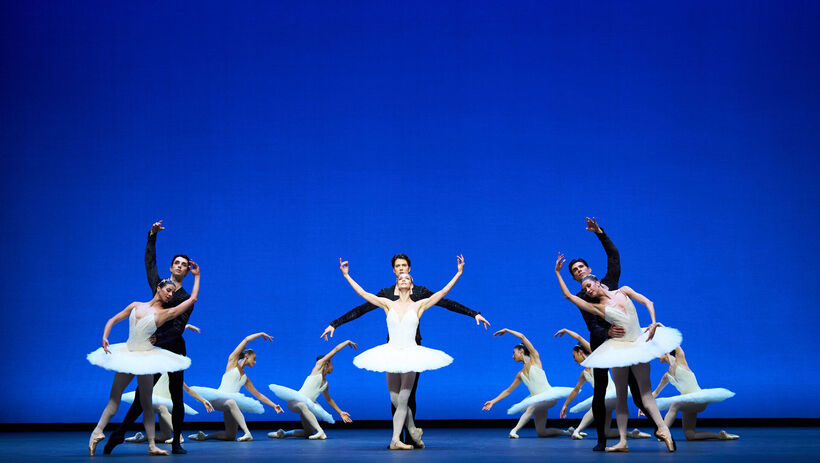
The Staatsballett Berlin closed the month with Fearful Symmetries, a double bill pairing George Balanchine’s Symphony in C (1947) set to the Bizet’s Symphony No. 1 in C major (1855) with Fearful Symmetries, a new piece of the same name by Christian Spuck (Artistic Director of the Staatsballett since 2023), set to John Adams’ 1988 composition, also of the same name. The title is drawn from Blake’s The Tyger and its notion of “fearful symmetry”. Both works are, in Spuck’s words, “strongly defined by symmetry”, and both interested in what happens when that symmetry is disturbed.
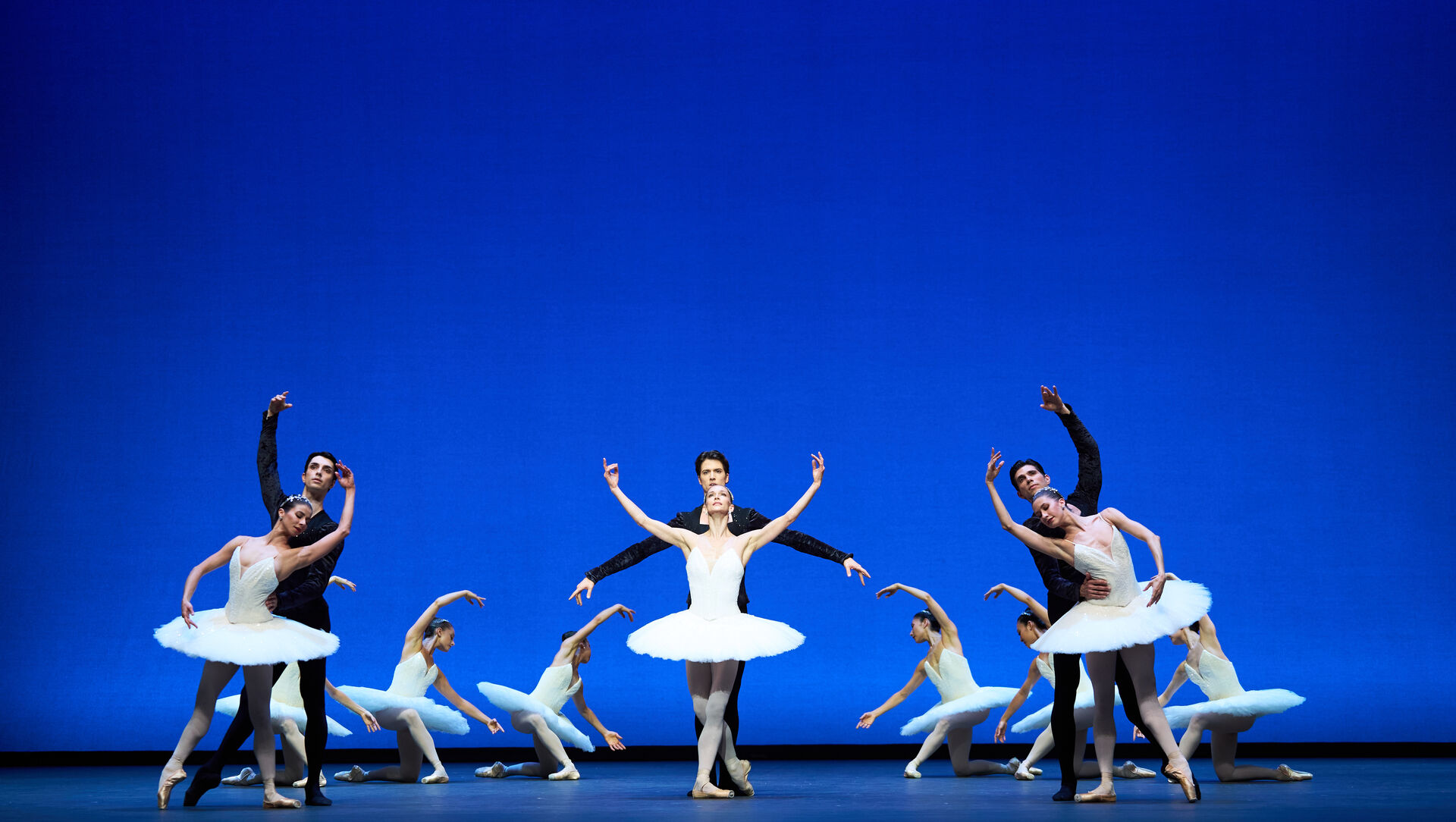
Created for the Paris Opéra Ballet in 1947 as Le Palais de Cristal and reworked the following year for the New York City Ballet, Symphony in C has deep ties to Berlin: Balanchine staged the piece at the Deutsche Oper in 1969, establishing a local tradition that eventually flowed into the modern Staatsballett’s repertoire. Set in blue light against a luminous backdrop, soloists and demi-soloists in white tutus emerge like sparks from the geometric order of the corps, generating kaleidoscopic patterns before being reabsorbed into the whole. The execution is flawless — energy, rapid-fire jumps, intricate arms punctuating the rhythm of the music, and smiles that read not as decorative convention but as a sign of genuine pleasure in the dance. Brief moments of imbalance and playful collapses into a partner’s support burst the architectural perfection — a symmetry most compelling precisely when it risks coming undone. It also raises questions about what it means, in 2026, to organize bodies, overwhelmingly female, into formations of immaculate precision. Balanchine’s relationship with power and femininity remains an open conversation.
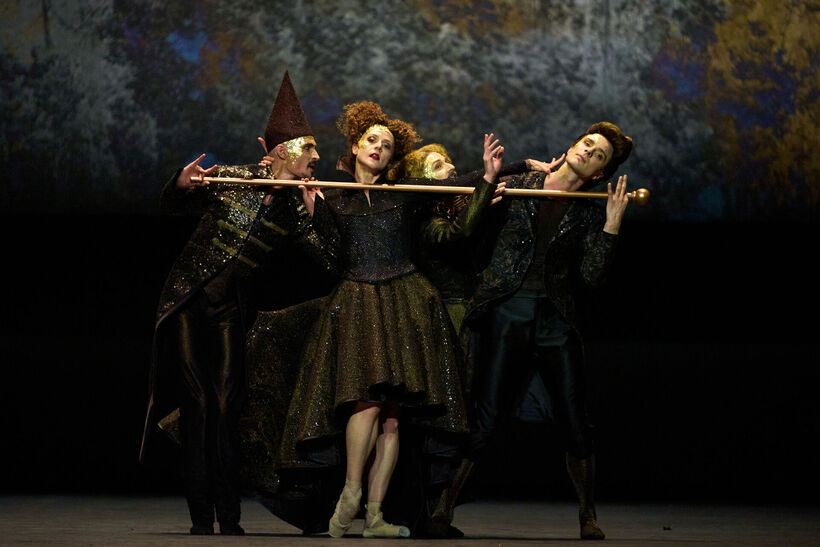
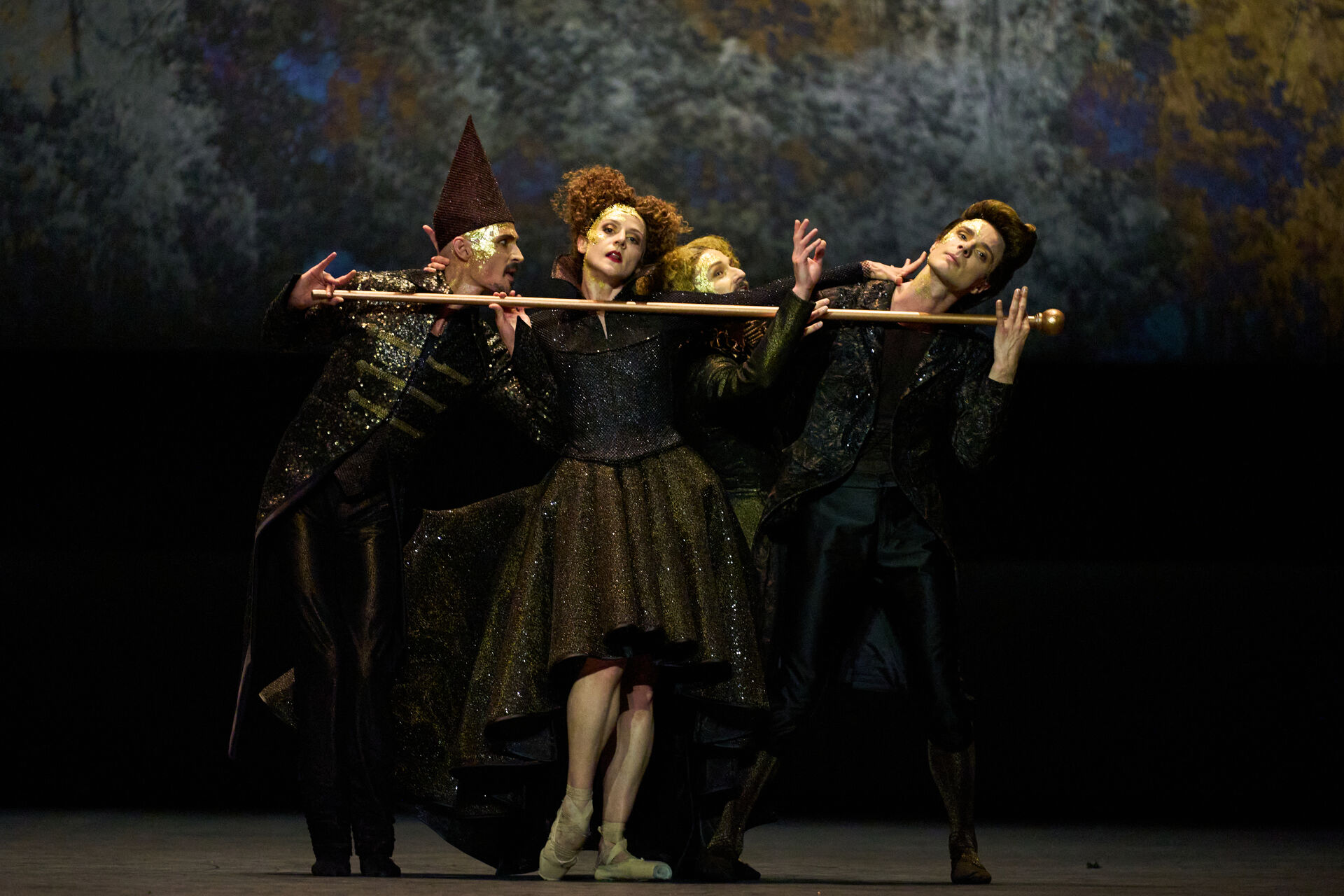
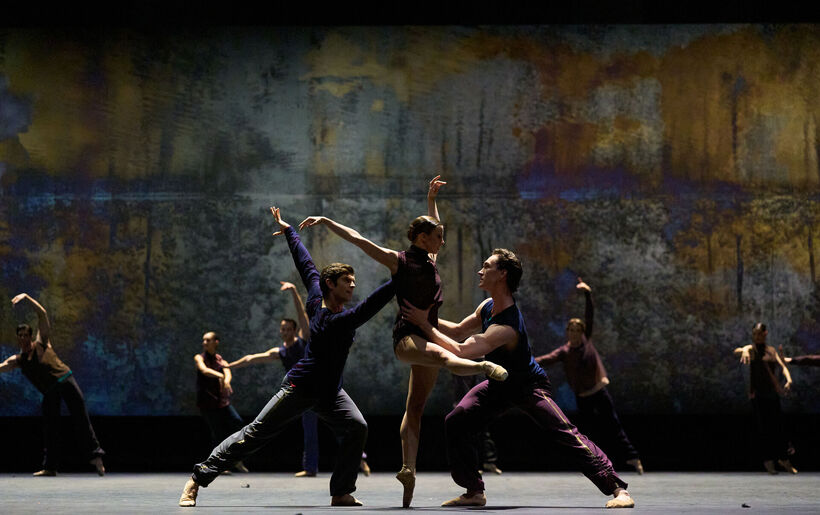
It is precisely at this threshold where order begins to tremble but has not yet dissolved, that Spuck’s Fearful Symmetries takes its point of departure, amplifying what is already latent in the neoclassical structure: the instability embedded within rigour, the tension beneath formal clarity. The piece works on a sharp structural counterpoint. On one side, a grotesque, almost fairy-tale, pantomime-esque quartet, a queen-like figure, somewhere between the Queen of Hearts and Snow White’s stepmother, wielding a stick topped with a ball like a sceptre and flanked by three character-style male figures dressed in black sparkling costumes: surreal, ceremonial, almost absurd. On the other side, the corps operating both as a full corps and in fixed pairs, in near-rehearsal wear, executing ferociously quickly, abstract sequences whose vertiginous trios are reminiscent of Forsythe’s One Flat Thing. “It drives forward like a whirlpool”, Spuck has said of Adams’ music, “but ends in a calm that almost feels like after a crash”. The stage opens with an abstract painting across three black sides, evoking a distorted forest on a dark lake; two black monolithic lateral walls are pushed inward by the dancers, like a gate being forced open, until the floor floods with bronze and copper spheres. What remains is a landscape of scattered objects and exhausted symmetries: origins not replicated, but fractured.
These two pieces work together with rare coherence. The premiere was a genuine event, and Spuck’s ongoing collaboration with the Staatsballett confirms what has been building for some time: this is a company at the top of its form.
What remains
Alongside the performances, two discussions organized by the Staatsballett Berlin added critical texture to the season. The first, Was bleibt? Tanzarchive und ihre Bedeutung für die Zukunft [“What Remains? Dance Archives and Their Significance for the Future”], brought together among others Nele Hertling of the Akademie der Künste and critic Claudia Henne, connected to the Tanzarchiv Berlin. The conversation framed choreographic memory as a living political instrument, Hertling emphasized the invisible labour of making forgotten material visible, while Henne was unequivocal: the archive is never neutral, it decides what counts as history, and who gets to experience it.
The second, Im Übergang: Was kommt danach? [“In Transition: What Comes Next?”], turned to the transition faced by retiring dancers — a moment that is not only a professional shift but an identity rupture, financial and emotional. One speaker addressed it with unusual candour: the somatic knowledge accumulated in a dancer’s body must be revalued, not discarded, after stage retirement.
Taken together, the performances and discussions kept returning to the same question: what does it mean to carry a practice, a technique, a tradition, a community, across time and across bodies? While Acogny has spent a lifetime answering it, Morau stages it as vertigo, and Hauert approaches it through the vulnerability of shared improvization. Caught between the dust of the archive and the pulse of the living body, between the Wunderkammer and the École des Sables, this Berlin season keeps asking: where do we come from, and what do we do with the answer?


.jpg)
.jpg)