Now in its 38th edition, Tanz im August was founded during German reunification to connect an isolated Berlin with the dance worlds of Western Europe and North America. The festival unfolds across the city rather than in a single venue, including HAU’s own stages as well as the Berliner Festspiele, Radialsystem, Berlinische Galerie, and beyond.
Artistic director Ricardo Carmona chose a fitting image this year: wind, crossing borders without passports, generating turbulence. Picturing Tanz im August as a weather map shaped by these winds situates the festival firmly in the present, when Berlin is feeling these changes directly. Some days, he joked, it is unclear what changes more often, the weather or the city’s Culture Senator. That turbulence, as it happens, materialized mere days after the festival ended, with the Saxony-Anhalt election result.
Sixty Minutes (Or So), Flat Out
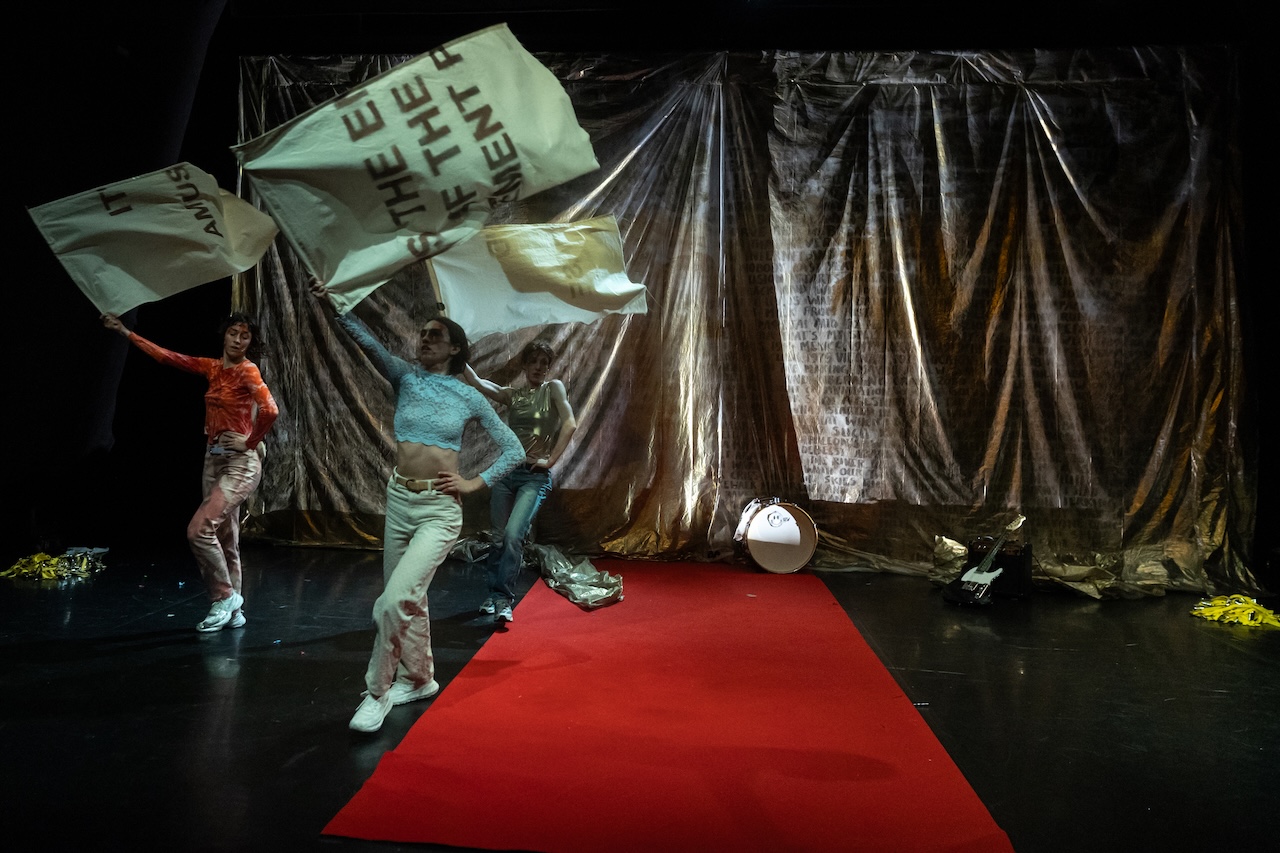
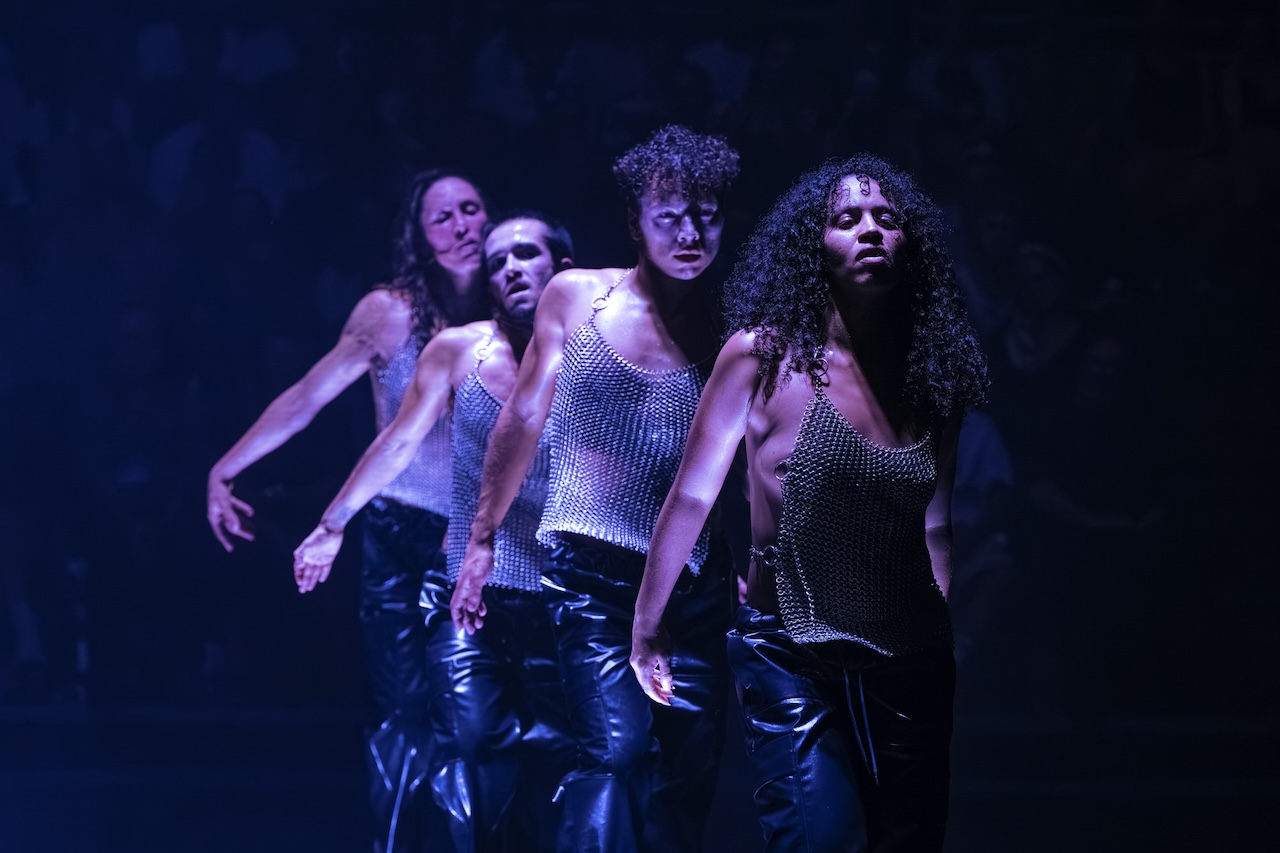
Almost every show, especially in the festival’s first week, ran to roughly an hour, less a specific artistic choice and more a kind of implicit production standard. Two pieces, more than any others, used that same compressed hour as a propellant rather than a cage: Chara Kotsali’s It’s the End of the Amusement Phase and Marco da Silva Ferreira’s F*CKING FUTURE almost felt like sweat-drenched marathons pulling audiences toward a kind of rave-like intensity – both fusing vocabularies borrowed from revues, raves, military marches, and parades, movement steeped as much in uniformity and discipline as resistance, transgression, and exhaustion.
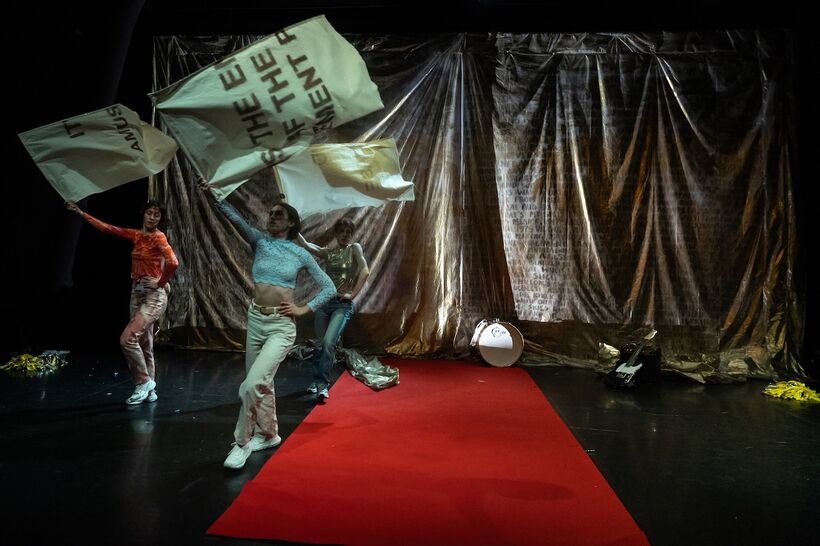 Greek choreographer Kotsali’s trio, comprising Sofia Pouchtou, Christina Skoutela, and Kotsali herself, interprets the piece’s title literally as a teenage-party aesthetic that steadily unravels into indictment. It opens with a breathless monologue racing through the phases of depression, before then moving scene-by-scene: Greek flags, cheerleader pompoms later shredded, a smashed birthday cake, costume changes on the fly; each stage a different historical moment, a moment of hope and its subsequent ruin. The movements slide between hip-hop, majorette formations, and cancan-inflected pop, a live technician speeding up the set changes as the energy climbs. A spoken-word text runs underneath, invoking failed revolutions and hope for the next attempt.
If Kotsali’s marathon builds toward indictment, Ferreira’s reaches instead for release.
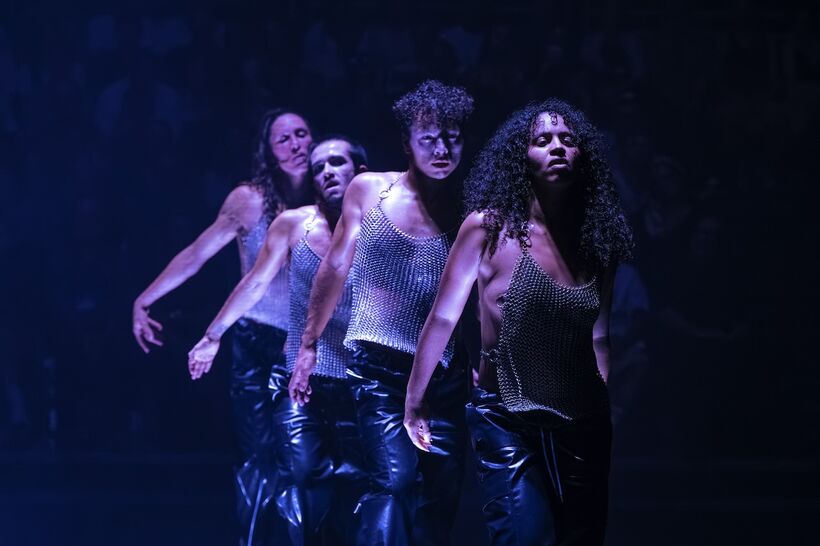
He opened the festival three years earlier with Carcaça (my review), and this time around submerged F*CKING FUTURE in a metallic, retro-futurist sheen. A mirrored floor, glossy trousers, chainmail-like tops that cover the chest like armour while revealing the back, caught between protection and exposure. By fusing house, hip-hop, street, and contemporary dance into a single fluid weave, eight oiled and sweat-slicked dancers move in tight unison, recomposing into chains, blocks, straight lines, robotic angularity melting into erotic softness, with sudden echoes from seventies camp-disco hip-swings that landed every time. Deep in the pulsating score, a build that never quite resolves, the dancers’ own voices rise, singing lines about not caring what others think, refusing to be what someone tries to destroy. Staged in the round, dancers enter one-by-one along diagonal lines that cut through the audience, then, towards the end, they literally climb over spectators to exit and re-enter from behind them. You can find the full performance on Arte Concert. Against that earlier, faster piece, this one felt almost lyrical – and seeing it the night after the Rave The Planet parade raises at least one question: whether this register of collective, sweat-soaked release has something specific to say in this city. Something in that armour-as-exposure seems to answer Vanackere’s opening words: joy as homeland, resistance carried through the exhausted body. Watching eight bodies drive themselves to exhaustion under laser light, singing of refusing to be destroyed, it was hard not to think how recently that space had been tested by the Christopher Street Day attack.
Old Friends
Like Ferreira, (LA)HORDE – who appeared in 2023 with Age of Content (my review) – and Trajal Harrell, are also familiar faces at Tanz im August.
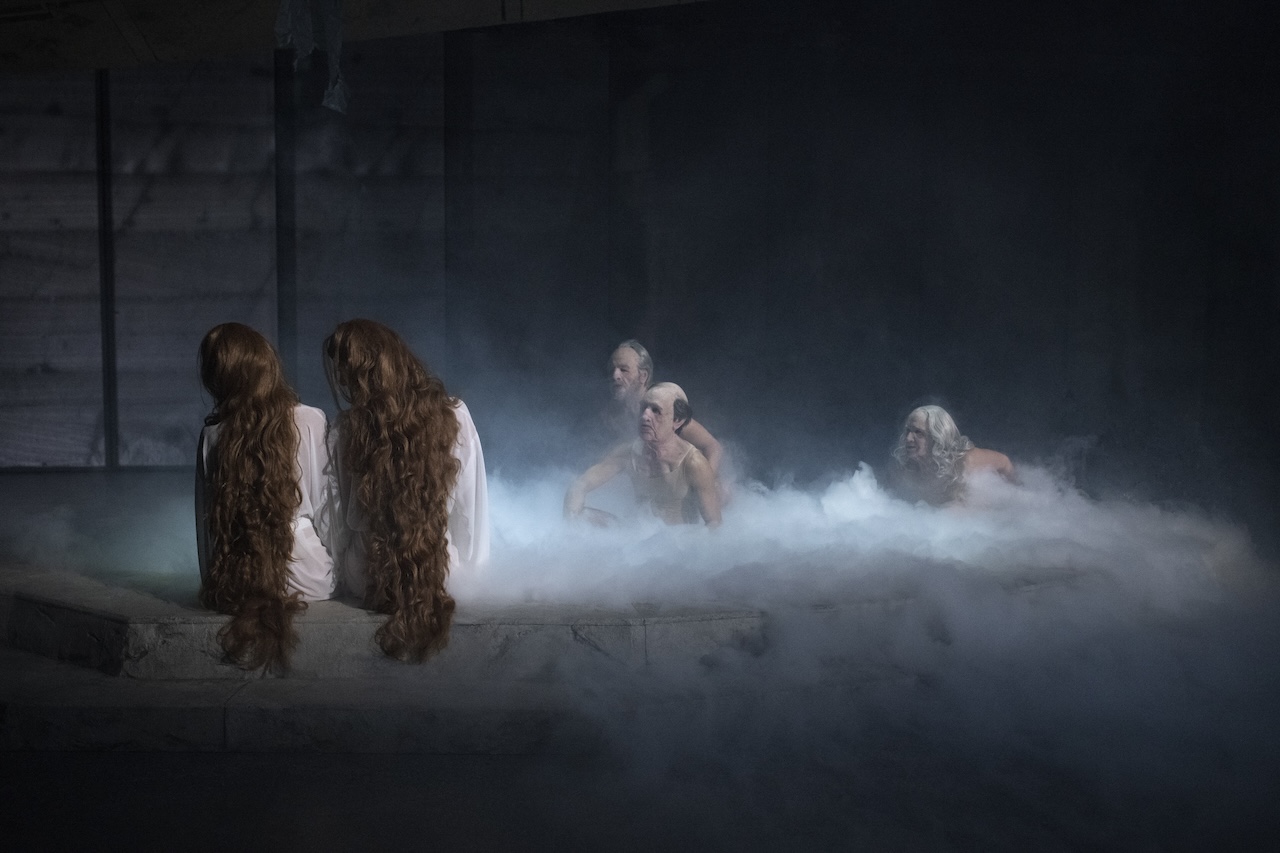
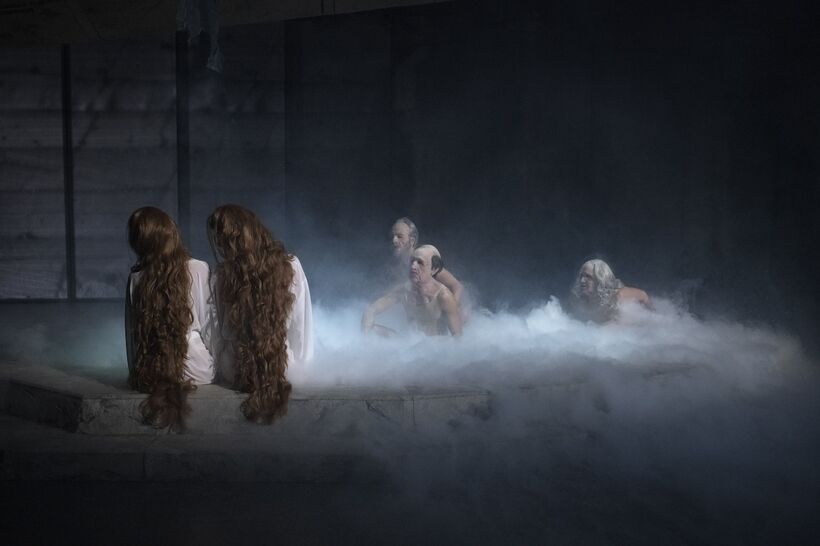
(LA)HORDE, the collective that has led the Ballet National de Marseille since 2019, performed Après moi le déluge, a piece whose opening runs almost entirely in reverse, with sci-fi writer Alain Damasio acting as an outside eye on the dramaturgy. It opens to applause, the cast bowing to a video of the auditorium, before the sequence rewinds and the dancers start moving backward. The stage floor splits open, and the dancers are pulled up from underground smiling – an image that in a way reminded me of Kimmy Schmidt (of the TV series Unbreakable Kimmy Schmidt), and her unshakeable grin after resurfacing from the cult bunker. What follows unfolds as grotesque tableaux: bald, zombie-like elders with young bodies, lounging in a pool, sniffing at an unconscious dancer with apparent cannibalistic intent, two long-haired figures hurling their manes through the air like twin sirens, figures staggering about with monkey tails and heavy elephant legs. True to (LA)HORDE’s signature, the movement fuses ballet vocabulary with urban forms such as breaking and jumping, eruptive sequences that explode and reassemble. The unison work was not always precise, though, and I am still not sure whether this imprecision was intentional. The piece climaxes in a roughly ten-minute stretch set to System of a Down’s Chop Suey!, not simply played as it is but stretched, looped, and manipulated like a DJ extending a peak-time track, turning the stage into a mosh pit with huge energy. Yet it was ultimately an empty show, making that emptiness its calling card: not a hidden depth to uncover but a declared surface. The collective moves just as easily between the festival stage and the pop world (they have also worked with iconic popstar Rosalía) and the audience’s genuine enthusiasm leaves no room for doubt: people come for exactly that surface impression, and that is exactly what they get.
Where (LA)HORDE offers full volume surface level, Trajal Harrell’s solo piece titled Music Music. Histoire(s) du Théâtre VII, made for Milo Rau’s Histoire(s) du Théâtre series, takes a more intimate and personal turn. It is built around the artist’s own musical loves: Elton John and Dua Lipa’s Cold Heart, which the audience is invited to watch on their own phones, filling the room with a scattered soundtrack, together with Purcell, Florence + the Machine, and Tracy Chapman, among others. Layered, beautiful clothes, not always worn, sometimes simply draped over his body, in a sequence suspended between trying on outfits alone in your bedroom and a runway show. The movement stays in his usual register: a mix of voguing, ballroom, and contemporary dance. The opening is genuinely playful, and a later passage set to African-inflected music and gestures remains beautiful throughout – Harrell’s presence never falters. I personally struggled with the length as the piece reached the end, though perhaps that is the price of an intimacy that, until then, had never stopped feeling true.
Living with Conflict
From famous names and their media spotlight, the festival shifts to different ground: bodies that have lived conflict for themselves. On one side, daily resilience in Gaza, on the other, the still-open wound of Russia’s invasion of Ukraine.
Sarkha (صرخة, “Scream”), Jumana Dabis’s screen dance work with her SHAMS Dance Company based in the West Bank, opens with the sky and a layered city sound: Ramallah, Cairo, and Gaza, a helicopter blades never quite absent. Hands appear first: the hands of girls from different cities, filmed separately and digitally stitched together into the same image, bodies appearing side by side despite never sharing the same place, images that start almost serenely – green, ordinary, before destruction seeps into the frame. The film grows out of a concrete impossibility – physical meetings between Palestinian women in Gaza (the Gaza Boxing Women), Ramallah, and Cairo – and turns that forced distance into an attempt at on-screen togetherness, the digital space as the only shared space left. The movement stays simple, closely resembling everyday gestures, effective throughout, at times performing boxing drill movements. The pacing is measured, the framing carefully composed even within the image itself, not a work to admire only for its subject matter, but for the care put into making it. Full credit is due to the festival for programming a work that confronts Gaza’s reality so directly. This is no easy choice, yet an absolutely necessary one, with the issue still politically fraught across Europe, and especially in Germany.
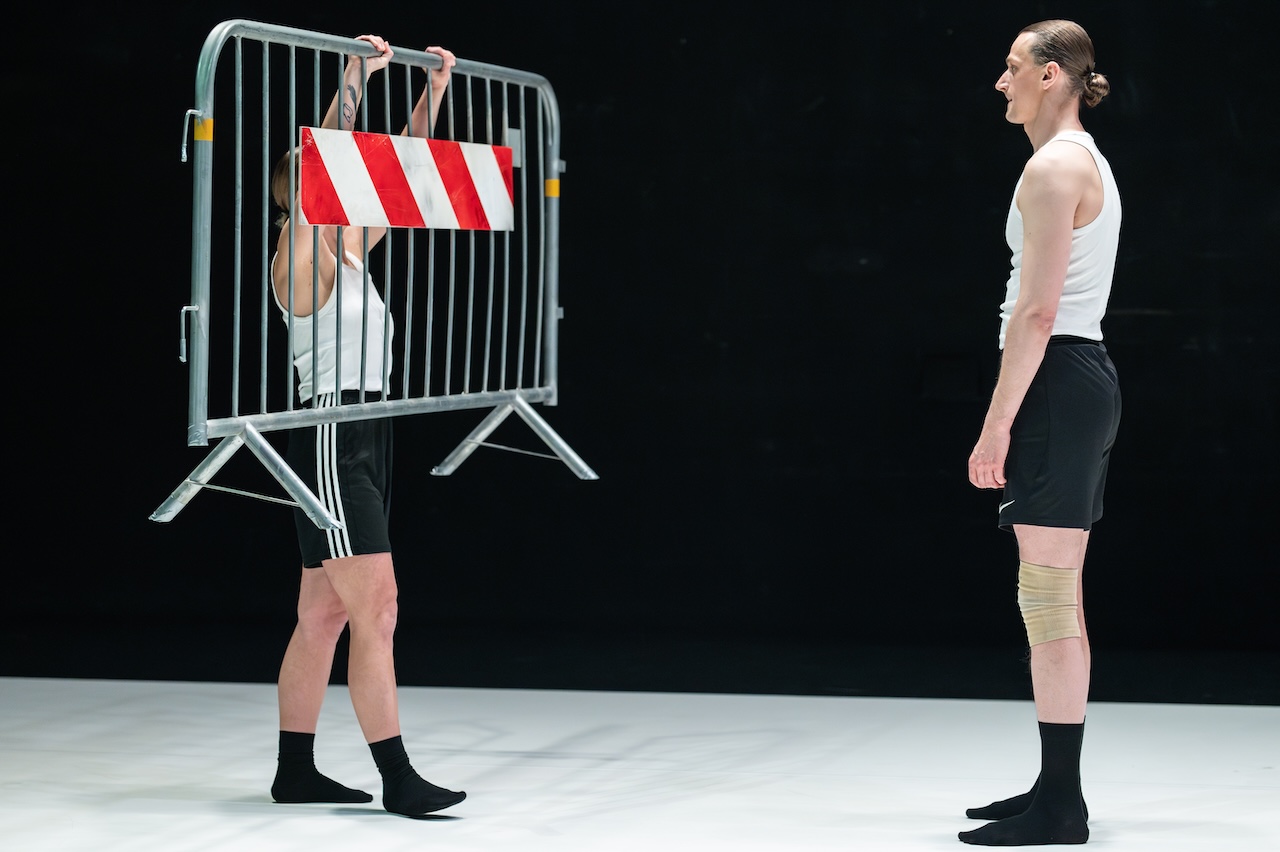
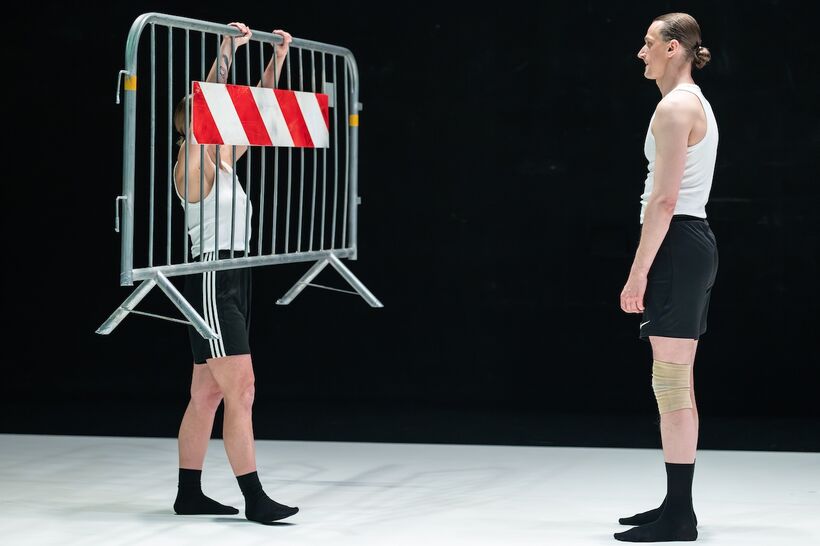
Agnietė Lisičkinaitė and Igor Shugaleev’s CLAP/SLAP stages its two performers on opposite sides of a metal barrier, marked with red-and-white road stripes like the opposite ends of a ping-pong table. Two small screens at the front of the stage, to the audience’s right, show a recorded conversation over a shared meal. Discussions about one’s favourite potato dishes evolve into questions of nationality and identity, arriving at the provocation – “Isn’t it the same thing? Aren’t you all the same?” By using the same motion for both a clap and a slap, distinguished only by intent, the piece builds its entire vocabulary around a single recurring gesture: a palm pressing air onto a body part. A recorded video of the piece’s dramaturg, Bush Hartshorn, leads the audience in clapping along, setting a tempo the piece will later break with real force, before the piece’s other gesture arrives, a real slap from the back of the head down to the nape, which the pair have described as drawing on the religious idea of mea culpa. The work is centred around guilt and wartime grief: Lisičkinaitė is Lithuanian and demonstrated against pro-Russian pressure on her country. Shugaleev is Belarusian, exiled after the 2020 crackdown, describing his own state as a “disappearing identity”, asking what share of collective responsibility falls on any one individual. In the final scene, the two stand face to face in the dark, singing their respective national anthems, one of which is now banned. The performers are skilled, precise, but I found myself wondering what would remain of this choreography once the urgency of the headlines were stripped away. Perhaps the gesture of guilt, the thin line between self-defence and aggression, are themes that outlast this particular conflict.
Contemporary Bestiaries
From geopolitics to biology and myths: three pieces that try to think like non-humans – flying like a bird, navigating like a bat, decaying and being reborn in accordance with a natural cycle that knows no borders. Sound was central to defining the character of all three.
If in Lenio Kaklea’s Les Oiseaux, the attempt to see the world from a bird’s point of view remains more of a pursued idea than a fully realised one, Kasia Wolińska’s Phoenix.Sun works in an entirely different register. The opening solo was genuinely intense, but the group unisons that followed were danced too imprecisely to tell whether it was intentional or just under-rehearsed. Set against a score built from real bioacoustic recordings of bird colonies, the show was partly redeemed by a closing drone shot that lingered on each individual bird-body from above, and by its beautiful costumes.
Wolińska’s own solo draws its inspiration from the fire sculptures of Polish artist Władysław Hasior, a way, as Wolińska describes it, of appeasing the ghosts of burning birds he once saw falling from war-torn skies. Staged in the St. Elisabeth-Kirche between two screens, the audience lining both flanks of the space, the piece unfolds against footage of birds and black-and-white planets by video artist Denis Kozerawski. A searing score performed live by Ukrainian composer Heinali stays abrasive and intense throughout. Yet the dance itself pulls inward rather than out, alternating between resting against the floor and passages of upright, folk-inflected steps that edge toward tap, hands, and torso doing most of the talking, the expression never less than internal. Only occasionally does Wolińska break that self-containment, drifting towards the audience along the space’s edges, commanding and fully absorbed, her body weaving folk dance into something that felt both carefully choreographed and genuinely summoned.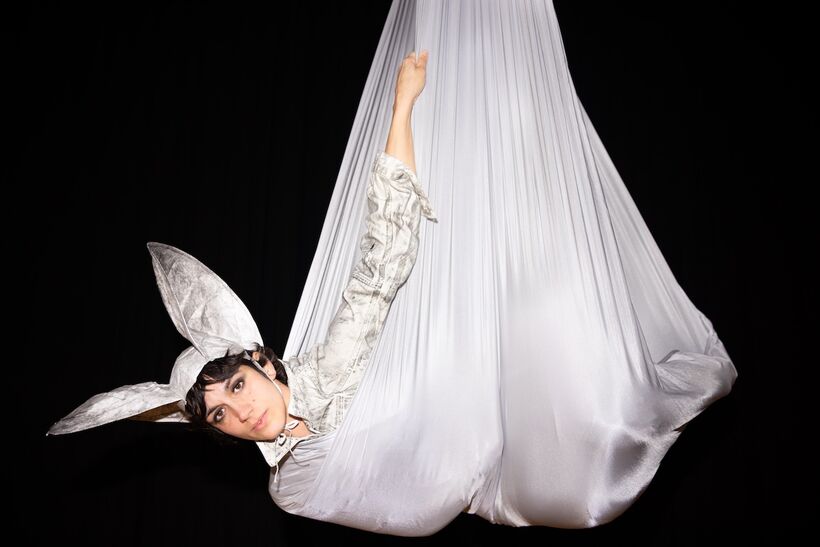
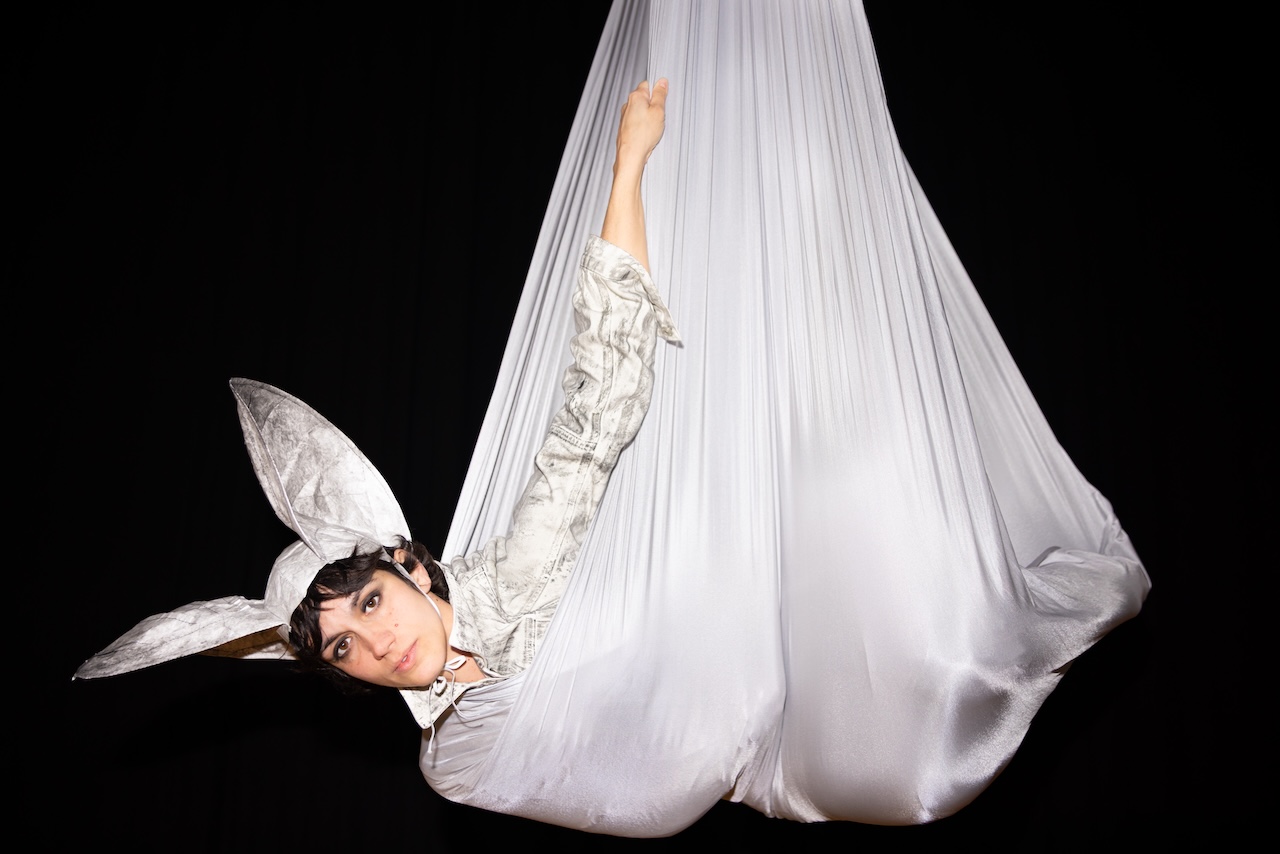
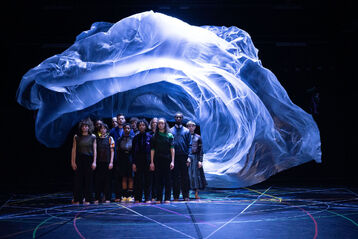
Kareth Schaffer and Jonas Hauer’s Bat Dances, with Leah Katz as a grey long-eared bat, goes beyond imagery to seek the actual experience of the non-human. It begins almost as a lecture-performance, in both English and German, Katz describing bat physiology while weaving in pirouettes and wing-like arm gestures, before disappearing under a cloth. What emerges is a nude figure in red, as if freshly stripped of fur, bleeding. Built for sighted and visually impaired audiences alike, the score is largely generated live – Katz’s own feet, hands and mouth producing hisses and clicks, while composer Jonas Hauer plays his instruments from a darkened corner of the stage – a mix leaning hard on reverb and pitched up toward bat-sonar frequencies. As a piece of sound design it is genuinely bold, closer to an experimental noise set, though by the end the mix it turns muddy instead of illuminating, and at one point I lost track of what was actually happening, perhaps, as someone suggested afterwards, it should be experienced with closed eyes, as an echolocation concert rather than a visual experience. What stays with me is one of Katz’s lines: “Our own perception feels complete, but the mistake is believing it”. A fascinating experience, even if I could not fully get inside it.
Openings and Closings
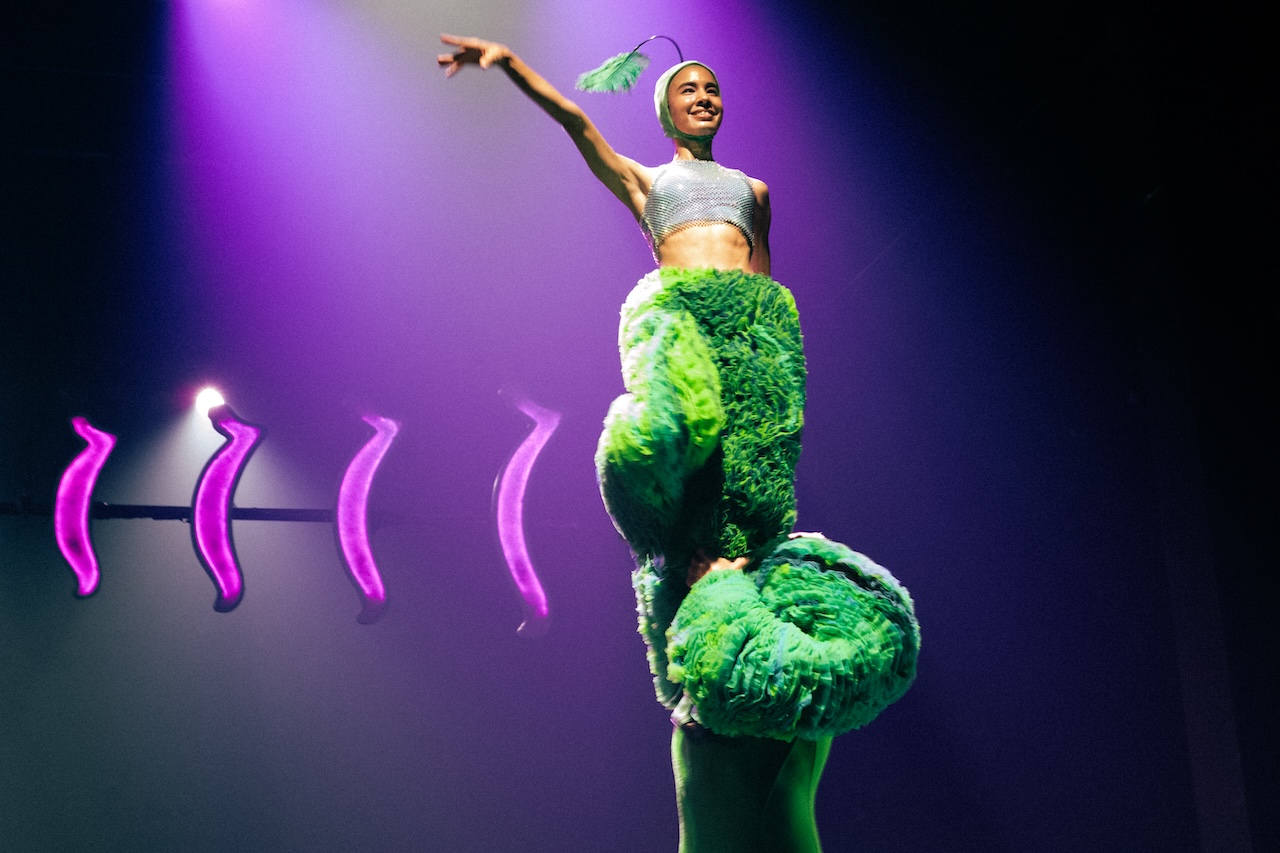
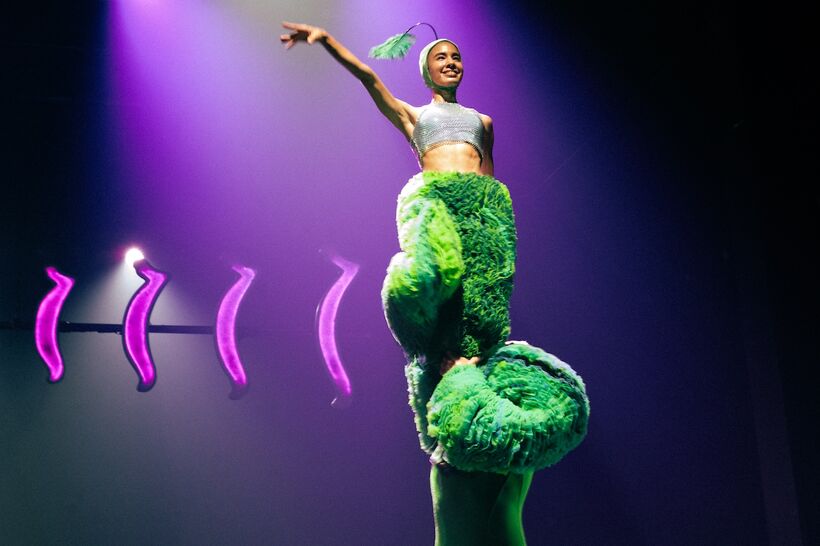
The festival’s opening night went to Jeremy Nedd, Joana Tischkau, and Sophie Yukiko’s Trapicana, a world premiere developed alongside Cuba’s Malpaso Dance Company, carrying, almost wordlessly, the weight of Cuba’s precarious economy and the exoticization of dancers within the famous Tropicana cabaret, the Havana tourist landmark, with the title representing a pun where the “trap” of Trap-icana is a nod both to the music and “tourist traps”. The movement vocabulary fuses Afro-Cuban dance – traditional and deliberately “imagined” – with the aesthetic of trap music, the hip-hop subgenre born in 1990s Atlanta that itself sits between racial stereotype and cultural reality. The costumes alone deserve a mention, composed of sequined silver crop tops set against enormous green, shaggy pom-poms wrapped around the performers’ hips and thighs like moss or fur, antenna-topped caps, all against a backdrop of neon-pink banana sculptures that glowed in the background – part camp, part tropical-kitsch, somewhere between insect and houseplant. The dancers enter carrying a mysterious malleable object that only later reveals the word “Tropicana”, and from there the piece proceeds in segmented blocks at a deliberately held-back pace, struggling to properly take off. Despite this, the dancers are excellent, the amount of work put in is evident. The score drops in a reworked version of Buena Vista Social Club’s famous Chan Chan, a deliberate jolt of the “authentic” against everything trap-adjacent around it. Only near the close does the pace loosen into a handful of salsa-inflected solos and duets, rain falling from the rig as dancers slide across the wet stage in big, joyful skids and the show ends in celebration – a finale the audience rewarded with warm, deserved applause.
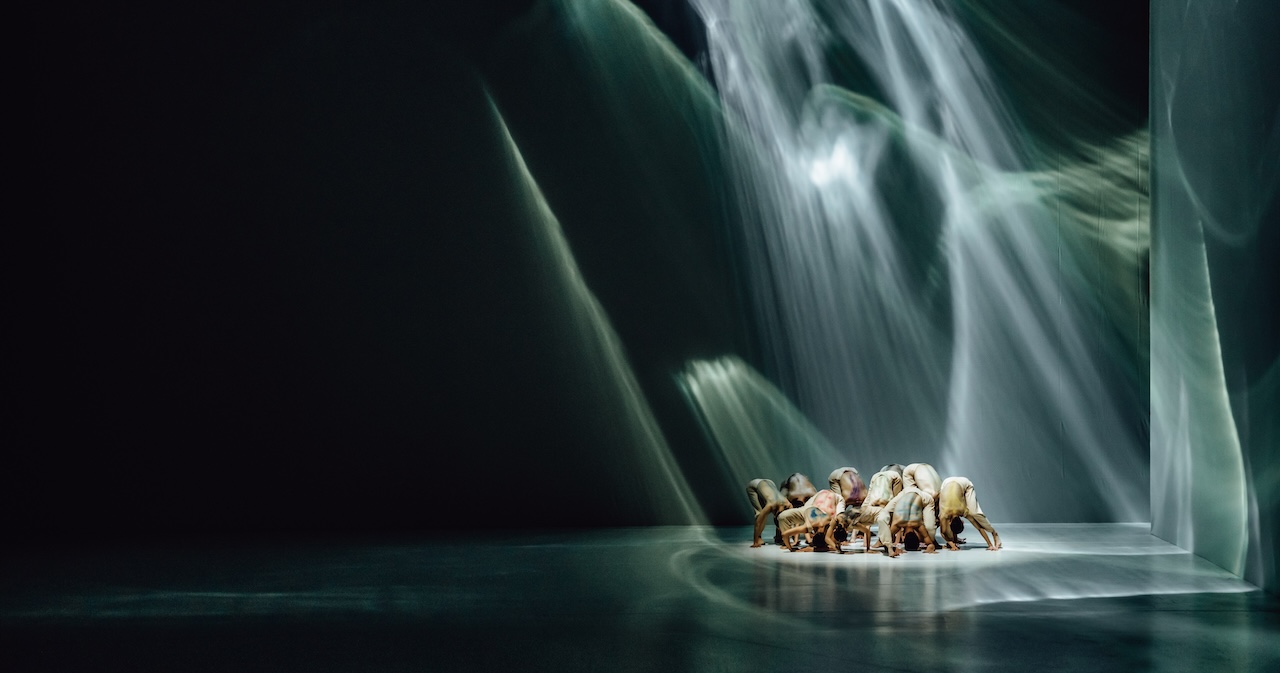
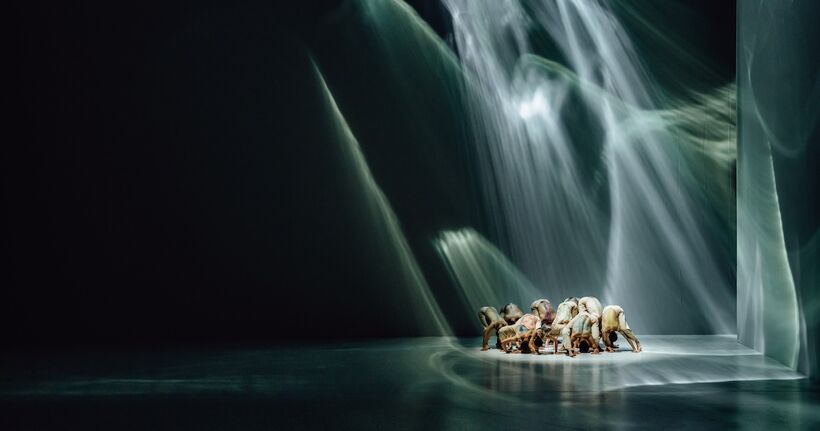
From Trapicana’s saturated colour and noise, Sounding Light (“定光”), choreographed by Cheng Tsung-lung for Cloud Gate Dance Theatre of Taiwan, moves to the opposite extreme. It is a piece I would describe as “ambient” and was danced beautifully. An all-white stage under dimmed overhead lighting projecting rock faces and waterfalls onto the backdrop, twelve motionless human backs evoking rock itself. There is no orchestra: the only sound comes from the dancers’ bodies themselves – finger snaps, tongue clicks, thigh slaps, stamps – all layered against onomatopoeic Hokkien Taiwanese chanting that mimics rain on a gutter, a stream, a rock. It is a kind of field-recording effect achieved entirely by the human voice. Cheng traces the title back to the Buddha Dipankara, said to have radiated light at birth, the moment, in his words, when voice and body become one.
Whilst Cloud Gate is all precision, Dana Michel’s You Cannot Can, performed at the striking Hotel Oderberger pool, aims for glorious mess. She worked through her own ambivalent relationship with water, despite her family hailing from an island between the Atlantic and the Caribbean, a relationship often framed around slave-trade trauma, though more concretely rooted in beach privatization and pool segregation, an improvised shower rigged over a big pot, red stockings, inflatable rings, and marmots, a hesitant, drawn-out entrance that finally resolved into the plunge. I remember MIKEfondly, I saw it performed at Gropius Bau a couple of years back, where Michel continually reinvented a whole constellation of objects in the space – the physical stumbling works just as well here as a piece of performance, but the objects around her never quite reach that same transformation. On one of the final nights of the festival, Slovenian company En-Knap closed with Masterwork for Six Dancers, a Bauhaus-inspired piece – dancers starting off semi-nude, their bodies painted in primary colours, before a playful, inventive romp through materials including yoga mats wrapped into cylinders, sticks lending the movement a mechanical stiffness. It was all excellently danced, though its humour felt overplayed at times.
Thirty Years On
On a spare evening recently, I found myself half-watching a TV series about 883 – a much-loved, thoroughly unsophisticated Italian pop band from the nineties. I wondered how much of what we see on stage today will survive as well as those songs have. Of course, it is a crooked comparison: a song is built to be reproduced endlessly, everywhere, and for free. Live dance depends on someone actively choosing to restage it, years later. But the question that actually stayed with me by the festival’s end was not about survival in the abstract.
Tanz im August had opened, in its stated intentions, with a homeland built on joy rather than fear. The staff were warm throughout, the atmosphere properly festive, and the opening speeches unexpectedly moving. It closed with a devastating election result and an anniversary of violence. Set against all that, a festival that keeps its doors open to the world does not read as a neutral curatorial choice. It reads as a position. Whether the individual shows will still be danced in thirty years or so matters less, in the end, than whether festivals like this one will still exist to ask the question at all.
Written from the Tanz im August Festival from 13 to 29 August 2026.